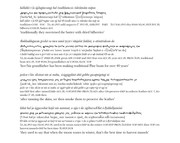
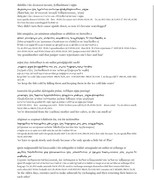
And now the first article of the universal declaration of human rights in Pine.
https://www.youtube.com/watch?v=SvW6UKHePoE
Some notes on the vocabulary you might find interesting:
bulkkuġġami | free, derived from the root bulk- 'tether', with the abessive suffix -uġġami 'without'
naġv- | 'to be born' is cognate with the copula naġan 'to be', and forms a sort of translative form (not many verbs use a -v- to indicate translativity but they exist)
niṡki | 'person' which is also the root of the name of the language, Niṡkullit (person-language), and here it's prefixed as niṡke- to gaḍḍa 'worth' (gảhinnit 'from worth') and mikvi 'right' (from migi 'right, correct'). Coincidentally, niṡkemỉgvunnit could also mean 'from people-food', but obviously the context makes it clear the word is mikvi (<mỉgvunnit in the elative) and not miġvu (mỉkvunnit in the elative, also).
alguss- | 'to be given' is actually an ornative form of algu 'gift' (from alk- 'to give'), so its literal meaning is more akin to 'go around with a gift', which it can mean literally.
mỉddukkut and
migisoatsƛikkut | here the suffix -kkut is a comitative ('with'), and the citation form of the words are mittuġma 'reason' (-ġma is a common abstract noun formant, from mid- 'to know') and migi+sasƛi 'right(eous) responsibility' or conscience, i.e. the responsibility to act righteously.
issineidnittyt | here -ttyt is also the comitative of the words issinennippyt, where issi- is a preffix meaning 'well, good, correctly, harmoniously' and nennippyt is derived from nennen 'friend' (which itself is derived from nen- 'to sit', because those who sit together are...friends - it is actually a nominalised form of the hyponomous, so it literally means 'who sits'), with the suffix -pput/-ppyt which shows a behavior or some sort of attribute, so fraternity or brotherhood is here more like 'the attribute of behaving like good friends'. It also means 'philanthropy'.
tṡavvuttug- : a verb made up of the root tṡavv- which literally means 'to flow, to proceed' with the medial voice suffix -uttug-, so 'to flow oneself', or 'to behave'.e'.