Hyperborea

Conworlds and conlangs
rotting bones
Posts: 2836
Joined: Tue Dec 04, 2018 5:16 pm

Hyperborea

Post by rotting bones »

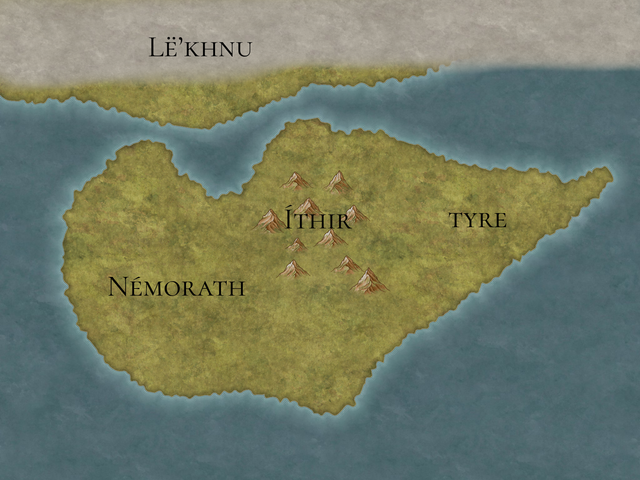
Image

I quickly sketched a regional map for one of my oldest conworlds, Hyperborea. I couldn't find any of my old maps. I'm hoping to add more details later. I'm also hoping to rework the materials into a form resembling consistency that satisfies me. (I've said that before.)

This world contains 3 sapient species: the telepathic Phong, the Numi whales and the humanoid Hyperboreans.

The Phong and the Numi and native to Hyperborea. The Phong resemble furry penguins with long, Narwhal-like beaks. The Numi whales are related to the Phong, but not much is known about them initially because of their aquatic habitat.

The ancestors of the Hyperboreans crash landedbin the Íthir mountains in ancient times, making them relative newcomers. They arrived from outer space on an ark ship whose ruins are a site of cultural and scientific pilgrimage. Their descendants lack the technology to build such ships, but they are still advanced compared to the Phong and the Numi. All their descendants speak branches of the same language family.

When the Hyperboreans arrived, the various clans feuded against each other. The six clans Sévadrai, Khélmelai, Róskaï, Azravor, Lunetyen and Ophalrhan emerged victorious and formed the empire of Khélythëa in Némorath, the flowery meadows of the Southwest. They spoke the Khélai language, the oldest language with a literary tradition on Hyperborea. The Narshalye were expelled to the Lë’khnu, the Boreal Wastes, where they became mammoth herders. The Tyrians settled in city states on the Eastern peninsula.

The Narshalye discovered the lyira in the Boreal Wastes. The word means ice tunnel, but they are portals created by light reflected by the ice that lead to other worlds. Or if you prefer, other cross sections of the hyperplanet. They used these resources to conquer Tyre. By this point, Khélythëa was in decadence. The Narshalye eventually conquered the known world of Hyperborea.

The official language of this empire was Sévrelai, a descendant of the Tyrian branch with strong Narshalye influence. Other languages were called "cants" from this point onwards. The Northern Cant was a descendant of Narshalye that became extinct. However, Old Narshalye continued to be used as a classical language in the World Empire. The Southern Cant is a descendant of Khélai. It has no official status and is looked down on as a provincial oddity, but it's in vibrant use.

My notes say the following:

Proto-Hyperborean

Stops: /p t k ʔ pʼ tʼ kʼ b d/
Fricatives: /f θ s ʃ x v ð z/
Sonorants: /m n ɲ l ʎ r j/

Vowel Inventory (6)

Front: /i e/
Central: /ɨ/
Back: /o u/
Low: /a/

Onset clusters were limited to fricative+liquid, stop+/r/, and sibilant+stop sequences
Coda positions permitted nasals (/m, n, ŋ/), glottal stop (/ʔ/), fricatives (/s, ʃ, f, x/), and liquids (/l, r/)
No geminate consonants were permitted
Triple consonant clusters were prohibited

Old Florestican branch

Old Khélai

ɨ → ə / _
*r > ʀ / _
*l > ɭ / _
*k > tʃ / i, e
*V# > Vn / _#

Classical Khélai

*VCʼ > VH́ (ejectives → high tone)
*Vʔ > VH́ (glottal stop → high tone)
*VN > V̄M (nasal codas → mid tone)
*V{ʀ,ɭ,s} > V̀L (sonorants/fricatives → low tone)
∅ → {t, n, s, r} / V_#V (phrase-medially)

Intervocalic:

*p > b > v / V_V
*t > d > ð / V_V
*k > g > ɣ / V_V

Southern Cant

*ɣ, *ð, *β > ∅ / V_V
*e > ei
*o > ou
Development of phrase melody

Tyrian branch

Old Tyre

*i > ɨ / _
*e > a / _
*o > u / _
(vertical alignment)

*k' > q' / _
*ʔ > ʕ / _
{s, z, ʃ} → ʃ / _

V → Vx / _#

Imperial Sévrelai

*q' > k / _
*x > ː / V_ (length)
#V → #hV / _
*Vː > V̄ / _ (length → level tone)
*a > æ / _
*ʃ > s / _
*x > h / _
C → Cé / _#

Boreal branch

Old Narshalye

*f > ɸ / _
*v > β / _
*VN > Ṽ / _
Various infix developments

I know this list is missing things. Is anything egregiously wrong?
rotting bones
Posts: 2836
Joined: Tue Dec 04, 2018 5:16 pm

Re: Hyperborea

Post by rotting bones »

I give up. I'm using Claude to sort of string this together until I can sort out this mess.

Hyperborean language family: Phonologies and Sound Changes, The Edited and Extended "At Least I Think That's How It Fits Together (This Can't Be Right)" Edition

Proto-Hyperborean (PH)

Consonant Inventory (24 phonemes)

- Plain stops: /p t k ʔ/
- Ejective stops: /pʼ tʼ kʼ/
- Voiced stops: /b d/
- Voiceless fricatives: /f θ s ʃ x/
- Voiced fricatives: /v ð z/
- Nasals: /m n ɲ/
- Liquids: /l ʎ r/
- Glides: /j/

Note: [ŋ] occurs as positional allophone of /n/ before velar consonants.

Vowel Inventory (6 phonemes)

- Front: /i e/
- Central: /ɨ/
- Back: /o u/
- Low: /a/

Prosody

- Fixed stress on penultimate mora
- No phonemic tone
- Vowel length non-contrastive

Phonotactics

Syllable template: (C)(C)V(C)

Where:
- (C)(C) = optional onset (maximum two consonants)
- V = required vowel nucleus
- (C) = optional coda (maximum one consonant from permitted set)

Onset constraints:
- Maximum two consonants
- Legal clusters:
- {fricative + liquid}: /fl fr θr sl sr ʃr vl vr/
- {stop + /r/}: /pr tr kr br dr pʼr tʼr kʼr/
- {/s/ + stop}: /sp st sk spʼ stʼ skʼ/
- Single consonant onsets: any consonant
- Onsets optional word-initially, obligatory word-internally

Nucleus constraints:
- One vowel required per syllable
- Vowel sequences prohibited except across morpheme boundaries

Coda constraints:
- Maximum one consonant
- Legal codas: /m n ɲ/ (plus [ŋ]), /ʔ/, /s ʃ f x/, /l r/
- Ejectives prohibited in coda
- Voiced stops prohibited in coda (devoice to voiceless)

Phonological processes:
- Final devoicing: /b/ → [p] / _#; /d/ → [t] / _#
- Nasal place assimilation: /n/ → [m] / _[+labial]; /n/ → [ŋ] / _[+velar]
- Schwa deletion: /ɨ/ → Ø / _[−stress] between identical consonants

---

Old Florestican Branch

Stage 1: Early Lenition and Debuccalization

Change 1.1a: /f/ → /h/ / #_
- PH fiθak → hiθak "fire"
- PH fumal → humal "smoke"

Change 1.1b: /s/ → /h/ / #_V[−stress]
- PH sipak → hipak "leaf"

Change 1.1c: /x/ → /h/ / _#
- PH talax → talah "mountain"
- PH pirux → piruh "stone"

Change 1.2a: /p t k/ → /b d g/ / V̆_V (introduces /g/)
- PH ˈtapaɲ → ˈtabaɲ "water"
- PH ˈsekir → ˈsegir "wind"
- PH ˈmotika → ˈmodiga "sun"

Stage 2: Ejective Expansion and Glide Formation

Change 2.1a: /s ʃ/ → /sʼ ʃʼ/ / _Cʼ (ejective fricatives)
- PH pʼask → pʼasʼk "blood"
- PH tʼiʃka → tʼiʃʼka "bone"

Change 2.2a: /u/ → /w/ / C_V
- Creates (C)(C)(G)V syllable template with glides
- PH ˈpukal → ˈpwakal "river"

Stage 3: Palatalization and Affricate Development

Change 3.1a: /k g/ → /tʃ dʒ/ / _i, _e
- PH kimal → tʃimal "hand"
- PH geral → dʒeral "foot"

Change 3.1b: /t d/ → /ts dz/ / _i
- PH tinar → tsinar "grain"
- PH dipaʔ → dzipaʔ "eye"

Change 3.1c: /s z/ → /ʃ ʒ/ / _i, _j
- PH simal → ʃimal "name"
- PH zin → ʒin "woman"

Stage 4: Coda Weakening and Compensatory Lengthening

Change 4.1a: /p t k b d g/ → /ʔ/ / _#
- talap → talaʔ "tree"
- hirut → hiruʔ "leaf"

Change 4.1b: /f θ s ʃ x/ → /h/ / _#
- kafas → kafah "boat"
- birax → birah "sky"

Change 4.1c: /m n ɲ/ → Ø / _# (with compensatory lengthening)
- pʼuθikalɨm → pʼuθikalɨː
- Note: Nasals deleted word-finally before compensatory lengthening

Change 4.2a: V → Vː / _C[weakened/lost]#
- talaʔ → talaː "tree" (then tone develops)
- kafah → kafaː "boat" (then tone develops)
- pʼuθikalɨː → pʼuθikalaː (vowel already lengthened)

Stage 5: Tonogenesis

Mechanism: Final laryngeals create F0 perturbations before deletion

Change 5.1a: Rising tone from /ʔ/ (tone 24 or 35)
- talaːʔ → talaː˨˦ /ta.laː˨˦/ "tree"
- pʼuθikalaː → pʼuθikalaː˨˦ (treated as if from earlier *-ʔ pattern)

Change 5.1b: Falling tone from /h/ (tone 51 or 42)
- kafaːh → kafaː˥˩ /ka.faː˥˩/ "boat"
- talah → talaː˥˩ "mountain"

Change 5.1c: Level tone in open syllables (tone 33)
- danu → danuː˧˧ "moon"

Old Khelai: Phonological System

Consonants (32 phonemes):
- Plain stops: /p t k b d g/
- Ejective stops: /pʼ tʼ kʼ/
- Affricates: /ts tʃ dz dʒ/
- Fricatives: /f θ s ʃ h v ð z ʒ/
- Ejective fricatives: /sʼ ʃʼ/
- Nasals: /m n ɲ/
- Liquids: /l ʎ r/
- Glides: /j w/

Vowels (12 phonemes):
- Short: /i e ɨ a o u/
- Long: /iː eː ɨː aː oː uː/

Tones (3 tones on long vowels in final syllables):
- Rising (˨˦): Chao 24 or 35
- Falling (˥˩): Chao 51 or 42
- Level (˧˧): Chao 33

Syllable template: (C)(C)(G)Vː?(T)(C)

Phonotactics:
- Onset clusters: expanded to include glides (CG, CCG)
- Coda constraints: reduced to /m n ɲ ʔ s ʃ l r/
- Tone restricted to final syllable long vowels

Classical Khelai: Phonological System

Consonants (30 phonemes):
- Stops: /p t k b d g/
- Ejectives: /pʼ tʼ kʼ/
- Affricates: /ts tʃ dz dʒ/
- Fricatives: /f θ s ʃ h v ð z ʒ/
- Nasals: /m n ɲ/
- Liquids: /l ʎ r/
- Glides: /j w/

Vowels (12 phonemes):
- Short: /i e ɨ a o u/
- Long: /iː eː ɨː aː oː uː/

Tones (5 tones on all syllables):
- High (˥): Chao 55
- Mid (˧): Chao 33
- Low (˩): Chao 11
- Rising (˨˦): Chao 24
- Falling (˥˩): Chao 51

Sound changes from Old Khelai:

Change CK-1: Tone spread
- Tones spread from final syllable to all syllables
- Final syllable tone becomes the dominant tone pattern

Change CK-2: Ejective fricative merger
- sʼ → s
- ʃʼ → ʃ

Change CK-3: Coda simplification
- Final consonants → mostly nasals /m n ɲ/
- Other codas lost or merged into tone/length patterns

Syllable template: (C)(C)Vː?(T)(N)

Phonotactics:
- Tone on all syllables (spread from original final position)
- Simplified coda inventory (mainly nasals)
- Complex onset clusters maintained

Southern Cant: Final System

Sound Changes from Classical Khelai

Change SC-0: Ejective merger
- pʼ → p
- tʼ → t
- kʼ → k
- Removes ejectives from inventory

Change SC-1: Dental fricative shift
- θ → s / _V[−low]
- θ → Ø / _V[+low]
- ð → d (or merger with other changes)

Change SC-2: Onset lenition (progressive)
- p → b → β / #_, V_V
- t → d → ð / #_, V_V
- k → g → ɣ / #_, V_V
- Creates approximants from stops

Change SC-3: Approximant resolution
- β → w (labial)
- ð → ɾ (dental/tap)
- ɣ → j (palatal/velar)
- Converts approximants to glides/taps

Change SC-4: Vowel nasalization
- V → Ṽ / _N, _N#
- Creates nasal vowels /ĩ ẽ ã õ ũ ɨ̃/

Change SC-5: Coda loss with melodic restructuring
- Codas deleted except nasals
- Tone system → phrase-final melodic contours
- Original 5 tones → 6 melodic patterns

Change SC-6: Syllable simplification
- Final template: CV(N)
- All coda consonants except nasals deleted
- Compensatory changes in prosody

Southern Cant Phonological System

Consonants (18 phonemes):
- Stops: /p t k b d g/
- Fricatives: /f s ʃ h v z/
- Nasals: /m n ŋ/
- Liquids: /l ʎ ɾ/
- Glides: /w j/

Vowels (22 phonemes):
- Oral: /i e a o u ɨ/
- Nasal: /ĩ ẽ ã õ ũ ɨ̃/
- Diphthongs: /ai ei oi ui au eu ou iu ja wa/

Prosody:
- 6 melodic contours (phrase-final only):
- Rise-Fall (RFL ˇ)
- Fall-Rise (FLR ˆ)
- High-Fall (HFL ˋ)
- Low-Rise (LOR ˊ)
- Level-High (HH ˉ)
- Level-Low (LL ˍ)

Syllable template: CV(N)

Onset constraints:
- Single consonant OR
- CG cluster (C + glide)

Coda constraints:
- Only nasals: /m n ŋ/
- Nasal place assimilation in liaison

Liaison patterns: Historical codas resurface across word boundaries
- Isolation: [mei] [lua] [kale]
- Liaison: [mei-t-V] [lua-n-V] [kale-r-V]

Phonological processes:
- Nasal place assimilation
- Glide formation across word boundaries
- Vowel harmony (optional, formal register)

---

Tyrian Branch

Period I: Early Tyre—Prosodic Restructuring

Change T-1: Stress shift: penultimate → initial
- PH ka.ˈne.θa → ˈka.ne.θa "water"

Change T-2: Vowel reduction in unstressed syllables (front vowels)
- i → ɨ / _[−stress]
- e → i / _[−stress]

Change T-3: Vowel reduction in unstressed syllables (back vowels)
- u → ʊ / _[−stress]
- o → u / _[−stress]

Change T-4: Central vowel stability
- ɨ remains stable in all positions

Early Tyre: Phonological System

Consonants (24 phonemes):
- Plain stops: /p t k ʔ/
- Ejective stops: /pʼ tʼ kʼ/
- Voiced stops: /b d/
- Fricatives: /f θ s ʃ x v ð z/
- Nasals: /m n ɲ/
- Liquids: /l ʎ r/
- Glides: /j/

Vowels (8 phonemes):
- Full: /i ɨ a o u/
- Reduced: /ʊ/ (from unstressed /u/)
- Note: /e/ → /i/ in unstressed position

Prosody:
- Initial stress (shifted from PH penultimate)
- Vowel reduction in unstressed syllables

Period II: Middle Tyre—Consonant Restructuring

Change T-5: Intervocalic lenition (labial)
- b → β / V_V

Change T-6: Intervocalic lenition (coronal)
- d → ð / V_V

Change T-7: Glottal stop restructuring
- ʔ → h / #_
- ʔ → Ø / V_V
- ʔ → C: / C_ (gemination)

Change T-8: Velar retraction (uvularization begins)
- k → q / _a, _ɨ, _u
- kʼ → qʼ / _a, _ɨ, _u
- PH ˈka.ma → ˈqa.ma "sun"

Change T-9: Dental fricative shift
- θ → h / _V
- PH ˈθa.las → ˈha.las "boat"

Change T-10: Velar fricative backing
- x → χ (becomes uvular in all positions)
- PH ˈxa.lim → ˈχa.lim "night"

Middle Tyre: Phonological System

Consonants (26 phonemes):
- Stops: /p t k q/
- Ejectives: /pʼ tʼ kʼ qʼ/
- Fricatives: /f s ʃ h χ v z/
- Approximants: /β ð/ (from lenition)
- Nasals: /m n ɲ/
- Liquids: /l ʎ r/
- Glides: /j/

Vowels (8 phonemes):
- /i ɨ a o u ʊ/

Prosody:
- Initial stress
- Approximants in intervocalic position

Period III: Late Tyre—Simplification and Voicing Neutralization

Change T-11: Voicing merger (devoicing)
- b → p
- d → t
- β → p (approximant merges with stop)
- ð → t (approximant merges with stop)
- PH danum → tanum "moon"

Change T-12: Ejective loss
- pʼ → p
- tʼ → t
- kʼ → k
- qʼ → q

Change T-13: Affricate development from palatalization
- t → ts / _i, _ɨ, _j
- k → tʃ / _i (word-initially and word-finally)

Change T-14: Lateral preservation
- ʎ → ʎ (remains stable)
- l → l (remains stable)

Change T-15: Final fricative changes
- v → w / _# (and in most positions)
- z → s
- x → h

Change T-16: Nasal merger
- ɲ → n

Change T-17: Schwa centralization
- ɨ → ə (full centralization)

Late Tyre: Phonological System

Consonants (22 phonemes):
- Stops: /p t k q/
- Affricates: /ts tʃ/
- Fricatives: /f s ʃ h χ/
- Nasals: /m n/
- Liquids: /l ʎ r/
- Glides: /w j/

Vowels (7 phonemes):
- /i e ə a o u ʊ/

Prosody:
- Initial stress maintained
- No voicing distinction in obstruents
- Schwa in unstressed positions

Phonotactics:
- Syllable: (C)(C)V(C)
- Simplified onset clusters
- Single coda consonants

---

Sevrilag Branch (from Late Tyre)

Transitional stage between Late Tyre and Sevrelai

Sound Changes from Late Tyre

Change SL-1: Intervocalic voicing restoration
- p → b / V_V
- t → d / V_V
- k → g / V_V
- Reintroduces voiced stops

Change SL-2: Schwa lowering
- ə → a
- Merges with low vowel

Change SL-3: Cadence development (diglossia begins)
- Final consonants → melodic patterns
- Formal register retains: -k, -g, -rg
- Casual register develops: -é, -í, -á

Change SL-4: Sibilant palatalization
- s → ʃ / _i, _j (context-dependent)
- Creates allophonic variation

Change SL-5: Hiatus resolution
- V.V → VjV / VwV (glide insertion)

Sevrilag: Phonological System

Consonants (19 phonemes):
- Stops: /p b t d k g/
- Fricatives: /f v s z ʃ ʒ h/
- Nasals: /m n/
- Liquids: /r l/
- Glides: /w j/

Allophonic notes:
- /ʃ/ → [ɕ], /ʒ/ → [ʑ] / _i, _e (palatalized allophones)
- Uvular /ʁ/ dialectal (from Boreal contact)

Vowels (5 phonemes + length):
- Short: /i e a o u/
- Long: /iː eː aː oː uː/

Cadences (diglossia):
- Formal register: -k, -g, -rg (historical codas retained)
- Casual register: -é, -í, -á (melodic finals)

Phonotactics:
- Syllable: (C)(C)V(ː)(C)
- Open syllables increasing
- Coda restrictions in casual speech

---

Sevrelai: Final System (from Sevrilag)

Sound Changes from Sevrilag

Change SE-1: Melodic codas phonemicization
- -g → -í (high tone marker)
- -k → -é (mid-high tone marker)
- -rg → -â (falling tone marker)
- Formal/casual split → tone distinctions

Change SE-2: Palatal sonorants from sequences
- li + V[front] → ʎ
- ni + V[front] → ɲ
- Creates /ʎ ɲ/ phonemes

Change SE-3: Hiatus smoothing completion
- i_V → ijV (everywhere)
- u_V → uwV (everywhere)

Change SE-4: Selective rounding (lexically conditioned)
- u → y / _Cé (in specific lexical items)
- Creates front rounded vowel /y/

Change SE-5: Open syllable enforcement
- CVC → CV / _#
- Final codas deleted (except in liaison)

Sevrelai: Phonological System

Consonants (21 phonemes):
- Stops: /p b t d k g/
- Fricatives: /f v s z ʃ ʒ h/
- Nasals: /m n ɲ/
- Liquids: /r l ʎ/
- Glides: /w j/

Allophonic notes:
- /ʃ/ → [ɕ], /ʒ/ → [ʑ] / _i, _e
- /r/ → [ʁ] in urban/prestige speech

Vowels (7 phonemes):
- Oral: /i e a o u y/

Prosody:
- Lexical tone on final vowels:
- H (High) = acute: -í, -é
- F (Falling) = circumflex: -â
- Stress: penultimate syllable (independent of tone)
- Rhythm: mora-timed, open syllables preferred

Phonotactics:
- Syllable: (C)V
- Onset: single consonant OR CG cluster (C + glide)
- No codas in surface forms (except liaison)
- Liaison across word boundaries (optional, style-dependent)

Liaison patterns:
- Formal speech: historical consonants surface
- /mei-k/ + /asi/ → [meikasi]
- Casual speech: glide insertion
- /mei/ + /asi/ → [meijasi]

Phonological processes:
- Palatal glide insertion in hiatus (obligatory)
- Optional liaison with historical codas
- Penultimate stress assignment (independent of tone)
- Tone sandhi in compounds (advanced)

---

Boreal Branch (Narshalye)

Phase 1: Early Narshalye—Ejective Loss and i-Umlaut

Change N-1: Labial and coronal ejective merger
- pʼ → p
- tʼ → t
(Note: kʼ follows different path)

Change N-2: i-Umlaut (creates /y/)
- u → y / _Cⁿi (n ≥ 0)
- PH ˈpurnik → ˈpyrnik "winter"
- PH ˈhusun → ˈhysyn "house"

Change N-3: Velar ejective → fricative → uvular
- kʼ → x → χ
- PH lakʼi → laχe "tree"

Change N-4: Central vowel lowering
- ɨ → ʌ / _C[−high] (creates /ʌ/)
- Creates additional central vowel

Change N-5: Front vowel split
- e → ɛ / _l, _rC (creates /ɛ/)
- Lower-mid front vowel emerges

Early Narshalye: Phonological System

Consonants (23 phonemes):
- Stops: /p t k b d/
- Fricatives: /f θ s ʃ x χ v ð z/
- Nasals: /m n ɲ/
- Liquids: /l ʎ r/
- Glides: /j/

Vowels (9 phonemes):
- Front: /i e ɛ y/
- Central: /ɨ ʌ/
- Back: /u o/
- Low: /a/

Phase 2: Mid Narshalye—Uvularization

Change N-6: Velar fricative backing
- x → χ / _a, _o, _u, _ʌ
- PH ˈxalam → ˈχalam "overlook"

Change N-7: Dental fricative labialization
- θ → ɸ (becomes bilabial fricative)
- PH ˈθalas → ˈɸalas "cup"

Change N-8: Uvular sonorant from clusters
- xr → χʁ
- kr → χʁ (via intermediate x)
- Creates uvular trill /ʁ/

Change N-9: Palatal preservation
- ʎ → ʎ (stable)
- ɲ → ɲ (stable in Phase 2)

Mid Narshalye: Phonological System

Consonants (25 phonemes):
- Stops: /p t k b d/
- Fricatives: /f ɸ s ʃ χ h v z/
- Nasals: /m n ɲ/
- Liquids: /l ʎ r ʁ/
- Glides: /j w/

Vowels (9 phonemes):
- Front: /i e ɛ y/
- Central: /ɨ ʌ/
- Back: /u o/
- Low: /a/

Phase 3: Late Mid Narshalye—Mergers

Change N-10: Palatal nasal merger
- ɲ → n
- Removes palatal nasal

Change N-11: Bilabial fricative → labiodental
- ɸ → f
- Completes shift to labiodental

Change N-12: Dental fricative loss
- ð → d (merger)
- θ already shifted via ɸ → f

Change N-13: Voiced fricative preservation
- v → v (stable)
- z → z (stable)

Late Mid Narshalye: Phonological System

Consonants (22 phonemes):
- Stops: /p t k b d/
- Fricatives: /f s ʃ χ h v z/
- Nasals: /m n/
- Liquids: /l ʎ r ʁ/
- Glides: /w j/

Vowels (9 phonemes):
- Front: /i e ɛ y/
- Central: /ɨ ʌ/
- Back: /u o/
- Low: /a/

Phase 4: Late Narshalye—Positional Neutralizations

Change N-14: Coda /f/ debuccalization
- f → h / {_C, _#}
- /laf/ → [lah] (citation form)
- /laf-i/ → [lafi] (with suffix, /f/ in onset)

Change N-15: Final /l/ → uvular
- l → ʁ / _#
- /pal/ → [paʁ] (citation form)
- /pal-i/ → [pali] (with suffix, /l/ surfaces)

Narshalye: Final Phonological System

Consonants (20 phonemes):
- Stops: /p t k b d/
- Fricatives: /f s ʃ χ h v z/
- Nasals: /m n/
- Liquids: /l ʎ r ʁ/
- Glides: /w j/

Positional allophones:
- /f/ → [h] / {_C, _#} (neutralization in coda)
- /l/ → [ʁ] / _# (final position only)

Vowels (9 phonemes):
- Front unrounded: /i e ɛ/
- Front rounded: /y/
- Central: /ɨ ʌ/
- Back: /u o/
- Low: /a/

Phonotactics:
- Syllable: (C)(C)V(C)
- Onset clusters (maximum two):
- {fricative + liquid}: /fl fr sl sr ʃr vl vr/
- {stop + liquid}: /pr tr kr br dr pl/
- {/s/ + stop}: /sp st sk/
- CCC → CəCC (epenthetic schwa inserted)

- Coda constraints (single consonant):
- Nasals: /m n/
- Fricatives: /s ʃ f χ/ (with /f/ → [h] neutralization)
- Liquids: /l r ʁ/ (with /l/ → [ʁ] neutralization)

Phonological processes:
- i-Umlaut: u → y / _Cⁿi (n ≥ 0) [still productive]
- Coda neutralizations:
- /f/ → [h] / {_C, _#}
- /l/ → [ʁ] / _#
- Nasal place assimilation (inherited from PH)
- Uvular voicing: /χ/ → [ʁ] / V_V (allophonic)
- Epenthetic schwa: Ø → [ə] / C_CC (repairs illegal clusters)

---

Prosodic Systems Summary

Proto-Hyperborean:
- Stress-based (penultimate mora)
- No tone
- No distinctive vowel length

Old Florestican → Classical Khelai → Southern Cant:
- Stage 1-4: Stress-based (inherited from PH)
- Stage 5 (Old Khelai): 3 tones develop on final long vowels (tonogenesis from laryngeals)
- Classical Khelai: 5 tones spread to all syllables
- Southern Cant: Tone → 6 phrase-final melodic contours
- Melody restricted to phrase edges in Southern Cant

Tyrian → Sevrelai:
- Early Tyre: Initial stress (shift from PH penultimate)
- Late Tyre: Initial stress maintained
- Sevrilag: Diglossic cadences (formal codas vs. casual melodic finals)
- Sevrelai: Lexical tone on final vowels (H, F) + penultimate stress

Narshalye (Boreal):
- Stress-based throughout (inherited penultimate from PH)
- No tone development
- Pitch prominence on stressed syllables
- Most conservative prosodically

---

Example Derivations

PH pʼuθikalɨm "monolith"

====================
OLD FLORESTICAN → SOUTHERN CANT
====================

Stage 1: Early Lenition and Debuccalization
- pʼuθikalɨm (no changes apply; /f/ and /x/ changes don't affect this word)

Stage 2: Ejective Expansion and Glide Formation
- pʼuθikalɨm (no ejective fricatives or glides created here)

Stage 3: Palatalization and Affricate Development
- pʼuθikalɨm (no palatalization; /k/ not before /i/ or /e/)

Stage 4: Coda Weakening and Compensatory Lengthening
- pʼuθikalɨm → pʼuθikalaː (nasal -m deleted with compensatory lengthening per 4.1c)

Stage 5: Tonogenesis (Old Khelai)
- pʼuθikalaː → pʼuθikalaː˨˦ "monolith" (rising tone 24, analogical to ʔ-final pattern)

Classical Khelai: Tone Spread
- pʼuθikalaː˨˦ → pʼú.θí.ká.làː˨˦ "monolith" (rising tone spreads; last syllable bears primary tone)

Southern Cant Changes:

SC-0: Ejective merger (pʼ → p)
- pʼúθíkálàː˨˦ → púθíkálàː "monolith"

SC-1: Dental fricative shift (θ → s / _V[−low])
- púθíkálàː → púsíkálàː "monolith" (/θ/ before /i/ which is [−low])

SC-2: Onset lenition (p → b → β / #_)
- púsíkálàː → βúsíkálàː "monolith" (initial /p/ lenites through both stages)

SC-3: Approximant resolution (β → w)
- βúsíkálàː → wúsíkálàː "monolith" (approximant becomes glide)

SC-4: Vowel nasalization
- wúsíkálàː (no nasals remain to trigger nasalization)

SC-5: Coda loss + melodic restructuring
- wúsíkálàː → wúsíkálá (long vowels shorten; tone becomes phrase-final melody)

SC-6: Syllable simplification
- wúsíkálá → wusikalá (CV syllables; tones replaced by melodic contours phrase-finally)

Southern Cant final: /wusiˈkala/ [wu.si.ka.ˈla]RFL "monolith"
(with Rise-Fall melodic contour phrase-finally)

====================
TYRIAN → SEVRELAI
====================

Proto-Hyperborean: pʼuθikalɨm

Early Tyre (Period I):
T-1: Stress shift (penultimate → initial)
- pʼu.θi.ˈka.lɨm → ˈpʼu.θi.ka.lɨm "monolith"

T-2-4: Vowel reduction
- ˈpʼu.θi.ka.lɨm (no changes; /ɨ/ stable, other vowels not in reduction contexts)

Early Tyre: ˈpʼu.θi.ka.lɨm

Middle Tyre (Period II):
T-5-6: Intervocalic lenition
- No /b/ or /d/ intervocalically

T-7: Glottal stop restructuring
- No /ʔ/ in this word

T-8: Velar retraction (k → q / _a, _ɨ, _u)
- ˈpʼu.θi.ka.lɨm → ˈpʼu.θi.qa.lɨm (/k/ before /a/)

T-9: Dental fricative shift (θ → h / _V)
- ˈpʼu.θi.qa.lɨm → ˈpʼu.hi.qa.lɨm

T-10: Velar fricative backing
- No /x/ in this word

Middle Tyre: ˈpʼu.hi.qa.lɨm

Late Tyre (Period III):
T-11: Voicing merger (devoicing)
- No voiced stops to devoice

T-12: Ejective loss
- ˈpʼu.hi.qa.lɨm → ˈpu.hi.qa.lɨm

T-13: Affricate development
- No palatalization contexts

T-14-16: Other changes
- No changes apply

T-17: Schwa centralization (ɨ → ə)
- ˈpu.hi.qa.lɨm → ˈpu.hi.qa.ləm

Late Tyre: ˈpu.hi.qa.ləm

Sevrilag:
SL-1: Intervocalic voicing
- No voicing contexts (no intervocalic voiceless stops in available positions)

SL-2: Schwa lowering (ə → a)
- ˈpu.hi.qa.ləm → ˈpu.hi.qa.lam

SL-3: Cadence development
- ˈpu.hi.qa.lam → ˈpu.hi.qa.lamé (melodic final -é added)

SL-4-5: Other changes
- No palatalization or hiatus here

Sevrilag: ˈpuhiqalamé

Sevrelai:
SE-1: Melodic codas phonemicization
- (Already has -é)

SE-2: Palatal sonorants
- No sequences trigger this

SE-3: Hiatus smoothing
- No hiatus

SE-4: Selective rounding (u → y / _Cé, lexically specific)
- ˈpuhiqalamé → ˈpyhiqalamé (if this lexeme undergoes rounding)
- OR remains: ˈpuhiqalamé (if not in affected class)

SE-5: Open syllable enforcement
- ˈpuhiqalamé → ˈpu.hi.qa.la.mé (already open syllables)

Sevrelai final: /puhiˈqalamé/ or /pyhiˈqalamé/ [pu.hi.qa.la.ˈme] "monolith"
(with high tone on final -é, penultimate stress)

====================
NARSHALYE (BOREAL)
====================

Proto-Hyperborean: pʼuθikalɨm

Phase 1: Early Narshalye

N-1: Ejective merger (pʼ → p, tʼ → t)
- pʼuθikalɨm → puθikalɨm

N-2: i-Umlaut (u → y / _Cⁿi)
- puθikalɨm → pyθikalɨm (u → y because of /i/ two syllables ahead)

N-3: Velar ejective (kʼ → x → χ)
- No kʼ in this word

N-4: Central vowel lowering (ɨ → ʌ / _C[−high])
- pyθikalɨm (final -m is [+high] nasal? Let's say it applies)
- pyθikalɨm → pyθikalʌm

N-5: Front vowel split (e → ɛ / _l, _rC)
- No /e/ in this word

Early Narshalye: pyθikalʌm

Phase 2: Mid Narshalye

N-6: Velar fricative backing
- No /x/ from /k/ here

N-7: Dental fricative labialization (θ → ɸ)
- pyθikalʌm → pyɸikalʌm

N-8: Uvular sonorant from clusters
- No xr or kr clusters

N-9: Palatal preservation
- No palatals in this word

Mid Narshalye: pyɸikalʌm

Phase 3: Late Mid Narshalye

N-10: Palatal nasal merger
- No ɲ

N-11: Bilabial to labiodental (ɸ → f)
- pyɸikalʌm → pyfikalʌm

N-12-13: Fricative preservation
- Stable

Late Mid Narshalye: pyfikalʌm

Phase 4: Late Narshalye

N-14: Coda /f/ debuccalization
- No /f/ in coda

N-15: Final /l/ → uvular
- No final /l/ (final is -m)

Narshalye final: /pyfiˈkalʌm/ [py.fi.ˈka.lʌm] "monolith"

---

The Tyrian branch can't possibly be right, can it?

The older languages in the family were polysynthetic. However, by the time the oldest native records were kept on the planet, Classical Khelai was already analytic with fusional elements. Both contemporary vibrant mutually unintelligible languages, Sevrelai and Southern Cant, are largely analytic, the latter much more so. They are not, however, like any earthly analytic languages I know of.

There are also other languages in this family like Nyphonic, spoken by the Phong when they live in human enclaves, and the many small Orgu-Warax languages spoken by the hill tribes. I don't have grammars for these languages.

After the creation of the World Empire, Hyperboreans turn their attention to the exploration of the lyïră portals. In this journey, they reach the nested valleys of Wahi. The Wahi valleys are a nexus of lyïră leading to numerous worlds rich in resources. Unfortunately, they are inhabited by a race of sapient fractals that are not very cooperative with the Empire's efforts to occupy their land. The World Empire is currently embroiled in a campaign against these primitives. The fractals don't have a name for themselves, but they and their language are referred to by the Hyperboreans with their word for "person", Lubokahe. The Lubokahe language is not only unrelated to Hyperborean, it is a non-human language with infinitely nesting properties. Just about the only cultural commonality they have with the Hyperboreans is that they too are familiar with the Phong, who wander freely through the lyïră. The Lubokahe see the Phong as spirit guides from other dimensions.

What does it mean for Lubokahe to be infinitely nesting? An example comes from the word itself. Each root in the language consists of a consonant and a vowel:

Le: Child
Hu: Walk to the next village
Ba: The sacred flame
Ko: Duties of a householder

Words are formed by infixing roots into other roots. For every odd root, the consonant comes first (in most situations). For every even root, the vowel comes first:

Le
"Child"

Luhe
"One who has been a child, and then walked to the next village"

Lubahe
"One who has been a child, walked to the next village and (witnessed) the sacred flame"

Lubokahe
"One who has been a child, walked to the next village, (witnessed) the sacred flame and (sworn to uphold) the duties of a householder"
"Person"

I do have a grammar for this language, but it needs editing. Honestly, it's fairly natural except for this bit. Not sure I'm satisfied with that. The Hyperborean languages also have some features not found in any human language to the best of my knowledge. Even for some of the small things, I don't know if they're realistic. E.g. My grammar of Narshalye says that when the language was alive, the category of infixes was productive. Not productively using infixes like in Tagalog, productively creating infixes like coining words. I don't know if that's a thing. My in-world explanation is that the Boreal nomads have been in contact with the Lubokahe for thousands of years. Like the Phong, they have been wandering across dimensions through the lyïră. There are limits to the amount of influence it had, but it picked up using lots of infixes as an areal feature. I don't have the "aliens" excuse for how copulas work in the Hyperborean languages.
Ares Land
Posts: 3518
Joined: Sun Jul 08, 2018 12:35 pm

Re: Hyperborea

Post by Ares Land »

rotting bones wrote: Fri Oct 24, 2025 3:52 pm

I do have a grammar for this language, but it needs editing. Honestly, it's fairly natural except for this bit. Not sure I'm satisfied with that. The Hyperborean languages also have some features not found in any human language to the best of my knowledge. Even for some of the small things, I don't know if they're realistic. E.g. My grammar of Narshalye says that when the language was alive, the category of infixes was productive. Not productively using infixes like in Tagalog, productively creating infixes like coining words. I don't know if that's a thing.
I'm not sure if it works (that is, if you can scale the process to large lexicon, and how it works diachronically and the like) though it's an interesting take on oligosynthesis. I don't think anything like that is attested -- I don't think oligosynthesis is really an actual phenomenon, and I don't know if any such use of infixing (though, again, it is interesting.)
Richard W
Posts: 1736
Joined: Sat Aug 11, 2018 12:53 pm

Re: Hyperborea

Post by Richard W »

rotting bones wrote: Fri Oct 24, 2025 3:52 pm E.g. My grammar of Narshalye says that when the language was alive, the category of infixes was productive. Not productively using infixes like in Tagalog, productively creating infixes like coining words. I don't know if that's a thing.
Well, the emphatic tmetic infixes of English, as in absobloodylutely, are a pretty open class.
rotting bones
Posts: 2836
Joined: Tue Dec 04, 2018 5:16 pm

Re: Hyperborea

Post by rotting bones »

Ares Land wrote: Mon Oct 27, 2025 7:47 am I'm not sure if it works (that is, if you can scale the process to large lexicon, and how it works diachronically and the like) though it's an interesting take on oligosynthesis. I don't think anything like that is attested -- I don't think oligosynthesis is really an actual phenomenon, and I don't know if any such use of infixing (though, again, it is interesting.)
Thanks. Even though infixes are technically an open class in Narshalye, these are semantically limited applicatives on verbs with meanings like "downstream", "while in shelter", "over the ridge", and so on. They are not used in a way that would make the language oligosynthetic. Lubokahe, on the other hand, is arguably oligosynthetic, albeit in a bizarre way that is only suited to life in the environment where it's spoken.
rotting bones
Posts: 2836
Joined: Tue Dec 04, 2018 5:16 pm

Re: Hyperborea

Post by rotting bones »

Religion in the Empire is a combination of Phong spirituality with Hyperborean traditions. Némorath is the cultic center of imperial religion.

Tribes of Phong priests became associated with each of the six Khelai clans in prehistoric times. In the old empire of Khélythëa, each clan maintained separate religious practices that often feuded with one another. Under the new empire, the teachings were unified and systematized.

Imperial religion worships 6 goddesses. Ordinary worshippers call them by the names of the Florestican clans. They have secret names known to their priesthoods. They also have mythic "retinues", spiritual beings other than the chief deity that originally formed the Pantheon of each clan religion. They are now seen as servants of each goddess.

According to popular belief, the goddesses are:

1. Sévadrai, maiden of Wonder.
2. Khélmelai, maiden of Wisdom.
3. Róskaï, maiden of Life.
4. Azravor, maiden of Sparing (people from trials, punishment, etc).
5. Lunetyen, maiden of Creativity.
6. Ophalrhan, maiden of Travel.

The secret scriptures studied by the priesthood describe the goddesses somewhat differently:

1. Sévadrai, maiden of Terror.
2. Khélmelai, maiden of Death.
3. Róskaï, maiden of Blood.
4. Azravor, maiden of Blindness.
5. Lunetyen, maiden of Drunkenness.
6. Ophalrhan, maiden of Outcastes.

The most common public ritual is the sacrifice. A gaggle of Phong drink the hallucinogenic substance known as Opal Mead until they become insensate. They are then roasted over an open flame and eaten in a public gathering.

Participants often describe visitations and possessions by the goddesses in their public and secret forms. (Most participants don't know what the secret forms are, but they know the goddesses have them.)

The victims are raised from chicks for this purpose. Until they become insensate, their hallucinations are noted down by scribes and added to the scriptures.

I might edit more details into this post in the future. My next post will probably describe Shir, which has so far been called Proto-Hyperborean.
rotting bones
Posts: 2836
Joined: Tue Dec 04, 2018 5:16 pm

Re: Hyperborea

Post by rotting bones »

Edit: In sentence 3, vacuum is not a locative. Thank you, Axas mlö.

Material I extracted this from:

Image

Do I think it's fully correct? No.

Outline of ʃir (Proto-Hyperborean)

ʃir was the most common language spoken on the space commune of ʎvanum and the ark ships it sent to colonize habitable worlds. According to folk etymology, ʃir means something like "friendly" or "(the language spoken by) friends". Scholars doubt this explanation for grammatical reasons. They think itʼs a corruption of "edge", a reference to the direction in the galaxy the language originated from. On Hyperborea, the descendants remember ʎvanum (Sevrelai: rfana, Southern Cant: vənə) as an original state of perfect knowledge where the world was understood in deeper terms than "good" and "bad". They try to partially recapture this state in their sacrificial ceremonies.

Phonology
I was hoping for a loosely Ethiopian Semitic feel while being fundamentally unlike those languages.

Consonant Inventory (24)
Stops:

Plain: /p t k ʔ/
Ejective: /pʼ tʼ kʼ/
Voiced: /b d/

Fricatives:

Voiceless: /f θ s ʃ x/
Voiced: /v ð z/

Sonorants:

Nasals: /m n ɲ/
Liquids: /l ʎ r/
Glide: /j/

Vowel Inventory (7)

Front: /i e/
Central: /ə ɨ/
Back: /o u/
Low: /a/

Phonotactic Constraints
Syllable Structure: (C)(C)V(C)

Optional onset cluster of up to two consonants, mandatory vowel nucleus, and optional single consonant coda. Sonorants become syllabic.

Onset Clusters (limited to initial position):

Fricative + liquid: /fr fl θr sl sr ʃr vr vl/
Stop + /r/: /pr tr kr br dr pʼr tʼr kʼr/
Stop + /l/: /pl bl kl/
/s/ + stop: /sp st sk spʼ stʼ skʼ/

Coda Consonants:

Nasals: /m n ɲ/
Glottal stop: /ʔ/
Voiceless fricatives: /f θ s ʃ x/
Liquids: /l ʎ r/
Glide: /j/
Plain stops: /p t k/ (including devoiced /b/ → [p], /d/ → [t])
Ejectives: /pʼ tʼ kʼ/ (rare in native words, more common in derivational morphology)

Phonological Processes:

Vowel sequences prohibited except across morpheme boundaries
Stress fixed on penultimate mora
Voiced stops devoice word-finally: /b d/ → [p t]
Nasal assimilation to following stopʼs place of articulation

Prosody
Stress is fixed on the penultimate mora, with secondary stress on every third mora leftward from primary stress.

Morphology

ʃir is a polysynthetic language with complex verbs.

Verbal Morphology
Verbs follow a template:

Converb-Root-Aspect-Valency-Direction-Mood (+ Locative)

Converb

-al- : same subject, sequential action
-r- : same subject, simultaneous action
-ox- : different subject, sequential action
-iɲ- : different subject, simultaneous action

Converbal chains allow complex event sequences with clear subject tracking.

Aspect

-n- : perfective
-at- : imperfective
-uʃ- : habitual
-isk- : inceptive
-omp- : completive

Valency

-iv- : causative
-ux- : passive
-eʎ- : reciprocal
-om- : reflexive
-aʃt- : applicative

Direction
Movement relative to gravity wells and orbital mechanics.

-gre : upward/away from gravity well
-witʼ : downward/toward gravity well
-stʼeʔ : circular/orbital motion
-θrəʔ : linear motion
-θreɲ : spiral motion

Mood

-Ø : indicative (unmarked)
-im : imperative
-əl : hortative
-uj : optative
-en : subjunctive

Locative
The locative always appears after the verb. Narshalye later incorporated it into the verb as an infix.

-vral : at station
-prak : in ship
-θral : in orbit
-skrəɲ : on surface
-θrɨ : in vacuum

Word Order
There are four major sentence types:

1. Evidence.Clause Evidential.Conjunction Conclusion.Clause Particles
(Declarative statements with epistemic marking)

2. Cause.Clause Causal.Conjunction Effect.Clause Particles
(Causal/logical statements)

3. Question.Clause Interrogative.Particle Conjunction Subject/Focus Particles
(Questions with evidential stance)

4. Command.Clause Modal.Particle
(Imperatives and hortatives)

Conjunctions
Tense, aspect and mood are shown in verbs. Verbs are used in clauses. Conjunctions are used between clauses to indicate evidential and logical relationships. Evidence claims are thus marked through conjunction choice.

Conjunctions are very prominent in ʃir. Although they disappear in the distant future, the role they played is taken over by other grammatical features.

Evidential Conjunctions

θan - direct sensory evidence
ʎm - inferential evidence
kʼej - reportative evidence
ðor - assumed/speculative evidence

Logical Conjunctions

tʼax - causal relation
veɲ - temporal sequence
ʃl - conditional relation
zir - contrastive relation

Interrogative System

Polar Questions (Yes/No):
Use particle **qə** at end of clause, conjunction indicates epistemic stance

Content Questions (Wh-questions):
Interrogatives appear in-situ with focus marker **kom**

Interrogative Pronouns:
xal - who/which person
muʃ - what/which thing
θarkom - where/which place (from θar "place" + kom "focus")
θrajkom - when/which time (from θraj "time/trajectory" + kom)
falux - why/for what reason (from fal "know" + -ux passive)
preɲ - how much/many (from pre "five" → "counting")
xomit - which one (from xo "select" + -mit diminutive)

Derivational Morphology
Nominalization

-ven : agent nominalization (vom "do" → vomven "doer")
-ex : instrument/system (ʎvan "navigate" → ʎvanex "navigation system")
-un : location (vral "station" → vralun "station-place")
-el : augmentative (prakan "ship" → prakanel "great ship")
-it : diminutive (mux "thing" → muxit "small thing")
-mit : selective diminutive (used with interrogatives)

Adjectivization

-ost : having quality of (kʼorb "harmony" → kʼorbost "harmonious")
-nal : lacking (stʼaɲir "resource" → stʼaɲirnal "resource-less")
-fik : causing (pʼuls "propulsion" → pʼulsfik "propulsive")

Numerals (Base-12)
Each number has a prefix form that can be attached to nouns.

tru - 1 [trə]
liɲ - 2 [lə]
aʔ - 3 [a]
nɨn - 4 [nə]
pre - 5 [prə]
ho - 6 [hə]
zu - 7 [zə]
bu - 8 [bə]
tʼo - 9 [tʼə]
ər - 10 [ə]
xa - 11 [xə]
θral - 12 [θrə] (full cycle)

Pragmatic Particles
Discourse Markers

ʃej - topic marker
kom - focus marker
ven - contrast marker
tm - emphasis marker

Modal Particles
Modal particles cluster at end of clauses to add nuance to commands and statements.

ʎɨʔu - possibility
ɲu - necessity
pʼɨt - volition
brop - capability

Vocabulary

Core Verbs:
vom - do/make/act
pir - go/move
zej - see/observe
fal - know/understand
xo - select/choose

Conjunctions:
ʎm - inferential conjunction
tʼax - causal conjunction
θan - direct evidence conjunction
veɲ - temporal conjunction
ðor - assumed conjunction
kʼej - reportative conjunction
ʃl - conditional conjunction
zir - contrastive conjunction

Nominals:
nal - negation
mux - thing/object
ʎar - place/location
θraj - time/trajectory
θar - place/station (short form)
sol - collective/together
pʼuls - cause/propulsion
prakan - spaceship
θralim - orbit/cycle
sʼokven - society/collective
ʎvan - knowledge/navigation
frmex - energy/power
slunxɨ - social harmony
vralun - station/habitat
stʼaɲir - resource/material
ʃrpon - system/network
droven - worker/comrade
kʼorb - harmony

Compounds:
stʼaɲirθovn - resource distribution
pʼulskʼaroven - propulsion engineer
θralimʎvanex - orbital navigation system
sʼokvenʃrponat - social network infrastructure
vralunprakanel - station-ship (habitat vessel)


EXAMPLE SENTENCES


1. SIMPLE DECLARATIVE (Direct Evidence)


droven-Ø vom-n-Ø vral θan frmex omp-n-Ø ʃej
worker-PL do-PFV-Ø station DIR.EV energy complete-PFV-Ø TOP

"The workers acted at the station; I saw that the energy system completed."
(Direct sensory evidence linking clauses)

Analysis:
- droven-Ø: "workers" (plural unmarked in ʃir)
- vom-n-Ø: do-PERFECTIVE-INDICATIVE
- vral: locative "at station"
- θan: direct evidence conjunction (speaker saw this)
- frmex omp-n-Ø: energy complete-PERFECTIVE-INDICATIVE
- ʃej: topic marker


2. CAUSAL STATEMENT (Inferential Evidence)


pʼuls-Ø fal-ux-n-Ø prak tʼax prakan pir-n-gre θral
propulsion understand-PASS-PFV ship CAUS ship go-PFV-upward orbit

"The propulsion was understood in the ship; therefore the ship went upward to orbit."
(Causal reasoning based on inference)

Analysis:
- pʼuls-Ø fal-ux-n-Ø: propulsion understand-PASSIVE-PERFECTIVE
(literally: "propulsion was understood")
- prak: locative "in ship"
- tʼax: causal conjunction
- pir-n-gre: go-PERFECTIVE-upward (directional suffix)
- θral: locative "in orbit"


3. CONVERBAL CHAIN (Sequential Actions, Same Subject)


al-zej-n-Ø θrɨ ʎm al-fal-n-Ø nal ʎar sol
CVB-see-PFV-Ø vacuum INF.EV CVB-understand-PFV-Ø NEG place collective

"Having seen the vacuum, (we) infer that having understood, there is no place together."
(Same subject does both actions sequentially; inference from observation)

Analysis:
- al-: converb prefix "same subject, sequential"
- zej-n-Ø: see-PERFECTIVE
- θrɨ: vacuum
- ʎm: inferential evidence conjunction
- al-fal-n-Ø: CVB-understand-PERFECTIVE
- nal ʎar sol: negation place collective = "no common place"


4. POLAR QUESTION (Yes/No with Direct Evidence Stance)


prakan pir-n-witʼ skrəɲ θan qə ʃej
ship go-PFV-downward surface DIR.EV Q TOP

"Did you SEE the ship descend to the surface?"
(Asking if addressee has direct sensory evidence)

Analysis:
- pir-n-witʼ: go-PERFECTIVE-downward (directional suffix -witʼ)
- skrəɲ: locative "on surface"
- θan: direct evidence conjunction (asking about visual confirmation)
- qə: polar question particle
- ʃej: topic marker

Alternative with different epistemic stances:
- ʎm qə = "Do you INFER...?" (asking for reasoning)
- kʼej qə = "Were you TOLD...?" (asking about hearsay)
- ðor qə = "Do you ASSUME...?" (asking about speculation)


5. CONTENT QUESTION (Who)


xal kom vom-at-Ø vralun θan qə
who FOCUS do-IMPF-Ø station DIR.EV Q

"Who (focus) is working at the station?" (Have you seen who it is?)

Analysis:
- xal: interrogative "who"
- kom: focus marker (marks the question word)
- vom-at-Ø: do-IMPERFECTIVE-INDICATIVE (ongoing action)
- vralun: "station/habitat"
- θan qə: direct evidence + question = asking for visual confirmation


6. CONTENT QUESTION (Why/Reason)


falux kom ʎvanex fal-ux-n-nal-Ø ʎm qə
why FOCUS navsystem understand-PASS-PFV-NEG INF.EV Q

"Why (for what reason) was the navigation system not understood?" (What do you infer?)

Analysis:
- falux: "why" (literally "for what understanding" - passive construction)
- kom: focus marker
- ʎvanex: "navigation system"
- fal-ux-n-nal-Ø: understand-PASSIVE-PERFECTIVE-NEGATION
- ʎm: inferential conjunction (asking for reasoning)


7. IMPERATIVE (Direct Command)


pir-im prak ɲu tm
go-IMP ship NEC EMPH

"Go to the ship! (You must!) (Emphasis!)"

Analysis:
- pir-im: go-IMPERATIVE
- prak: locative "in/to ship"
- ɲu: necessity modal particle
- tm: emphasis marker


8. IMPERATIVE (Polite Request)


vom-im-aʃt-Ø frmex vral pʼɨt
do-IMP-APPL-Ø energy station VOL

"Please attend to the stationʼs energy." (Volitional = polite)

Analysis:
- vom-im-aʃt-Ø: do-IMPERATIVE-APPLICATIVE
(applicative adds "for/to" - attending to something)
- frmex vral: energy station
- pʼɨt: volition modal (softens to polite request)


9. PROHIBITIVE (Negative Command)


nal pir-im θrɨ tm ɲu
NEG go-IMP vacuum EMPH NEC

"Do NOT go into vacuum! (Emphasis!) (Necessary!)"

Analysis:
- nal: negation (comes first)
- pir-im: go-IMPERATIVE
- θrɨ: locative "in vacuum"
- tm: emphasis
- ɲu: necessity (double marking for urgency)


10. HORTATIVE (Letʼs...)


pir-əl sol θral veɲ vom-əl ʎvan-aʃt
go-HORT COLL orbit TEMP do-HORT navigate-APPL

"Letʼs go together to orbit, then letʼs navigate."

Analysis:
- pir-əl: go-HORTATIVE
- sol: collective "together"
- θral: locative "in orbit"
- veɲ: temporal sequence conjunction "then"
- vom-əl ʎvan-aʃt: do-HORTATIVE navigate-APPLICATIVE
("letʼs do navigating" = "letʼs navigate")


11. OPTATIVE (Wish/Hope)


slunxɨ omp-uj-Ø sʼokven ʎɨʔu ʃej
harmony complete-OPT-Ø society POSS TOP

"May harmony complete in society." (Ceremonial blessing)

Analysis:
- slunxɨ: "social harmony"
- omp-uj-Ø: complete-OPTATIVE-INDICATIVE
- sʼokven: "society/collective"
- ʎɨʔu: possibility modal
- ʃej: topic marker


12. CONDITIONAL (If-Then with Subjunctive)


pʼuls-Ø isk-en-Ø prak ʃl prakan pir-en-gre θral
propulsion begin-SBJV-Ø ship COND ship go-SBJV-upward orbit

"If propulsion begins in the ship, then the ship will go upward to orbit."

Analysis:
- pʼuls-Ø isk-en-Ø: propulsion begin-SUBJUNCTIVE
- prak: locative "in ship"
- ʃl: conditional conjunction
- pir-en-gre: go-SUBJUNCTIVE-upward
- θral: locative "orbit"


13. SIMULTANEOUS CONVERB (Same Subject)


r-zej-at-Ø θral ʎm r-ʎvan-at-Ø θralimʎvanex
CVB-see-IMPF-Ø orbit INF.EV CVB-navigate-IMPF-Ø orb.nav.system

"While seeing the orbit, (we) infer (we are) navigating via the orbital navigation system."

Analysis:
- r-: converb "same subject, simultaneous"
- zej-at-Ø: see-IMPERFECTIVE (ongoing)
- ʎm: inferential conjunction
- r-ʎvan-at-Ø: CVB-navigate-IMPERFECTIVE (simultaneous with seeing)
- θralimʎvanex: "orbital navigation system" (compound)


14. DIFFERENT SUBJECT CONVERB (Sequential)


ox-vom-n-Ø droven vral veɲ stʼaɲir pir-n-θrəʔ
CVB-do-PFV-Ø worker station TEMP resource go-PFV-linear

"After the workers acted at the station, then the resources moved linearly."

Analysis:
- ox-: converb "different subject, sequential"
- vom-n-Ø: do-PERFECTIVE
- droven vral: workers station
- veɲ: temporal conjunction "then"
- stʼaɲir: resources
- pir-n-θrəʔ: go-PERFECTIVE-linear (directional suffix)


15. RECIPROCAL ACTION


droven-Ø fal-eʎ-at-Ø sol sʼokven θan ʃej
worker-PL understand-RECIP-IMPF-Ø COLL society DIR.EV TOP

"The workers understand each other collectively in society." (I see this.)

Analysis:
- droven-Ø: workers (plural)
- fal-eʎ-at-Ø: understand-RECIPROCAL-IMPERFECTIVE
(they understand each other)
- sol: collective "together"
- sʼokven: society
- θan: direct evidence conjunction
- ʃej: topic marker


16. CAUSATIVE CONSTRUCTION


pʼulskʼaroven pir-iv-n-gre prakan θral θan
propulsion.engineer go-CAUS-PFV-upward ship orbit DIR.EV

"The propulsion engineer caused the ship to go upward to orbit." (I saw this.)

Analysis:
- pʼulskʼaroven: "propulsion engineer" (compound)
- pir-iv-n-gre: go-CAUSATIVE-PERFECTIVE-upward
- prakan: ship
- θral: locative "orbit"
- θan: direct evidence conjunction


17. REFLEXIVE ACTION


droven fal-om-uʃ-Ø ʎvanum kʼej ʃej
worker understand-REFL-HAB-Ø ʎvanum REP.EV TOP

"The worker understands themselves habitually in ʎvanum." (I was told this.)

Analysis:
- droven: worker (singular)
- fal-om-uʃ-Ø: understand-REFLEXIVE-HABITUAL
(habitually understands themselves)
- ʎvanum: the space commune (proper noun)
- kʼej: reportative evidence conjunction
- ʃej: topic marker


18. SPIRAL MOTION (Directional)


prakanel pir-at-θreɲ θral ʎm ʃej
great.ship go-IMPF-spiral orbit INF.EV TOP

"The great ship is moving in a spiral through orbit." (We infer this.)

Analysis:
- prakanel: "great ship" (prakan + -el augmentative)
- pir-at-θreɲ: go-IMPERFECTIVE-spiral (directional suffix)
- θral: locative "orbit"
- ʎm: inferential conjunction
- ʃej: topic marker


19. CIRCULAR MOTION (Orbital)


θralim-Ø pir-uʃ-stʼeʔ vralun θan
orbit.cycle-PL go-HAB-circular station DIR.EV

"The orbital cycles habitually move circularly around the station." (I see this.)

Analysis:
- θralim-Ø: "orbit/cycle" (plural)
- pir-uʃ-stʼeʔ: go-HABITUAL-circular
(habitual circular motion)
- vralun: station
- θan: direct evidence conjunction


20. CONTRAST MARKER


droven vom-at-Ø vral zir frmex nal omp-n-Ø ven tm
worker do-IMPF-Ø station CONTR energy NEG compl-PFV CONTR EMPH

"Workers are acting at the station, but in contrast, the energy did not complete. (Contrast! Emphasis!)"

Analysis:
- droven vom-at-Ø: workers do-IMPERFECTIVE
- vral: locative "station"
- zir: contrastive conjunction
- frmex nal omp-n-Ø: energy negation complete-PERFECTIVE
- ven: contrast discourse marker
- tm: emphasis marker


21. COMPLEX QUESTION (Where + When)


θarkom kom θrajkom kom prakan pir-n-witʼ ʎm qə
where FOCUS when FOCUS ship go-PFV-down INF.EV Q

"Where and when do you infer the ship descended?"

Analysis:
- θarkom kom: where focus
- θrajkom kom: when focus (double focus for multiple questions)
- prakan: ship
- pir-n-witʼ: go-PERFECTIVE-downward
- ʎm: inferential conjunction (asking for reasoning)
- qə: question particle


22. INCEPTIVE ASPECT (Beginning)


ʃrpon fal-isk-n-Ø droven tʼax stʼaɲir vom-isk-at
network understand-INCEP-PFV worker CAUS resource do-INCEP-IMPF

"The network began to be understood by the worker; therefore, resources are beginning to be processed."

Analysis:
- ʃrpon: "system/network"
- fal-isk-n-Ø: understand-INCEPTIVE-PERFECTIVE
(began to be understood)
- droven: worker
- tʼax: causal conjunction
- stʼaɲir vom-isk-at: resources do-INCEPTIVE-IMPERFECTIVE
(are starting to be processed)


23. REPORTATIVE EVIDENCE


sʼokvenʃrponat omp-n-Ø kʼej slunxɨ omp-uj ðor
soc.network.infrastr complete-PFV-Ø REP.EV harmony compl-OPT ASSUM

"The social network infrastructure completed (I was told), (we) assume harmony may complete."

Analysis:
- sʼokvenʃrponat: "social network infrastructure" (long compound)
- omp-n-Ø: complete-PERFECTIVE
- kʼej: reportative evidence conjunction (hearsay)
- slunxɨ omp-uj: harmony complete-OPTATIVE
- ðor: assumed/speculative conjunction


24. CEREMONIAL FORMULA (Philosophical)


ʎvanum fal-n-Ø sol ðor nal kʼorb nal ʃej
ʎvanum understand-PFV COLL ASSUM NEG harmony NEG TOP

"ʎvanum understood collectively, (we) assume, neither harmony nor disharmony."
(Ceremonial: the original state beyond good/bad)

Analysis:
- ʎvanum: the space commune (proper noun)
- fal-n-Ø sol: understand-PERFECTIVE collective
- ðor: assumed/speculative conjunction (philosophical speculation)
- nal kʼorb nal: negation harmony negation
(neither X nor not-X = beyond binary thinking)
- ʃej: topic marker


25. CAPABILITY MODAL


droven ʎvan-aʃt-Ø-brop θralimʎvanex ʎm qə
worker navigate-APPL-Ø-capable orb.nav.system INF.EV Q

"Is the worker capable of navigating using the orbital navigation system?" (We infer?)

Analysis:
- droven: worker
- ʎvan-aʃt-Ø-brop: navigate-APPLICATIVE-capable
(brop "capability" used as clitic after verb)
- θralimʎvanex: "orbital navigation system"
- ʎm qə: inferential evidence + question
Last edited by rotting bones on Mon Nov 17, 2025 10:07 pm, edited 1 time in total.
rotting bones
Posts: 2836
Joined: Tue Dec 04, 2018 5:16 pm

Re: Hyperborea

Post by rotting bones »

Outline of Toukanta (Southern Cant)

Źülwaɾ-l-źei-t ŋai
goddess-LINK-shine-DIRECT now
"The goddess shines now."

Toukanta (*tou-kan-ta* [tou.kan.ta]) is spoken by the descendants of Khélythëa in Némorath (ləiśai "(the) meadows"). The clans of the old empire are now defunct and refer exclusively to goddesses. Many of the speakers of Old Florestican speakers were absorbed or displaced after the conquest of the new empire. Toukanta is primarily spoken in high population density areas next to rivers and the ocean. It is the most divergent member of the Hyperborean family. Its use is vibrant, and it is arguably the largest language in the family whose grammar hasn't been artificially modified by universal education.

Speakers of Toukanta tend to feel like outcasts in their homeland. They call themselves the "water people" (Ailani). Most of the Ailani exclusively worship Oufaləɾan as "the lady of the waters", often calling her simply "goddess". Their religion is arguably henotheistic. However, they believe their devotion to Oufaləɾan makes them eminently suited to call other goddesses on behalf of others. This is because Oufaləɾan is the goddess of messengers and the waters that flow beneath the ice. The Ailani have spiritual practices where they say they walk in the dreams of others.

The Ailani are sometimes dismissed as the "swamp people" by imperials. At the same time, superstitious imperials believe some of the older Ailani have the ability to cast spells. They tend to assume Toukanta sayings, being descended from the oldest historical civilization, and given the single-minded devotion of the Ailani to one goddess, carry magic power. This impression is helped by the nature of the language, which has a certain rhythmic flow compared to other languages in the empire and is difficult for outsiders to master.

In cities, Southern Cant is spoken with a lot of Sevrelai and the occasional Narshalye loanword. This outline tries to stick to native vocabulary everywhere. To the Ailani, the language used here might sound abnormally rural, insular, uneducated or old fashioned. Possibly a dialect spoken by fishermen.

Phonology
Toukanta is my attempt at creating complex phonemic interactions. Not all words are pronounced as they are written in this grammar.

Consonants

Stops: p b t d k g
Fricatives: f v s z ɕ(ś) ʑ(ź)
Nasals: m n ŋ ɲ
Liquids: l ɾ
Glides: w j

Vowels:

Monophthongs: i, e, a, o, u, ə, ü
Diphthongs: ai, ei, ou, au, əi

Phonotactics

The maximal syllable is **(C)(C)V(N)** where:
- C = any consonant or permitted cluster
- V = any vowel or diphthong
- N = nasal or liquid coda m, n, ŋ, ɲ, l, ɾ

Liquids can take the place of vowels. Consonants can be long.

Initial clusters (rare): pr, tr, kr, pl, kl, bl, gl

Glei-voudəŋ vəla-t ɾiŋ
very-far go-DIRECT boat
"The boat went very far."

Interfixes
Toukanta has an extensive system of interfixes, some of which mutate based on the following sound.

There are two two distinct liaison systems that operate simultaneously: structural liaison (marking syntactic relationships) and evidential liaison (marking information source).

Structural Liaison marks syntactic relationships between words. Historical final consonants resurface before vowels:

Historical Final: -r, -l
Liaison: -l-

śəɾ-l-aila
"moon shines"

Historical Final: -n, -m
Liaison: -n/m/ŋ-

foŋ-ŋ-ɾəimən
"Phong arrives"

Historical Final: -s, -z
Liaison: -v-

neve-v-ola
"silver wave"

Historical Final: -t, -d
Liaison: -k-

Structural liaison is obligatory between:
- Article + Noun
- Adjective + Noun
- Subject + Verb (when adjacent)
- Preposition + Object

Wei-n-vəlai-t ɾiŋ nəima
[reef-LINK-guide-DIRECT boat home]
"The reef guides the boat home."

Evidential liaison marks the speaker's information source on finite verbs. These evidential markers undergo systematic phonological mutations based on the following sound:

Before vowels (base forms):

-t- Direct witness (tor- "see")
vəla-t "went (I saw)"

-n- Hearsay (nar- "hear")
vəla-n "went (I heard)"

-s- Inferential (nar- "hear")
vəla-s "went (I infer)"

-r- Assumptive (rar- "assume")
vəla-r "went (I assume)"

This is how these sounds are written. Here is how they are pronounced before consonants:

Direct witness (-t-):

Before voiced stops /b d g/ [d]

vəla-t bela
və.la.d‿be.la
"goes far (I see)"

Before voiceless stops /p k/ [t] (unchanged)

vəla-t pela
və.la.t‿pe.la
"goes forward (I see)"

Before nasals /m n ŋ/ [n]

vəla-t noma
və.la.n‿no.ma
"goes to reef (I see)"

Before fricatives /f s v z/ [s]

vəla-t sina
və.la.s‿si.na
"goes deep (I see)"

Before liquids /l ɾ/ [ɾ]

vəla-t luma
və.la.ɾ‿lu.ma
"goes to light (I see)"

Hearsay (-n-):

Before labials /p b m f v/ [m]

vəla-n bela
və.la.m‿be.la
"goes far (I heard)"

Before velars /k g ŋ/ [ŋ]

vəla-n gora
və.la.ŋ‿go.ɾa
"goes there (I heard)

Before palatals /j/ [ɲ]

vəla-n jela
və.la.ɲ‿je.la
"goes soon (I heard)"

Before alveolars /t d s z ɾ l/ [n]

vəla-n tola
və.la.n‿to.la
"goes always (I heard)"

Inferential (-s-):

Before voiced obs. /b d g v z/ [z]

vəla-s bela
və.la.z‿be.la
"goes far (I infer)"

Before voiceless stops /p t k/ [s]

vəla-s pela
və.la.s‿pe.la
"goes forward (I infer)"

Before nasals /m n ŋ/ [z]

vəla-s noma
və.la.z‿no.ma
"goes to reef (I infer)"

Before fricatives /f/ [s]

vəla-s fina
və.la.s‿fi.na
"goes fast (I infer)"

Before liquids /l ɾ/ [z]

vəla-s luma
və.la.z‿lu.ma
"goes to light (I infer)"

Assumptive (-r-):

Before stops /p t k b d g/ [ɾ]

vəla-r bela
və.la.ɾ‿be.la
"goes far (I assume)"

Before nasals /m n ŋ/ [n]
vəla-r noma
və.la.n‿no.ma
"goes to reef (I assume)"

Before fricatives /f s v z/ [ɾ]

vəla-r sina
və.la.ɾ‿si.na
"goes deep (I assume)"

Before /l/ [l]

vəla-r luma
və.la.l‿lu.ma
"goes to light (I assume)"

Morphology
Toukanta is an analytic language with agglutinative characteristics.

Nouns
Nouns do not show case or number. Count words are used to show plurality:

Foŋ vəla-t
"The Phong went"

Səiŋəfül-foŋ vəla-t
"A gaggle of Phong went"

Noun Phrases
Modifiers precede heads:

Gouɾən jaisəi gəil foŋ-n-ləivən-məl
deep lagoon REL.where Phong-LINK-swim-HAB
"The deep lagoon where Phong habitually swim."

Prepositional Phrases

Toukanta uses postpositions:

Ləiśai gəiɾə
"in Némorath (flowery-meadow)"

Śəɾ vəinə
"before the moon"

Wei gəilən
"after the reef"

ɾiŋ vəla-t ləiśai gəiɾə śəɾ vəinə
boat go-DIRECT Némorath to moon before
"The boat went to Némorath before moonrise."

Verbs
Verbs optionally show aspect, mood, and evidentiality:

(MOOD)-ROOT-(ASPECT)-(EVIDENTIAL)

ɾəi-jaiɾou-gəl-n nai ŋai-vəinə
SUBJ-sing-PERF-HEARSAY I yesterday
"I might have sung yesterday (they say)."

Mood

Indicative

Unmarked for statements:

Nai vəla-t kəiɾəm gəiɾə
I go-DIRECT city to
"I went to the city."

Subjunctive (ɾəi-)

Used for hypothetical or doubtful situations:

ɾəi-vəla-∅ sei nəima
SUBJ-go-∅ he/she home
"He/she might go home."

Potential (ləi-)

Expresses possibility:

Vouɾiŋ ləi-toulən-t gəilɾə vouləiŋ
ship POTEN-travel-DIRECT across ocean
"The ship could travel across the ocean."

Obligative (dou-)

Expresses obligation:

Foŋ dou-touzəim-∅ omre gəiɾə śəivouɾən
Phong OBLIG-sacrifice-∅ always at temple
"Phong must always be sacrificed at the temple."

Optative (mei-)

Expresses wishes:

Oufaləɾan mei-vəlai-∅ du nəima
Oufaləɾan OPT-guide-∅ you home
"May Oufaləɾan guide you home."

Imperative (-lou)

For commands:

Pəulən-louˉ kanta ɾouməl-vən
[drink-IMP water river-from
"Drink water from the river!"

Aspect

Perfective (-gəl)

Indicates completed action:

Foŋ füləŋi-gəl-t vəinə źeiśə-n-ɾəimən
Phong roast-PERF-DIRECT before priest-LINK-arrive
"The Phong had been roasted before the priest arrived."

Imperfective (-nou)

Indicates ongoing action:

Ailani kaɾail-nou-t ləivə śəɾ-l-dei
Wave-People fish-IMPERF-DIRECT when moon-LINK-rise
"The Wave-People were fishing when the moon rose."

Habitual (-məl)

Indicates habitual or repeated action:

Foŋ pəulən-məl-n źünəmüɾ gəiɾə śəivouɾən
Phong drink-HAB-HEARSAY opal.mead at temple
"The Phong habitually drink opal mead at the temple (they say)."

Inchoative (-dai)

Indicates beginning of action:

Foŋ śawəinüvaun-dai-t gəilən pəulən-gəl-t
Phong hallucinate-INCEP-DIRECT after drink-PERF-DIRECT
"The Phong began to hallucinate after they had drunk."

Cessative (-sou)

Indicates end of action:

Ailani jaiɾou-sou-t ləivə vouɾiŋ-n-ɾəimən
Wave-People sing-CESS-DIRECT when ship-LINK-arrive
"The Wave-People stopped singing when the ship arrived."

Evidentiality

Evidentiality is obligatory on all finite declarative verbs. See the phonology section for their mutations.

Direct Evidence (-t-)

Used for directly witnessed or experienced events:

Foŋ füləŋi-vən-t na məinən-t gəiɾə ŋeiləgəzu
Phong roast-PASS-DIRECT and eaten-DIRECT at ritual.public
"The Phong were roasted and eaten at the public ritual (I witnessed it)."

With mutation before voiced consonant:

Ailani kaɾail-t bela
ai.la.ni ka.ɾail.d be.la
"The Wave-People fish far away (I see them)."

Hearsay (-n-)

Used for reported information:

Kaɾəle śəivəl-n ŋiməso gəiɾə noɾ
herder discover-HEARSAY ice.portal at wastes
"The herders discovered ice portals in the wastes (I heard)."

Note: "ŋiməso" is very rare in contemporary speech.

With place assimilation:

Źeiśə nüɾ-n foŋ gəiɾə
źei.śə nüɾ.m foŋ gəi.ɾə
"The priest speaks to Phong (they say)."

Inferential (-s-)

Used for conclusions based on evidence:

Foŋ jaiɾou-gəl-s məina śawəinüvaun-nou
Phong sing-PERF-INFER because hallucinate-IMPERF
"The Phong must have sung because they were hallucinating."

With voicing assimilation:

Ailani toulən-s gəiɾə
ai.la.ni tou.lən.z gəi.ɾə
"The Wave-People travel to (I infer)."

Assumptive (-r-)

Used for general assumptions:

Ailani pəulən-məl-r gəiɾə kəiɾəm
Wave-People drink-HAB-ASSUME at city
"The Wave-People presumably drink habitually at the city."

With liquid assimilation:

Foŋ ləivən-r luma gəiɾə
foŋ ləi.vən.l lu.ma gəi.ɾə
"Phong presumably swim toward the light."

Derivational Morphology

Causative gəi-

Gəi-pəulən-t źeiśə foŋ źünəmüɾ
CAUS-drink-DIRECT priest Phong opal.mead
"The priest made the Phong drink opal mead."

Passive -vən

Źünəmüɾ pəulən-vən-t dai foŋˍ
opal.mead drink-PASS-DIRECT by Phong
"The opal mead was drunk by the Phong."

Reciprocal ɾəi-

Ailani ɾəi-məŋ-t gəiɾə kəiɾəm
Wave-People RECIP-see-DIRECT at city
"The Wave-People saw each other at the city."

Reflexive mei-

Oufaləɾan mei-məŋ-s gəiɾə ɾouməl
Oufaləɾan REFL-see-INFER in river
"Oufaləɾan surely sees herself in the river."

Syntax

Word Order
Basic word order is SVO:

Ailani məŋ-t wei omre
Wave-People see-DIRECT reef always
"The Wave-People always see reefs."

SOV order is marked/emphatic:

Ailani wei-n-məŋ-t omre
Wave-People reef-LINK-see-DIRECT always
"The Wave-People always see reefs (emphasis on object)."

Questions

Yes/no questions use particle məi or rising contour (ˊ):

Məi du vəla-∅ kəiɾəm gəiɾəˊ
Q you go-∅ city to
"Are you going to the city?"

Du pəulən-gəl-t źünəmüɾˊ
you drink-PERF-DIRECT opal.mead
"Have you drunk the opal mead?"

Content Questions

Use question words in situ:

nəi "who"
vəi "what"
gəil "where"
ləivə "when"
nouməi "why"
jəila "how"
vəiŋə "how many"

Vəiŋə foŋ pəulən-gəl-t źünəmüɾˊ
how.many Phong drink-PERF-DIRECT opal.mead
"How many Phong have drunk the opal mead?"

Nəi vəlai-t Ailani gəiɾə vouləiŋˊ
who guide-DIRECT Wave-People to ocean
"Who guides the Wave-People to the ocean?"

Complex Sentences
Toukanta has returned to the form of the earth languages. Or possibly earth languages are descended from the later Hyperborean languages.

Conjunctions

na
"and"

dai
"but"

vei
"or"

Ailani kaɾail-t na ŋün-śəiləɾ zəiɾən-t
Wave-People fish-DIRECT and pearl-seekers dive-DIRECT
"The Wave-People fish and the pearl-seekers dive."

Conditional Sentences

ŋəi
"if"

ɾou
"then"

Ŋəi foŋ pəulən-t źünəmüɾ, ɾou śawəinüvaun-dai-t˜
if Phong drink-DIRECT opal.mead, then visualize-INCEP-DIRECT
"If the Phong drink opal mead, then they begin to visualize."

Ŋəi vouɾiŋ nai-źim-s, ɾou dou-jəvəɾ-∅ nai-məl˜
if ship NEG-ready-INFER, then OBLIG-wait-∅ we
"If the ship isn't ready, then we must wait."

Relative Clauses

Relative clauses use relativizers: səi (general), nəil (who), gəil (where), ləin (when):

Foŋ səi pəulən-gəl-t źünəmüɾ źəivəiŋ-gəl-t
Phong REL drink-PERF-DIRECT opal.mead calm-PERF-DIRECT
"The Phong who drank opal mead became calm."

Noɾ gəil kaɾəle-n-śəivəl-n ŋiməso gouɾən-məl
wastes REL.where herder-LINK-discover-HEARSAY ice.portal cold-HAB
"The wastes where herders discovered ice portals are habitually cold."

Complement Clauses

Complement clauses use dai as complementizer:

Nai məiŋə-t dai foŋ ləi-məivəl-∅ Toukanta
[I think-DIRECT COMP Phong POTEN-understand-∅ Toukanta]
"I think that Phong could understand Toukanta."

Serial Verb Constructions
Multiple verbs can be serialized:

Ailani vəla-ləivən-ɾəimən-t gəiɾə śəivouɾən
Wave-People go-swim-arrive-DIRECT to temple
"The Wave-People went swimming and arrived at the temple."

Purpose Clauses

Purpose clauses use məl "in order to":

Kaɾəle toulən-t gəiɾə noɾ məl śəivəl-∅ ŋiməso
herder travel-DIRECT to wastes PURP discover-∅ ice.portal
"The herders traveled to the wastes in order to discover ice portals."

Temporal Clauses

Temporal conjunctions:

Nouɾə Ailani jaiɾou-nou-t, foŋ füləŋi-nou-n
while Wave-People sing-IMPERF-DIRECT, Phong roast-IMPERF-HEARSAY
"While the Wave-People were singing, the Phong were being roasted (they say)."

Switch-Reference System

Toukanta employs a switch-reference system through continuous structural liaison to track whether the subject remains the same across clauses.

Same Subject: Continuous Liaison
When the subject remains the same across clauses, structural liaison continues unbroken:

Ailani-l-kaɾail-t-l-pəulən-t-l-jaiɾou-t
Wave-People-LINK-fish-DIRECT-LINK-drink-DIRECT-LINK-sing-DIRECT
"The Wave-People fish, drink, and sing (same subject throughout)."

Foŋ-ŋ-śawəinüvaun-dai-t-ŋ-jaiɾou-nou-t-ŋ-źəivəiŋ-gəl-t
Phong-LINK-visualizing-INCEP-DIRECT-LINK-sing-IMPERF-DIRECT-LINK-calm-PERF-DIRECT
"The Phong began visualizing, were singing, and became calm (same subject)."

Note how the liaison consonant continues through all verbs when the subject remains constant.

Different Subject: Liaison Break

When the subject changes, the liaison chain breaks and restarts:

Ailani kaɾail-t, foŋ-ŋ-pəulən-t
Wave-People fish-DIRECT, Phong-LINK-drink-DIRECT
"The Wave-People fish, (but/and) the Phong drink (different subjects)."

Źeiśə-l-dəivən-t ŋeiləgəzu, pərə-l-nüɾəm-nou-t
priest-LINK-commence-DIRECT ritual, scribe-LINK-record-IMPERF-DIRECT
"The priest commenced the ritual, (while) the scribe was recording (different subjects)."

Complex Chains

In complex sentences, liaison patterns reveal subject continuity:

Kaɾəle-l-śəivəl-n ŋiməso-l-toulən-n gəilɾə ɾəimə, leinəɾ-kəlofi-l-gəiźən-n
herder-LINK-discover-HEARSAY ice.portal-LINK-travel-HEARSAY across worlds, northern-empire-LINK-establish-HEARSAY
"The herders discovered ice portals (and) traveled across worlds; the Hyperborean empire was established."

The break before leinəɾ-kəlofi signals a new subject (the northern empire, not the herders).

Pragmatic Uses

Speakers can manipulate liaison to suggest connections or distinctions:

Oufaləɾan-n-vəlai-r, nai-l-toulən-r
Oufaləɾan-LINK-guide-ASSUME, I-LINK-travel-ASSUME
"Oufaləɾan guides (and consequently) I travel" (suggesting divine causation)

vs.

Oufaləɾan vəlai-r, nai toulən-r
Oufaləɾan guide-ASSUME, I travel-ASSUME
"Oufaləɾan guides; I travel" (separate, unconnected actions)

Interaction with Evidential Mutations

The switch-reference system operates independently of evidential mutations. Both systems can be active simultaneously:

Ailani-l-kaɾail-t bela-l-jaiɾou-t nəima
ai.la.ni.l.ka.ɾail.d be.la.l.jai.ɾou.n nəi.ma
Wave-People-LINK-fish-DIRECT far-LINK-sing-DIRECT home

Note: The -t- mutates to [d] before bela and to [n] before nəima, while the structural liaison -l- continues throughout, showing same subject.

Melodic Contours

Phrase-final syllables carry melodic contours that provide grammatical and pragmatic information:

Contour: Falling
Symbol: <None>
Pattern: HL
Function: Statement

Nai vəla-t nəima
"I went home"

Contour: Rising
Symbol: ˊ
Pattern: LH
Function: Question

Məi vəla-∅ duˊ
"Are you going?"

Contour: Level-High
Symbol: ˉ
Pattern: HH
Function: Command

Vəla-louˉ
"Go!"

Contour: Level-Low
Symbol: ˍ
Pattern: LL
Function: Passive

Məŋ-vən-rˍ
"(It) is seen"

Contour: Rising-Falling
Symbol: ˆ
Pattern: LHL
Function: Emphasis

Oufaləɾan-l-ɾəimən-tˆ
"Oufaləɾan cometh!"

Contour: Wavering
Symbol: ˜
Pattern: MLM
Function: Conditional

Ŋəi vəla-t, ɾou məŋ-t˜
"If you go, you'll see"

The melodic contour interacts with both liaison systems but applies only to the final syllable of the phrase.

Lexicon

Pronouns

nai "I/me"
du "you"
sei "he/she/it"
nai-məl "we"
du-məl "you (pl)"
sei-məl "they"

Basic Verbs
vəla "go"
ɾəivə "come"
məŋ "see"
gəiŋ "hear"
mem "know"
məivəl "understand"
nüɾ "speak"
dai "give"
nouɾ "take"
gəin "want"
ləiŋ "be able"
vəlai "guide/lead"
pəulən "drink"
ləivən "swim"
touzəim "sacrifice"
śəivəl "discover"
gəiməl "protect"
toulən "travel/journey"
gəilɾə "cross/traverse"
gəiźən "establish/found"
ɾəimən "arrive/reach"
zəiɾən "dive/plunge"
nüɾəm "record/inscribe"
nouɾən "add/append"
jaiɾou "sing"
kaɾail "fish"
füləŋi "roast"
məinən "eat/consume"
śawəinüvaun "hallucinate"
źəivəiŋ "become insensate"
dəivən "commence/begin"
gələn "complete/finish"
jəvəɾ "wait"
źim "be ready"

Question Words
nəi "who"
vəi "what"
gəil "where"
ləivə "when"
nouməi "why"
jəila "how"
vəiŋə "how many"

Time and Place
ŋai "now"
vəilə "soon"
omre "always"
naiməl "never"
ɾəŋ "here"
giŋ "there"
voudəŋ "far"
gouɾən "deep"
bela "far/distant"
noma "reef/barrier"
sina "deep place"
luma "light/bright place"

Maritime Vocabulary

ɾiŋ "boat/outrigger"
vouɾiŋ "ship/vessel"
ola "wave"
wei "reef"
jaisəi "lagoon"
śaiɾauŋ "tide pool"
kaɾail "fishing/to fish"
zadu "pearl diving"
ŋün "pearl"
Ailani "Wave-People"
kəiɾəm "city"
śəiləɾ "seekers/searchers"
vouləiŋ "ocean"
ɾouməl "river"
ləin "stream"
kanta "water/speech"
tou "flow"
neve "silver/foam"

Religious Vocabulary

Oufaləɾan Lady of the Waters (patron of outcasts)
źülwaɾ "goddess/maiden (generic)"

Oufaləɾan-n-gəiməl-t Ailani məina sei-məl-n-wüveinəźəiŋ gəiɾə sei-məl-nəima
Oufaləɾan-LINK-protect-DIRECT Wave-People because they-LINK-outcast in their-home
"Oufaləɾan protects the Wave-People because they are outcasts in their homeland."

Other goddesses (maidens)

sevadəɾai Sévadrai (Wonder)
kelmelai Khélmelai (Wisdom)
ɾoskai Róskaï (Life)
azəɾavoɾ Azravor (Sparing)
lunetien - Lunetyen (Creativity)

Ritual Terms

touzəim "sacrifice/to sacrifice"
źünəmüɾ "opal mead"
śawəinüvaun "hallucination/to hallucinate"
źəivəiŋ "insensate/unconscious"
füləŋi "roasted/to roast"
məinən "eaten/consumed"
ŋeiləgəzu "public ritual"
ŋəŋəŋouŋ "scripture"
pərə "scribe"
źeiśə "priest"
dəivən "commence/begin"
gələn "completed/finished"
śəivouɾən "temple"
źeiməl "shrine"
śəigəl "altar"
źülənśai "sacred place"

Geographic Terms

ləiśai "Némorath (flowery meadow)"
gauməl "meadow"
kəiɾəm "city"
douɾən "town"
məilən "village"
kəiɾəməl "capital"
vaupoźəŋ "provincial"
nəima "home/homeland"
wüveinəźəiŋ "outcast/displaced"

Cultural Terms

foŋ "Phong (telepathic species)"
səiŋəfül "gaggle (of Phong)"
kəlofi "empire"
kaɾ "clan"
toukanta "Toukanta (Water-Speech)"
ləŋ "cant/language"
ɾəŋəŋoudai "unify/unite"

Northern/Narshalye Terms

ŋiməso "lyira/ice portal"
noɾ "wastes"
kaɾəle "herder"
bolətü "mammoth"
kousəɾ "conquest"
leinəɾ "northern/boreal"
ɾəimə "worlds/realms"
ɾəim "world/realm"
məimən "known/familiar"
vəilən "new/fresh"

Particles and Conjunctions

na "and"
dai "but/that(complementizer)"
vei "or"
ŋəi "if"
ɾou "then"
məina "because"
dəivə "although"
nouɾə "while"
gəilən "after"
vəinə "before"
jəiməl "until"
səi "that/which(relative)"
nəil "who(relative)"
gəil "where(relative)"
ləin "when(relative)"
nai "not/negation"
məi "Q(yes/no question)"
məl "in order to/for(purpose)"

Examples

Kaɾ-səi-l-ɾəŋəŋoudai-gəl-t kəlofi gəiɾə ləiśai
six.clan-LINK-unify-PERF-DIRECT empire at Némorath
"The six clans had unified the empire at Némorath."

Fisherfolk's Prayer

Ailani-l-kaɾail-t bela-l-jaiɾou-t nəima ləivə śəɾ-l-dei
ɾiŋ-ŋ-ɾəimən-t kəiɾəm gəiɾə, zadu-śəiləɾ-l-pəulən-t
Nouɾə ola-m-gouɾən-r, nai-məl-l-jəvəɾ-nou-t
Oufaləɾan vəlai-r, kanta-l-gəiməl-r

"The Wave-People fish far and sing home when the moon rises.
The boats arrive at the city, the pearl-divers drink.
While the waves are presumably deep, we are waiting.
Oufaləɾan presumably guides, the waters presumably protect."

Note the evidential mutations: -t becomes [d] before bela, [n] before nəima.
Civil War Bugle
Posts: 118
Joined: Sat Jul 14, 2018 6:57 pm

Re: Hyperborea

Post by Civil War Bugle »

Did the Phong seek the humanoids out to gain access to higher tech or do they co-mingle for other reasons (whether purely motivated by the religious practices mentioned or otherwise?)
rotting bones
Posts: 2836
Joined: Tue Dec 04, 2018 5:16 pm

Re: Hyperborea

Post by rotting bones »

Civil War Bugle wrote: Thu Nov 06, 2025 5:34 pm Did the Phong seek the humanoids out to gain access to higher tech or do they co-mingle for other reasons (whether purely motivated by the religious practices mentioned or otherwise?)
The Phong families who associated with humanoids ended up having a larger population. Humanoids were able to give them long-term security.

That was not the motivation of the families who originally associated with the humanoids. The Phong are telepaths who exist in what humanoids would call a dream-like state. Nevertheless, they perceive structures in the world that humanoids cannot. The original Ophalrhan clan were a nomadic group associated with the empire similar to the Cossacks in Russia. The Phong who propitiated their goddess of the waters stayed with them in order to make their prayers more efficacious by association with the flowing, watery energy of the Ophalrhan clan. (There were similar motivations for each of the other clans.)

At least that's what they told the humanoids. Later in the story, the Phong turn out to have very, very long-term motivations that even they had been aware of only dimly, in symbolic terms.
rotting bones
Posts: 2836
Joined: Tue Dec 04, 2018 5:16 pm

Re: Hyperborea

Post by rotting bones »

Edit 2: Briefly discussed Vulgar Sevrelai. Clarified copula use.

Edit: Corrected syllable structure, added some grammatical features, regularized some vocabulary.

Imperial Sevrelai: a minimalistic outline

When the Boreal tribes invaded Tyre, the city states formed leagues against them. To cement their rule, they scaled the crags of Shémarrg, where the rocs once laid their eggs. They drove off the monstrous birds and founded a fortified citadel on the summit. To this day, Semara remains the city of brass, every rampart reinforced by metal, its triple palace reflected in the Sunset Bay.

The Tyrian dialects spoken around Shémarrg were fairly divergent when the Boreal tribes settled there, having developed tones. These underwent great changes, influenced by large numbers of imperial subjects immigrating from every quarter. In the early new empire, all official business was done in Narshalye. These influences crystallized into the old Shémarrg creole. The schools eventually switched from Narshalye to the local "Semara language", but some features of Narshalye grammar remained in the language officially taught in schools. Over centuries, this educated speech evolved into Sevrelai. As the new empire extended universal education across the known world, Sevrelai absorbed all Tyrian and Boreal dialects.

The citizens of the new empire aspire to live by the Semarite ethos, being precise and effective in all things. The official religion is the cult of the six goddesses, but the capital of Semara is a military and educational stronghold with only small shrines and chapels. State services are regimented and perfunctory. Pilgrims visit the Ailani and their Phong priesthood when seeking miracles or any kind of spiritual depth. Nevertheless, citizens are required to attend religious services to demonstrate their loyalty.

Unlike Toukanta, Sevrelai grammar is not completely insane for English speakers at first glance. Well, except maybe the tonal cadences, but it's like two tones. What's insane about Sevrelai is the wording Semarites use might not immediately make sense. In practice, Sevrelai is much harder to speak despite the relative simplicity of the grammar.

Abbreviations

ATT evidential nō ‘attested’
COMP vō ‘complementizer’
REL že ‘relative’
SIMUL -i 'simultaneous'
SEQ -la 'sequential'
RES -a 'result'
CAUS k- 'causative'
NEG mā- 'negative'
LOC -li 'locative'
INST -na 'instrumental'
BEN -mu 'benefactive'
COP rié ‘copula’
1SG/2SG/3SG (1st, 2nd, 3rd person clitics)

1. Phonology

Consonants: p b, t d, k g, m n ñ, f v, s z, š ž (postalveolar), ś ź (palatal), h, l ly, r (ritual [r], urban [ʁ]), w j.

Vowels: i e a o u ə (optionally ü in limited lexical families). Clause-final cadences are written í, é, â (phonologically level vs. high-fall).

Canonical syllable: CV usuly in fluent/ritual diction.

ś/ź only before i/e; use š/ž elsewhere.

No codas: lexical items and prosodic words avoid final consonants.

The rightmost content head of the clause bears the final cadence vowel (í, é, â).

Particles and clitics are atonal (they never carry the cadence).

Historical word-final -k/-g/-rg may resurface before a following vowel across words; orthography doesn’t mark it.

Vulgar Sevrelai: C(C)V is more common. Fluent speech inserts a vowel (often but not always schwa) between the consonants and removes sandhi effects from the second consonant, if any. Most dialects pronounce level tone codas as high tone. Orthography marks these syllables differently.

Vulgar Sevrelai has a semi-official status in the imperial army.

2. Morphology
Sevrelai is an agglutinative language.

2.1. Nominals

No case.

Plural: enclitic =ri (after the noun). Function clitics do not bear cadence.

Compounds: head-final is productive, e.g., a-źeyoyé ‘her-reflection’.

2.2. Verbs (stem + spine)

NEG: mā- (preverbal).

CAUS: k-.

Inner aspect: -i SIMUL ‘while/as’; -la SEQ ‘then/next’; -a RES ‘already/result’.

Applicatives: -li LOC 'locative', -na INST 'instrumental', -mu BEN 'benefactive'.

Instrumental Linker -ne (morphosyntactic “by/with”) precedes -na: …-ne-na-… ‘by means of’.

Person: postverbal 1SG/2SG/3SG clitics (=m/=t/=∅). Cadence remains on the predicate head (verb or final content noun), not on clitics.

Fluent CV fusion (for meter): clitic + cadence may be written fused, e.g., =m + é → mé:
śel-a-li =m –é → śelalimé.

Nominalizer: -â

A patient-primary (passive-like) reading arises with =ən and no expressed subject, especially on RES (-a) forms.

2.3. Copula

rié ‘be/exist’ (COP).

Default order is VSO; gnomic/identificational lines often use NP rié NP.

rié can carry cadence itself or yield cadence to a following content head in poetic apposition.

2.4. Clause particles
Syntax-morphology interface anachronistically imported from Narshalye. Clause particles can sometimes replace the copula.

nō ATT ‘it is attested’; vō COMP ‘that/so that’; že REL ‘that/which’.

šemâ ‘thus/so then’ (discourse frame; non-cadent).

3. Syntax

Neutral order: VSO. VOS marks object focus/new info. SVO can be used to introduce a new topic.

Complement clauses: vō opens the complement; cadence still lands on the rightmost content head.

Relative clauses: že introduces a modifying clause; particles are atonal.

Seriality: inner aspects -i (SIMUL “while/as”), -la (SEQ “then”), -a (RES/result).

Questions: pragmatic (intonation), with the final CV cadence preserved.

Grammar in brief:

Neutral order: VSO. VOS marks object focus/new info
Negation: mā- scopes the predicate (e.g., mā-varé, mā-śelí); use k- for causative.
Chaining: -i (SIMUL “while/as”), -la (SEQ “then”). Instrumental by-means-of: -ne + -na on the verb.
Declarative (evidential frame): nō X … (cadence on rightmost content head).
Complement (vō): vō + clause; cadence stays on the clause’s head.
Relative (že): že + VP; RC precedes the head and can carry the phrase cadence.
Simultaneous vs. Sequential: -i SIMUL, -la SEQ.
Applicatives & linker: -li (LOC), -na (INST), -mu (BEN), with -ne linker as …-ne-na-… ‘by means of’.

Got it?

4. Vocabulary

Concept Sévrelai
to name (V) śelé
city kukiśé
hall (of recitation) limuné
tablet/slab (law-tablet) kevirâ
brass rimumé
law kamoližâ
measure rušušilí
name keí
bind/secure (V) varé
lead/go by path (V) velivuyí
reflection źeyoyé
mirror-trace śevaré
mirror (object) śekošâ
rivers ležuví
meadow mižâ
worship/devotion vakuví
chaos/turmoil ruralâ
death nažemâ
birth yeyažeyí
spread/diffuse yayeleźé
forge (V/N) vimové
garden lažâ
(to) bear/carry (V) vē (surfaces as vēé with cadence)
city (proper: Semara) Semára
meadows (proper: Nemorath) Némorath / Némorathâ (cadential)

5. Excerpts from the Chronicles of Semara in the High Imperial style

5.1. Declarative with Evidential (nō)

From The Maid of Róskaí:
Nō nažemâ Róskaí; že a-źeyoyé k-varé-la.
EVID death Róskai REL 3SG.POSS-reflection CAUS-secure-SEQ.CAD

“It is attested: Róskai’s death; her reflection caused (it)—then fixed it.”

Talk like this, or else it is attested that thou shalt stand out like a thumb most sore at the triple palace.

5.2. Result (RES)

From The Maid of Róskaí:
Nō yeyažeyí ležuví; vō velivuyí mižâ.
EVID birth rivers.CAD COMP lead/path meadow.CAD

“Witnessed: the rivers were birthed; that they run to the meadow.”

5.3. Spread (VOS focus)

From The Maid of Róskaí:
yayeleźé =∅ vakuví-â; vō velivuyí Némorathâ.
spread =3 worship-CAD.FALL COMP lead/path Némorath-CAD.FALL

“Worship spread; that it carried into Némorath.”

5.4. Copula & gnomic apposition

From The Maid of Róskaí:
Šemâ vō ruralâ; Róskaí vō źeyoyéé.
thus COMP chaos.CAD Róskai COMP reflection.CAD

“Thus: chaos stands; Róskai stands with the reflection.”

It may not be obvious what these sentences are saying:
"In the chaos, Róskaï fell — slain by her own reflection, who had learned to bleed in her stead. Her death birthed the rivers anew, and her worship spread across Némorath."

There is no way the High Sevrelai style would spell this out. That would be barbaric.

5.5.

From Semára, the City of Brass:
Semára śelaí kukiśé; vō varé rimumé, že kamoližâ.
Semara speak-RES.CAD city.CAD COMP secure brass.CAD REL law-CAD.FALL

“Semara is set in speech as a city; that it is bound in brass, which is law.”

5.6.

From Semára, the City of Brass:
Nō keí kukiśé; rušušilí śelaí, vō varé vēé.
EVID name city.CAD measure speak-RES.CAD COMP secure carry-CAD

“Witnessed: the name is in the city; measure is spoken, so that binding is borne.”

5.7.

From Semára, the City of Brass:
Vō śevaré keí; k-varé-la, že nō vēé.
COMP mirror-trace name.CAD CAUS-secure-SEQ REL EVID carry-CAD

“That the name is mirrored; then it is caused to hold fast—which, witnessed, bears it.”
Last edited by rotting bones on Sun Nov 23, 2025 7:33 pm, edited 2 times in total.
User avatar
Man in Space
Posts: 2434
Joined: Sat Jul 21, 2018 1:05 am

Re: Hyperborea

Post by Man in Space »

There’s something about the way you constructed this last post that I find very appealing to read, if that makes sense.
rotting bones
Posts: 2836
Joined: Tue Dec 04, 2018 5:16 pm

Re: Hyperborea

Post by rotting bones »

Man in Space wrote: Wed Nov 12, 2025 7:49 am There’s something about the way you constructed this last post that I find very appealing to read, if that makes sense.
Thank you. I was told my last outline was too long.
User avatar
Axas mlö
Posts: 42
Joined: Thu Dec 12, 2024 12:13 am
Location: Luna City

Re: Hyperborea

Post by Axas mlö »

Hi! Interesting stuff!

The infixing Lubokahe language:
  • You need a good memory, to remember the earlier parts of a deeply nested word : )
  • Are sentences built out of words in more ordinary ways, and the part that's really unusual is how words are built out of morphemes?
  • The example word is built as a sort of sequence in time. Is that typical?

Such a big pile of paper!


ʃir:
  • I like the space-based direction words. I'd be curious to see more done with them - especially to make them seem like something really different from 'up/'down'/'around'/etc. Maybe I'd just like to see sentences to describe more motions in space, from one not-planet-point to another.
  • I like the evidential conjunctions. I'm not sure I've really understood them. E.g. does X θan Y mean the speaker saw both X and Y, and also that there's a causal link between X and Y? Does it mean the speaker saw the causal link? Or something else entirely?
  • θrɨ locative "in vacuum" fills the role (in example 9) that I'd usually call locative, but in example 3 it's the role that I'd usually call the object of 'see' - is that right? is it only sometimes a locative? have I misunderstood the terminology?
  • preɲ - how much/many (from pre "five" → "counting") - cool, so it's almost like you ask "how many?" by saying "are there, for example, five?"
Travis B.
Posts: 9855
Joined: Sun Jul 15, 2018 8:52 pm

Re: Hyperborea

Post by Travis B. »

rotting bones wrote: Wed Nov 12, 2025 7:52 am
Man in Space wrote: Wed Nov 12, 2025 7:49 am There’s something about the way you constructed this last post that I find very appealing to read, if that makes sense.
Thank you. I was told my last outline was too long.
I'm with Man in Space -- I like this post quite a bit.
Yaaludinuya siima d'at yiseka wohadetafa gaare.
Ennadinut'a gaare d'ate eetatadi siiman.
T'awraa t'awraa t'awraa t'awraa t'awraa t'awraa t'awraa.
rotting bones
Posts: 2836
Joined: Tue Dec 04, 2018 5:16 pm

Re: Hyperborea

Post by rotting bones »

Thank you for the interest. I will get back to you as soon as feasible. Posting an outline might answer some of these questions.
rotting bones
Posts: 2836
Joined: Tue Dec 04, 2018 5:16 pm

Re: Hyperborea

Post by rotting bones »

Edit: All the texts were wrong.

Lubokahe

Šemâ Waí lonâ yeyažeyí-le že lyirá-viremé-li; vō rušušilí velivuyí-la ležuví že ruralâ.
thus Waí valley birth-RES-IN REL lyira-gate-LOC; COMP measure lead/path-SEQ rivers REL chaos
“Thus Waí-valley was born among the lyira-gates; the measures of the world ran there like rivers out of old chaos.”

Waí lonâ rié lyirá-viremé-li; že ležuví velivuyí-la lonâ =ri.
Waí valley be lyira-gate-LOC; REL rivers lead/path-SEQ valley=PL
“Waí valley lies where the lyira-gates stand; and the rivers lead down from valley to valley.”

Nō viremé =ri śevâ-â; vō vowe vâ =∅ kamoližâ-â.
EVID gate=PL pattern-RES; COMP abundance go=3 law-RES
“The gates themselves resolve into pattern; and abundance goes there, to become law.”

Lubokaé =ri rié lonâ-śevâ; že śevâ-i śevâ-la śevâ-â.
Lubokaé=PL be valley-pattern; REL pattern-SIMUL pattern-SEQ pattern-RES
“The Lubokaé are valley-patterns: pattern within pattern, ending as pattern.”

Nō mā-varé Lubokaé =ri že kamoližâ; vō memé kamoližâ velivuyí Waí lonâ-li.
EVID NEG-bind Lubokaé=PL REL law; COMP know-RES law lead/path Waí valley-LOC
“The Lubokaé are not bound by law; they know how law itself is led into the valleys of Waí.”

- From an army manual in Vulgar Sevrelai

The Wahi complex is a stacked system of basins cut into a mountain spine: bowls nested inside bowls. From the outer plains the range looks like a broken spine. From within, it is a chain of ledges, ring-pools, steep channels, and abrupt drops.

At the upper tier, bare ridges lie exposed. Cloud-banks strike the stone and collapse into mist. The mist slides along the ridges, condenses in narrow seams, and falls in thin veils into the first bowls. Soil is shallow. Terraces are sparse and brittle. Gate-rings here are small and often dry; they are watched as signs rather than used as routes.

The middle tier is settled. Terrace-bands cling to slopes in staggered rows. Retaining stones are dark with damp and smoke. Channels are cut into bedrock to turn mist-fall into workable flows. On one cliff-face a whole terrace system has been stripped of soil by storms and gate-shifts; only a stone grid remains, a visible diagram of pattern that failed to hold.

The lower tier is darker and louder. Several rivers combine; several gates lie close together. Running along an outer rim is the White Road (xe) of the Empire, a rigid arc of pale stone. On some terraces stand warmed rings (xă) where children and the infirm huddle against the damp.

The natives are the Lubokahe, who do not sharply separate themselves from this place. It is also frequented by the Phong, whom the Lubokahe take as guides for traveling through the gates. There is a third rumored denizen of Wahi mentioned in the last line of the lamentation.

---

1. Phonology and prosody

Consonants

p, b, t, d, k, g, ʔ (orthographic ’),
m, n, f, s, x, h, l, r, w, y, j [dʑ], v.

Vowels

a, e, i, o, u, ɤ (orthographic ă), ɨ (orthographic ï).

Each lexical root is one CV syllable.

The central syllable is accented, carrying a small pitch rise. In transcription, the vowel of this syllable is marked with an acute accent (á, é, í, ó, ú, ắ, ḯ). Poetry rhymes along the middles of words.

2. Grammatical roots

Tense–aspect–layer: ti – LIVE, event is ongoing in this layer in this layer, te – SETT, event is complete and part of current structure, already settled into this layer, ta – OLP, past anchored in another layer, la – PAT, pattern aspect (event seen as pattern or arrangement), vu – THR, event at threshold (on the brink)

Polarity: sa – NEG, negation

Evidentiality: he – WIT, directly witnessed, hï – VIS, inward / visionary knowledge, ho – HRS, hearsay / tradition

Mood: ka – DECL, declarative, ke – Q, yes/no question, ki – IMP, imperative

Cognitive and locative: do “know”, mi “inside”

Narrative structuring: ja – BRAID, open parallel tracks, je – SW, switch tracks, ji – JOIN, synchronise tracks

3. Clause structure and braiding

External noun phrases are optional and used for focus or reference-tracking.

There are no overt complementizers. Relations that other languages express with “that”-clauses or “when”-clauses are built by including do, mi, and appropriate TAM and evidential roots in the same chain, and by the ordering of predicates in discourse.

The roots ja, je, ji mark braided narratives:

ja – opens a braid: multiple threads are present.
je – marks a shift of focus between threads.
ji – marks a point where threads coincide.

The same infixing system applies; threads are distinguished by context and performance.

Braiding example:

jixajuhojetahákehiwiwilerena
ja–ni–xe–ra–je–lu–hi–wo–ji–we–ti–ha–he–ka
BRAID–EMP–ROAD–WAR–SW–PPL–VAL–RIV–JOIN–GATE–LIVE–WEIGHT–WIT–DECL

“The Empire’s war-route along the White Road and our river-paths in the bowls are braided together and meet live at the gate, as we ourselves have seen and feel as a burden.”

4. Vocabulary

Entities and settings

hi – VAL, valley, bowl
wo – RIV, river
we – GATE-ring
xă – warmed stone ring
no – NIGHT
zo – LAY, other layer
ră – BST, beast beneath the bowls
xe – ROAD, path (including the White Road)

Participants and agents

lu – PPL, basin folk (Lubokahe)
ni – EMP, Empire / Outsiders
fo – PHONG
wï – 1, speaking centre / ingroup
ne – 2, addressee
le – CHILD (young, tightly coiled pattern)

Processes and relations

pe – RUIN, broken remains
da – DWELL, stay
ra – WAR, wage war
fa – STRUGGLE, exert effort
zu – GUIDE, lead
xu – SPILL, pour
vi – PERCEIVE, sense
do – KNOW, understand
ha – WEIGHT, burden, load-bearing demand
mi – INSIDE
’u – DROP, moment a flow leaves support

5. The Lament

A prominent feature of solidarity is gathering in groups and adding to one another's lamentations in rhyme. The rhyme scheme for this one is a, a, e, a, a, i, a.

1.
duwitahákelehola
da–lu–wo–hi–te–la–he–ka
DWELL–PPL–RIV–VAL–SETT–PAT–WIT–DECL
“We have lived beside these river-bowls so long that our dwelling has become a settled pattern we know in the stone.”

Theme: Growing old

2.
pehatekáheliwe
pe–we–hi–la–te–he–ka
RUIN–GATE–VAL–PAT–SETT–WIT–DECL
“Even ruin at the gates and along the slopes has learned the same shape, a settled pattern we recognise and cannot ignore.”

Theme: Growing old

3.
ninehahékehixive
ne–vi–ni–xe–hi–ha–he–ke
2–PERCEIVE–EMP–ROAD–VAL–WEIGHT–WIT–Q
“Do you also feel, as clearly as what we have already seen, the pressure of the Outsiders’ White Road laid above the bowls?”

Theme: Oppression

4.
naditakásihahi
ni–ha–da–hi–ti–sa–ka
EMP–WEIGHT–DWELL–VAL–LIVE–NEG–DECL
“Their dwelling-weight has not yet entered this bowl and taken hold as ours has.”

Theme: Teetering on the brink of disaster

5.
nawitahákehihori
ni–ra–wo–hi–ti–ha–he–ka
EMP–WAR–RIV–VAL–LIVE–WEIGHT–WIT–DECL
“Yet their war already moves live among our rivers and bowls; we have felt its new pull.”

Theme: Oppression

6.
nulihăhikítaximeze
ne–zu–le–mi–hi–xă–ha–ti–ki
2–GUIDE–CHILD–INS–VAL–RING–WEIGHT–LIVE–IMP
“Draw the young coils inward, toward the warmed rings inside the bowl that can take a broken slope and still hold.”

Theme: Poverty

7.
riwinhokáhaomohă
ră–hi–wo–mi–no–ha–ho–ka
BST–VAL–RIV–INS–NIGHT–WEIGHT–HRS–DECL
“At night we speak of the beast: how something huge beneath the bowls turns once in its sleep, and the rivers start in their beds.”

Theme: Primal terror
rotting bones
Posts: 2836
Joined: Tue Dec 04, 2018 5:16 pm

Re: Hyperborea

Post by rotting bones »

Axas mlö wrote: Wed Nov 12, 2025 9:50 pm Are sentences built out of words in more ordinary ways, and the part that's really unusual is how words are built out of morphemes?
Both versions I have of the Lubokahe grammar are super duper infixing. I wanted the language to be something beyond the reach of humanity. Sadly, I had only one idea at the time. I'm open to suggestions.
Axas mlö wrote: Wed Nov 12, 2025 9:50 pm The example word is built as a sort of sequence in time. Is that typical?
It is typical of one of my Lubokahe grammars, but most of my example texts are written in the other one. Probably for a reason.
Axas mlö wrote: Wed Nov 12, 2025 9:50 pm I'd be curious to see more done with them - especially to make them seem like something really different from 'up/'down'/'around'/etc. Maybe I'd just like to see sentences to describe more motions in space, from one not-planet-point to another.
For better or worse, the flagship conlang of this world is Sevrelai, and that's what I have most of the texts in, with some incantations and the like in Southern Cant. I'm hoping to make Sevrelai and the other currently spoken languages a little less boring. Let's see how I do with the proto-language:

prakanit
ship-DIM
shuttle

frmexun
energy-LOC
power station

θrajun
trajectory-LOC
waypoint

1.
prakanit pir-n-θrəʔ vral ʎm pir-at-θrəʔ θrɨ frmexun ʃej
shuttle go-PFV-linear station INF.EV go-IMPF-linear vacuum energy-LOC TOP
“The shuttle went in a straight line away from the station; we infer it is moving in a straight line through vacuum toward the power station.”

2.
prakanit pir-n-θreɲ vral ʎm pir-at-θreɲ θral θrajun ʃej
shuttle go-PFV-spiral station INF.EV go-IMPF-spiral orbit traj-LOC TOP
“The shuttle spiraled with respect to the station; we infer it is spiraling through orbit toward the waypoint.”

3.
prakanit pir-n-witʼ θral frmexun θan pir-at-witʼ vral ʃej
shuttle go-PFV-downward orbit energy-LOC DIR.EV go-IMPF-downward hab TOP
“The shuttle descended from the power station’s orbit; I saw it continuing to descend toward the hab.”

4.
prakanit pir-n-witʼ θral frmexun θan pir-at-witʼ vral ʃej
shuttle go-PFV-downward orbit energy-LOC DIR.EV go-IMPF-downward hab TOP
“The shuttle descended (from) the power station’s orbit; I saw it continuing to descend toward the hab.”

5.
prakanit pir-uʃ-θrəʔ θrɨ vralun tru ʎm pir-uʃ-θrəʔ θrɨ vralun liɲ ʃej
shuttle go-HAB-linear vacuum station-LOC one INF.EV go-HAB-linear vacuum station-LOC two TOP
“The shuttle habitually travels in a straight corridor in vacuum (from) Station One; we infer it likewise travels in a straight corridor in vacuum toward Station Two.”

Is this what you're looking for?
Axas mlö wrote: Wed Nov 12, 2025 9:50 pm I like the evidential conjunctions. I'm not sure I've really understood them. E.g. does X θan Y mean the speaker saw both X and Y, and also that there's a causal link between X and Y? Does it mean the speaker saw the causal link? Or something else entirely?
My intention when writing the grammar was that X θan Y means "clause X is the direct sensory evidence proving that clause Y". However, when I was writing example sentences, the conjunctions ended up being used in many different ways, especially for questions. Now, I could have rephrased all of those examples, but I felt like it would be naturalistic to have one word be used in many different vaguely associated ways. (I wanted a naturalistic conlang that is deeply invested in logical sentence constructions.) I'm not sure I was right about that.
Axas mlö wrote: Wed Nov 12, 2025 9:50 pm θrɨ locative "in vacuum" fills the role (in example 9) that I'd usually call locative, but in example 3 it's the role that I'd usually call the object of 'see' - is that right? is it only sometimes a locative? have I misunderstood the terminology?
Thanks for pointing this out. The sentence structure is ambiguous. The structure of each clause in ʃir is SVO. Also, the locative is between the V and the O, and the locative for vacuum in ʃir is the same as the normal word. The question is, should the analysis say vacuum is in "locative"? In ʃir and its close descendants like Narshalye, the locatives eventually get incorporated into the verb and get extended to sometimes fulfil other roles (in Narshalye, as an infix). Nevertheless, calling it the locative when used this way is needlessly confusing. I'm going to change it.
Last edited by rotting bones on Mon Nov 17, 2025 10:20 pm, edited 1 time in total.
rotting bones
Posts: 2836
Joined: Tue Dec 04, 2018 5:16 pm

Re: Hyperborea

Post by rotting bones »

Edit: Already found mistakes from previous drafts.

Texts I'm trying to fix or otherwise improve:

A Shaman's Apprentice
A Fairytale in Sevrelai

Memé Emé téré šorâ vuší mižâ-li.
Grandmother Emé speaks a tale of the sky and of the wind in the meadow-place.

Šavé Lé memé Emé; vō ruralâ havâ Léâ.
Lé listens to Grandmother’s song; her heart is in a little turmoil.

Memé Lé Emé: "vō mā-šavé Lé vuší; vō mā-žî Lé šorâ."
Lé says to Grandmother: “that I do not quite listen to the wind; that I do not clearly see the sky.”

Velivuyí-la šorâ damâ-li; vō loyé šayâ šorâ-li.
Then, in the night, the sky goes forth; that a crack of light opens in the sky-place.

Žî Lé šayâ šorâ-li; nešâ havâ Léâ.
Lé sees the crack in the sky; fear enters Lé’s heart.

Memé Lé Emé: "vō šorâ šayâ vúlí; vō nešâ Lé."
Lé says to Grandmother: “that the sky has opened a crack; that I am afraid.”

Šavé Emé vuší šorâ; nō nešâ šorâ šayâ.
Grandmother listens to the wind of the sky; it is witnessed that the sky’s crack is fearful.

Memé Emé Léâ: "vō náví Lé šorâ; vō šavé Lé vuší šayâ-li."
Grandmother tells Lé: “that Lé will help the sky; that Lé will listen to the wind at the crack.”

Vúlí žaké koyé; velivuyí-la Lé Emé koyé-li.
The ice opens a tunnel; Lé and Grandmorther go by way of the tunnel-place.

Memé vuší koyé-li; vō ruralâ havâ Léâ.
The wind sings in the tunnel-place; Lé’s heart is in turmoil.

Nešâ Lé koyé-la; vō žî Lé že a-źeyoyé havâ.
Lé is afraid as she goes through the tunnel; that she sees what is her heart’s reflection.

Šavé-la Lé havâ; loyé havâ Léâ; vō śal-a ruralâ.
Then Lé listens to her heart; Lé’s heart brightens; that the turmoil has already fallen away.

Velivuyí-la koyé Lé Emé šorâ-li; vō loyé Numí šorâ-li.
Then the tunnel leads Lé and Grandmother to the sky-place; that the whale shines in the sky-place.

Memé Numí nešâ; vō šayâ šorâ vē vuší.
The whale sings in fear; that the crack in the sky bears the wind inward.

Memé Emé Numí: "vō šavé-a Numí memé Lé."
Grandmother says to the whale: “that the whale will already listen to Lé’s song.”

Memé Lé memé loyé; vō memé Lé Numí havâ-li.
Lé sings a light-song; that Lé sings to the whale’s heart-place.

Śal-a memé vuší šayâ-li; sár-a šorâ šayâ.
Already the song of the wind falls into the crack-place; already the sky’s crack is closed.

Memé Numí Lé Emé: "vō loyé Numí šorâ-li; vō šavé Numí mižâ memé."
The whale says to Lé and Grandmother: “that the whale will shine from the sky-place; that the whale will listen to the meadow’s song.”

Velivuyí-la Lé Fé koyé-li; vō śel-a koyé téré.
Then Lé and Fé go back by the tunnel-place; that the tunnel’s tale is already set in speech.

Velivuyí-la Lé Fé mižâ-li; vō loyé luyé mižâ-li.
Then Lé and Fé come to the meadow-place; that the flowers bloom in the meadow-place.

Memé Emé Léâ: "vō šav-a Lé vuší; vō memé mižâ šorâ."
Grandmother tells Lé: “that Lé now listens to the wind; that the meadow and the sky sing together.”


---

A Hero's Prayer

Nō mā-velivuyí =m velivâ.
“It is witnessed: I do not walk by any path.”

Šemâ velivuyí =m.
“Thus I go on.”

Nayavâ tavâ; rié vakuví-â.
“Nature, my father, is a nurturing guide.”

Varé =m vakuví-â; hanuví vē =m nayavâ sayavâ.
“Secure guide; forever carry me, spirit of nature.”

---

BTW, can you believe my notes say Nemorath is descended from the Settler Patois word Ŋmoratk?

PS. How obvious is it that all of these languages started out as my daydreams about what Japanese could be instead of what it is?
User avatar
Man in Space
Posts: 2434
Joined: Sat Jul 21, 2018 1:05 am

Re: Hyperborea

Post by Man in Space »

rotting bones wrote: Wed Oct 29, 2025 12:22 amAccording to popular belief, the goddesses are:

1. Sévadrai, maiden of Wonder.
2. Khélmelai, maiden of Wisdom.
3. Róskaï, maiden of Life.
4. Azravor, maiden of Sparing (people from trials, punishment, etc).
5. Lunetyen, maiden of Creativity.
6. Ophalrhan, maiden of Travel.

The secret scriptures studied by the priesthood describe the goddesses somewhat differently:

1. Sévadrai, maiden of Terror.
2. Khélmelai, maiden of Death.
3. Róskaï, maiden of Blood.
4. Azravor, maiden of Blindness.
5. Lunetyen, maiden of Drunkenness.
6. Ophalrhan, maiden of Outcastes.
I quite dig this. Like a gnostic tradition for elites/Da Vinci Code-type situation in the empire? Do the respective goddesses and their associated “virtues”/“vices” in each list correspond to each other? Like a duality type thing?
rotting bones wrote: Mon Nov 17, 2025 5:27 pmWaí-valley
lyira-gates
valley-patterns
ring-pools
gate-rings
mist-fall
cliff-face
gate-shifts
I love these. The hyphenations. The 1800s/Tolkien “kenning” constructions. The classic sci-fi era WYSIWYG naming convention.
rotting bones wrote: Wed Oct 29, 2025 12:22 amThe victims are raised from chicks for this purpose. Until they become insensate, their hallucinations are noted down by scribes and added to the scriptures.
I find this quite intriguing too.
Post Reply