Alternate-universe IPA

Alternate-universe IPA
No, I don't mean this, or this, much less this, although alternate-universe versions of these might well exist and be worth talking about. I am of course talking about the International Phonetic Alphabet, with which at least some of you here may have a passing familiarity. The theme of this thread is: what would the IPA look like if it originated in a script which was not one of those in common use in Europe, such as Arabic, Hebrew, Hangul, or even Chinese ideographs?
mais grand il tour, mais rapid e fort e spes caze la merda
Re: Alternate-universe IPA
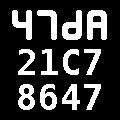
I don't know; the closest I've got to that is designing part of an IPA-based phonetic alphabet for a crow-like species on my conworld. I will let you guess the phonetics of {A/Cʡ͡ʜ̣ạɹ.3̠/ị}.
Edit: missed a tie bar.
Edit: missed a tie bar.
LZ – Lēri Ziwi
PS – Proto Sāzlakuic (ancestor of LZ)
PRk – Proto Rākēwuic
XI – Xú Iạlan
VN – verbal noun
SUP – supine
DIRECT – verbal directional
My language stuff
PS – Proto Sāzlakuic (ancestor of LZ)
PRk – Proto Rākēwuic
XI – Xú Iạlan
VN – verbal noun
SUP – supine
DIRECT – verbal directional
My language stuff

Re: Alternate-universe IPA
This sounds extremely fascinating, but I'd have no idea how to even start doing something like that.
-
/ˌnɐˈɾɛndɚduːd/
- Posts: 369
- Joined: Tue Feb 11, 2025 7:47 pm
- Location: now you see me, now you
Re: Alternate-universe IPA
I have actually wondered about this myself. early on last year I discovered the whole idea for an alternate timeline in which Ming China discovers and colonizes the Americas instead of European powers, and I wondered to myself what everyday life would look like if we all spoke Mandarin instead of English. part of that was wondering what conlanging would be like, and in turn the IPA. while I haven't actually come up with any ideas, this is my excuse to do so!
edit: fixed a grammar issue.
edit: fixed a grammar issue.
also known as, 'notenderdude' or any variation thereof.
terminally in search of who asked.
terminally in search of who asked.
-
zompist
- Site Admin
- Posts: 4373
- Joined: Sun Jul 08, 2018 5:46 am
- Location: Right here, probably
- Contact:
Re: Alternate-universe IPA
The closest to this in the real world is probably Cyrillic phonetic alphabets.
Honorable mention to the ʼPhags-pa script, which could be equally used for Mongolian, Chinese, Tibetan, Uyghur, and even Sanskrit.
Honorable mention to the ʼPhags-pa script, which could be equally used for Mongolian, Chinese, Tibetan, Uyghur, and even Sanskrit.
Re: Alternate-universe IPA
Cool. For the longest time, I wondered how one might transcribe my click-using conlangs into Cyrillic and now I have one possible answer. Admittedly it differs greatly from my expectations.
Intelligentia artificiālis dēlenda est.
Idiot America | He/him
Idiot America | He/him
-
linguistcat

- Posts: 598
- Joined: Sun Jul 08, 2018 12:17 pm
- Location: Utah, USA
Re: Alternate-universe IPA
Could be fun trying to make one based on Japanese kana (maybe a mix of both hiragana and katakana, including odd uses of daku- or handakuten, and small kana). Though I think it would be hard to start off, and it still would make use of basic mora unless forced to use phonemes directly.
A cat and a linguist.
Re: Alternate-universe IPA
For a development from Chinese ideographs, there is Bopomofo.
Re: Alternate-universe IPA
Nice! How many Verdurian phonetic alphabets are you waiting to tell us about?zompist wrote: ↑Thu Jan 29, 2026 6:15 pm The closest to this in the real world is probably Cyrillic phonetic alphabets.
Honorable mention to the ʼPhags-pa script, which could be equally used for Mongolian, Chinese, Tibetan, Uyghur, and even Sanskrit.

mais grand il tour, mais rapid e fort e spes caze la merda
-
zompist
- Site Admin
- Posts: 4373
- Joined: Sun Jul 08, 2018 5:46 am
- Location: Right here, probably
- Contact:
Re: Alternate-universe IPA
Kana is admirable for representing Japanese. I think it would be a mess for a general system. It'd be a forest of diacritics.linguistcat wrote: ↑Fri Jan 30, 2026 11:45 am Could be fun trying to make one based on Japanese kana (maybe a mix of both hiragana and katakana, including odd uses of daku- or handakuten, and small kana). Though I think it would be hard to start off, and it still would make use of basic mora unless forced to use phonemes directly.
What would be easily extensible would be Hangul. It's already featural*, and has a much wider variety of vowels than kana. You could easily add another few symbols for places of articulation, and modifications for features not currently represented.
*Carl B. thinks it wasn't originally, but I think a case can be made that it's been reanalyzed, and is best explained and learned that way. Not many scripts are easier to learn than an alphabet!
-
linguistcat
- Posts: 598
- Joined: Sun Jul 08, 2018 12:17 pm
- Location: Utah, USA
Re: Alternate-universe IPA
Oh, I know it wouldn't be good for this usage, but I think it would be interesting to try.zompist wrote: ↑Fri Jan 30, 2026 3:20 pmKana is admirable for representing Japanese. I think it would be a mess for a general system. It'd be a forest of diacritics.linguistcat wrote: ↑Fri Jan 30, 2026 11:45 am Could be fun trying to make one based on Japanese kana (maybe a mix of both hiragana and katakana, including odd uses of daku- or handakuten, and small kana). Though I think it would be hard to start off, and it still would make use of basic mora unless forced to use phonemes directly.
What would be easily extensible would be Hangul. It's already featural*, and has a much wider variety of vowels than kana. You could easily add another few symbols for places of articulation, and modifications for features not currently represented.
*Carl B. thinks it wasn't originally, but I think a case can be made that it's been reanalyzed, and is best explained and learned that way. Not many scripts are easier to learn than an alphabet!
A cat and a linguist.

Re: Alternate-universe IPA
I was recently trying to put together a conversion table for Hiragana / Katakana and that already felt trauma inducing. "キョ" <KIyo> = /kyo/ vs "キヨ" <KIYO> = /kiyo/ would be difficult for those with even mild dyslexia ; more so if you are sounding out words that you have never seen before and are not expecting as the next word of a sentence.linguistcat wrote: ↑Fri Jan 30, 2026 4:05 pm Could be fun trying to make one based on Japanese kana (maybe a mix of both hiragana and katakana, including odd uses of daku- or handakuten, and small kana). Though I think it would be hard to start off, and it still would make use of basic mora unless forced to use phonemes directly.
Oh, I know it wouldn't be good for this usage, but I think it would be interesting to try.
True but Hangul has no /j/ + "ㅡ" jamo equivalent. There is no currently existing program to compose special hangul symbols into syllabic blocks.zompist wrote: ↑Fri Jan 30, 2026 3:20 pm Kana is admirable for representing Japanese. I think it would be a mess for a general system. It'd be a forest of diacritics.
What would be easily extensible would be Hangul. It's already featural*, and has a much wider variety of vowels than kana. You could easily add another few symbols for places of articulation, and modifications for features not currently represented.
*Carl B. thinks it wasn't originally, but I think a case can be made that it's been reanalyzed, and is best explained and learned that way. Not many scripts are easier to learn than an alphabet!
-
WeepingElf

- Posts: 2486
- Joined: Sun Jul 15, 2018 12:39 pm
- Location: Braunschweig, Germany
- Contact:
Re: Alternate-universe IPA
My Elves use a featural alphabet to write Old Albic, and a bard-dialectologist has developed extensions of this alphabet to write sounds in various dialects that do not occur in Classical Old Albic. Not a full-fledged phonetic alphabet, more of a phonemic alphabet. However, I haven't worked it out yet. What I do have worked out is the International Hesperic Alphabet, a repository of digraphs and diacritics for making compatible phonemic transcriptions of Hesperic languages.