Wetland Nodes and Colossal Bridges: the Urban Pattern of the Mid to Lower Svetla
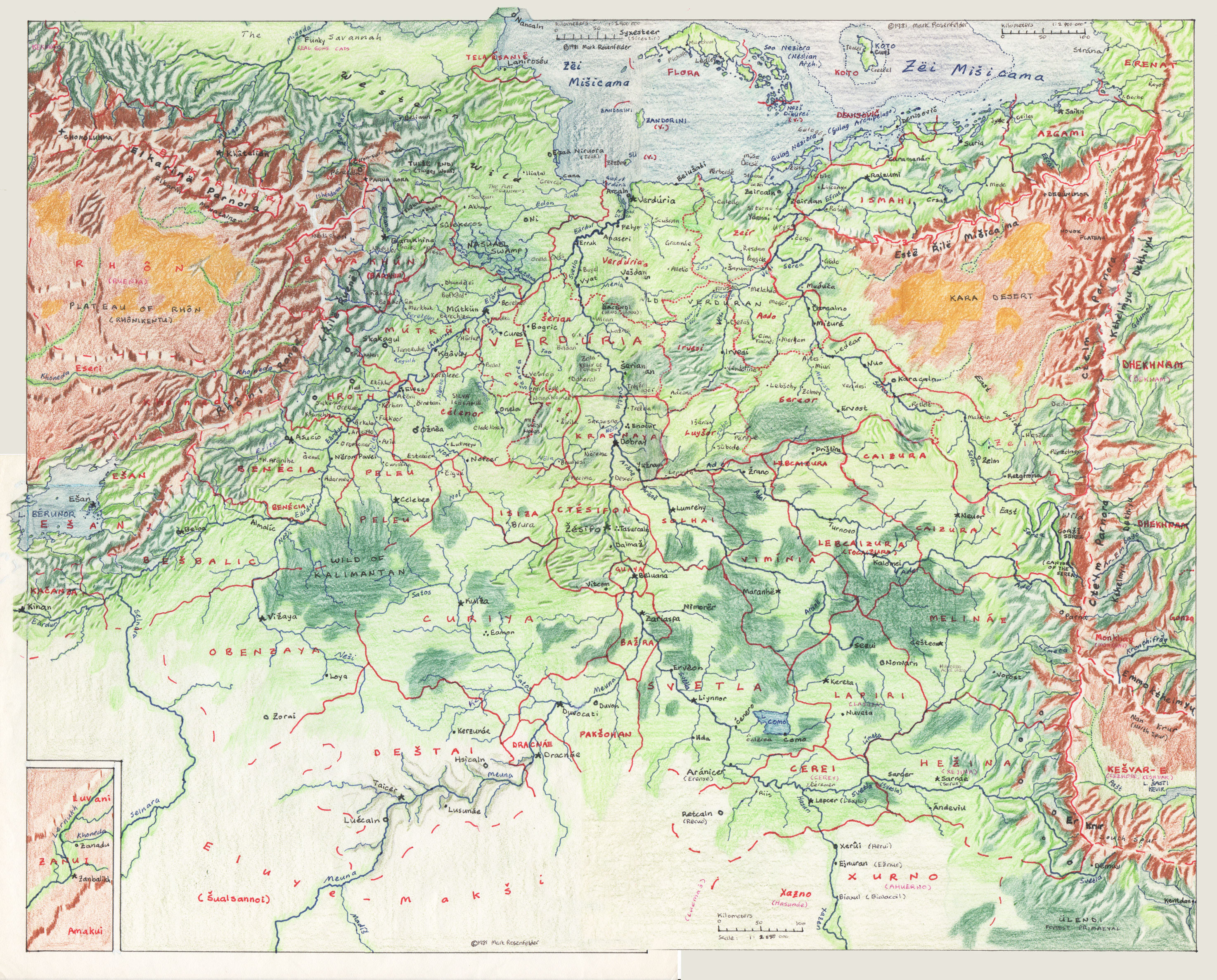
Aenocur, Šerian, Ulian, Cantiego/Vyat, and Anaseri: the five locations on the Svetla north of Dobray where a bridge has ever stood, whether in ancient times or now. In each case, the river today is between one and three cemisî wide. How has this feat of engineering, economy and politics been achieved? And what of their hinterlands, in the midlands between Ctésifon and Arosd ‒ what inspired the wider pattern of settlement which has prevailed in this landscape for millennia?
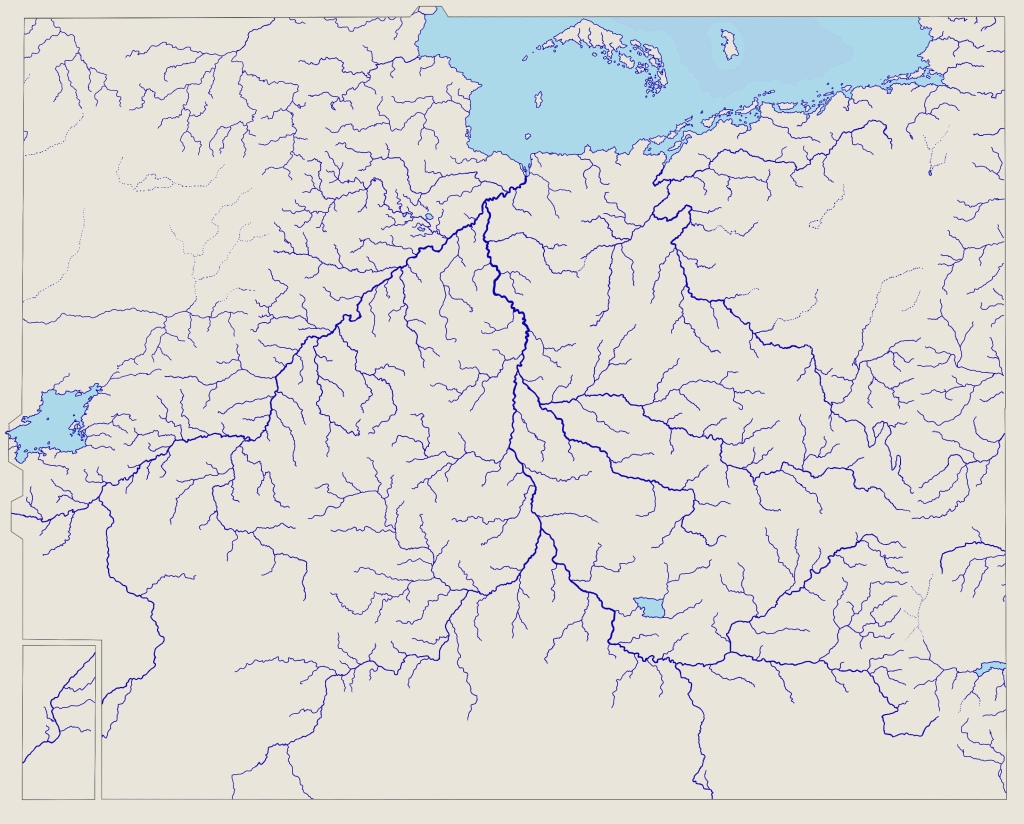
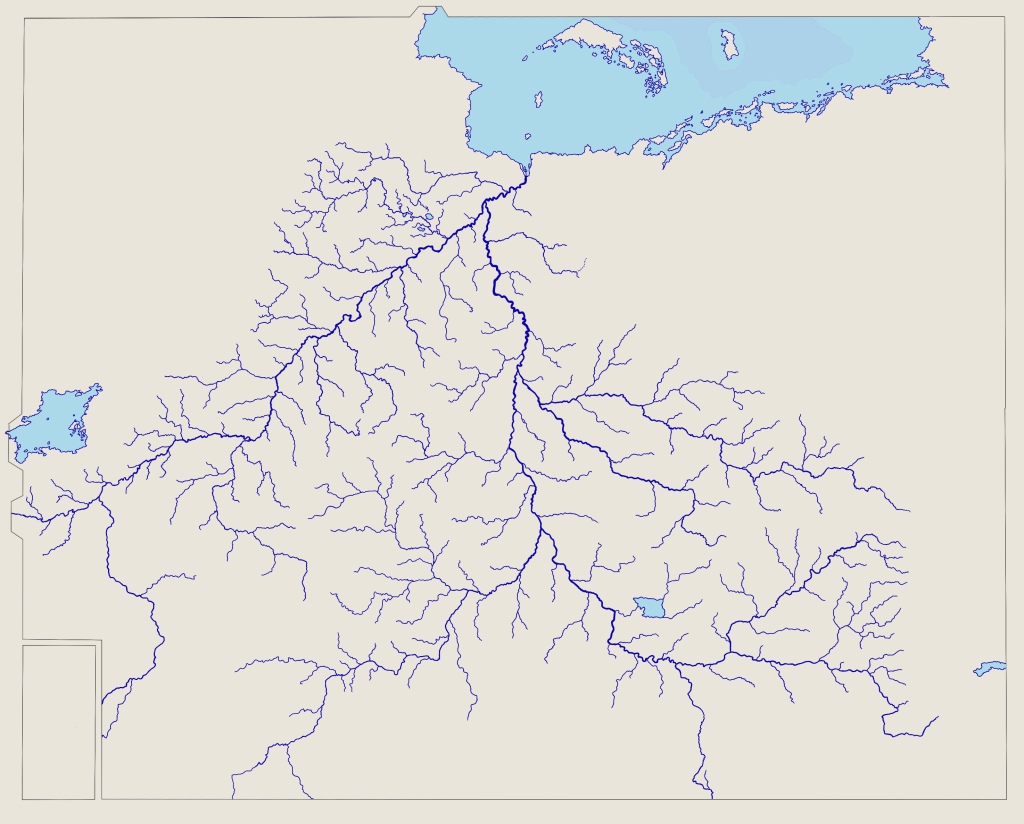
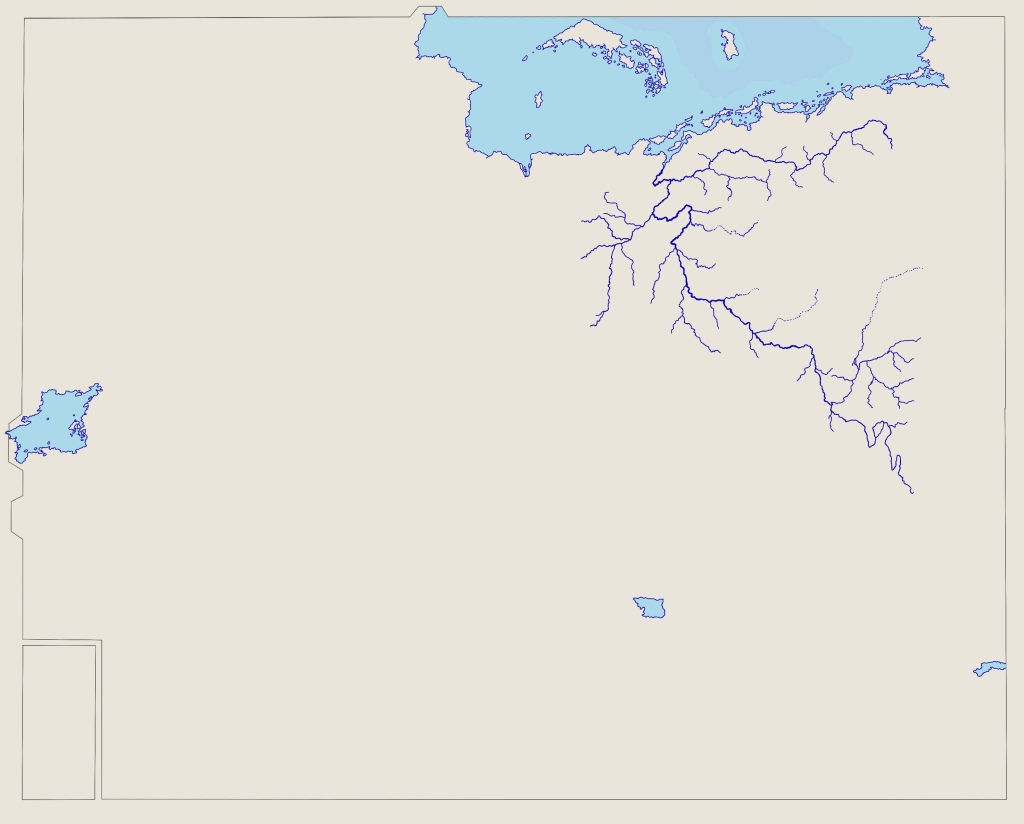
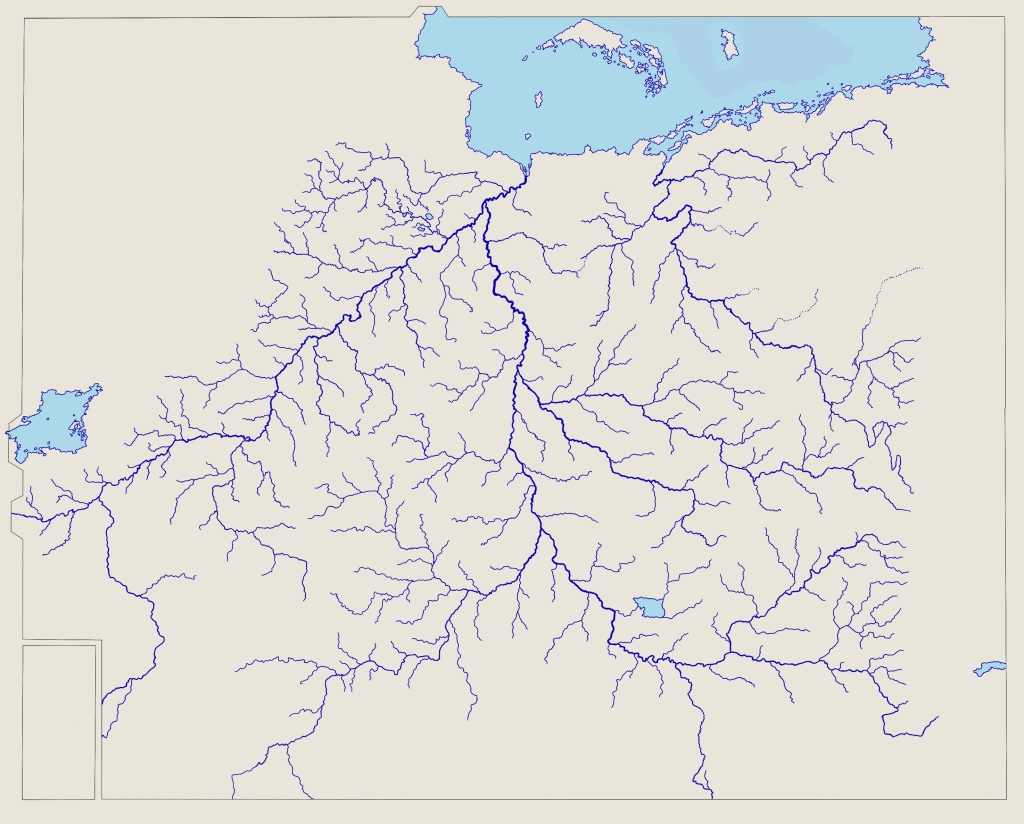
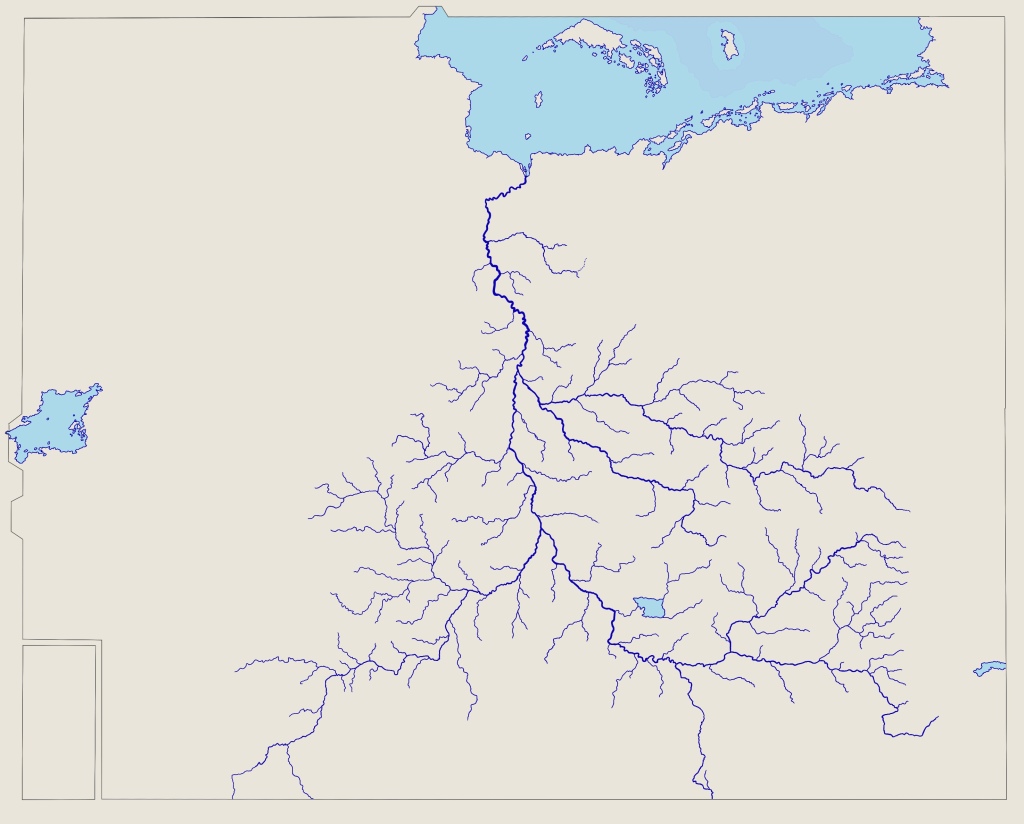
To understand the position of the towns and bridges along the middle and lower Svetla we must first understand something about the river in ancient times. The Svetla, already around a cemisa wide on average, proceeded from the Elcaďin highlands north of Ctésifon into a 100-cemisa-wide valley between the Irvesi and Curesi highlands. In doing so it widened considerably, particularly after Dobray. This was partly the result of a higher volume of water from tributaries, especially the sediment-rich Aränë/Adel, but also due to changing soils and a lessening gradient, which encouraged the banks to spread out greatly. In many places the increased width compensated for the increased flow, meaning that there were numerous sections on this (Šerian) section of the middle Svetla which were both wider and shallower than the Elcaďin section, and where many shifting islands writhed in between the waters.
After Ulian, at the northern boundary of Šerian province, the surrounding terrain morphed from a wide valley with gentle slopes and gradient into a flat plain. Here there was a much greater deposition of alluvial material, creating levees some way inland from the normal course of the river, and even wider yet shallower channels forming complex braided networks of water and land. The Meťaiun etymology of Anaseri coincides with our understanding of its ancient landscape: ‘duck place’, suggesting a wetland environment, not the deep, monolithic river of today. (Though it must be said, the ducks abundantly remain.)
No weirs, kiddles, dams, irrigation channels or bridges reduced the flow of either water or sediment. Without such obstructions withholding sediment (which increases friction, slowing the force of the flow and lessening the erosion of the riverbed), deposition was stronger than today, and erosion weaker. There was also no human intervention at all to control seasonal variations in flow, meaning that various broad sections of open water could reduce to networks of smaller channels during the drier winter – and conversely that flood-plains a dozen cemisî across might form in the wettest summers. The precise course of the river would change from year to year, flood to flood.
Imagine this environment to the early humans. It was unpredictable and hazardous, and yet those places ‒ let us call them ‘wetland nodes’ ‒ where the river yawned outwards into great, shallow, slow-flowing wetlands provided numerous opportunities. Firstly, for nutrition: fish and birds, reptiles and amphibians, game seeking to drink en masse, and a host of edible plants clustered here when the waters allowed. Secondly, the environment directly provided useful materials, such as kena reeds, thought to be used for objects as diverse as blow-darts, paintbrushes, garments, roofs and musical instruments. Thirdly, for movement: shallower, slower channels might be sequentially forded, swum or rafted much more easily, especially in winter. Our species is particularly at home in water, given our genetic ancestry. It would be a laborious, risky crossing, and far from dry ‒ but in certain braided places, these humans might cross the whole span of the river without need for watercraft, allowing access to new hunting grounds, resources, and neighbours.
To agriculturalists, the nodes provided even more valuable opportunities. Cattle, the source of early wealth, could be driven across them in relative safety, and both farmers and armies found it possible to cross to new pastures, markets and rivals, especially on horseback. The landscape inspired irrigation channels and allowed them to be easily cut, while the annual floods boosted the fertile capacity of the land. Archaeology points to a lively exchange of colourful shells originating in such places, and these and gold captured in the wetlands found their way into jewellery and ceremonial objects of the early Meťaiun settlements.
Permanent settlement was impossible at the nodes, for obvious reasons. Instead, hills and high ground close by nodes were the central places of the age; and ridges of higher land likewise provided dry passage between them. Sometimes, the high ground included river islands of rockier, higher ground outcropping from the surrounding plain. As boat-building became more advanced and people developed the capacity to navigate deep, swift, wide waters more reliably, a trinity of favourable circumstance dictated the seats of power along the river: proximity to wetland nodes, defensible/traversable high ground, and natural wharves on the riverbanks where numerous boats could put in at once. We can call these ‘enhanced nodes’. They were hubs of transition between the rhythms of the land and the axis of water.
A list of places scoring well against these criteria, where known, corresponds to many of the town locations we will consider in this paper. Perhaps unsurprisingly, four items from the list we began with ‒ Šerian, Vyat, Aenocur and Anaseri ‒ comprise, to our knowledge, the most quintessential of them on the ancient river north of Ctésifon. Dobray and Ulian count as special cases. We can then consider a second tier of central places: locations that have never hosted a bridge, but meet the criteria to a lesser extent. For instance, Erruk had defensible high ground and natural wharves, and commanded river travel, but did not possess shallow, slow channels, which accounts for the lack of evidence of its importance in the early period.
Another important consideration in the prominence of our five is their hinterlands. The general condition of the land in such early times is difficult to comprehend. Great tracts of forest shadowed the land and precluded movement, especially in upland areas. No hard roads can be proven to predate the Easterners, so the thin parcels of land not shrouded by forest upon which people might live were connected, if at all, by water or mere dirt tracks. Even in forest zones, then, the very floods that frustrated settlement enabled communication, through suppressing tree-growth and creating open meadows alongside the larger water courses. Winter was invariably easier for moving any distance overland: it was less waterlogged, and vegetation had died back somewhat.
The drier valleys and the northern plain contained natural grasslands, in some cases extensive, as well as outcrops of woodland. These were, at first, the areas most suitable for agriculture, by virtue of not being covered already with forest.
Only with the spread of agriculture and metallurgy did this condition of the land change. Grazing animals, particularly goats and sheep, cleared upland pastures, such that communications became generally possible where the land sustained high elevations across distances. Minerals and exposed rock in such places drew humans up valleys and into mines and quarries. Human activity burned and felled new farmlands, encroaching deeper into the forested zones. And the alluvial meadows became criss-crossed with irrigation channels, sowed with grains and various crops, and were crunched in the mandibles of innumerable cattle.
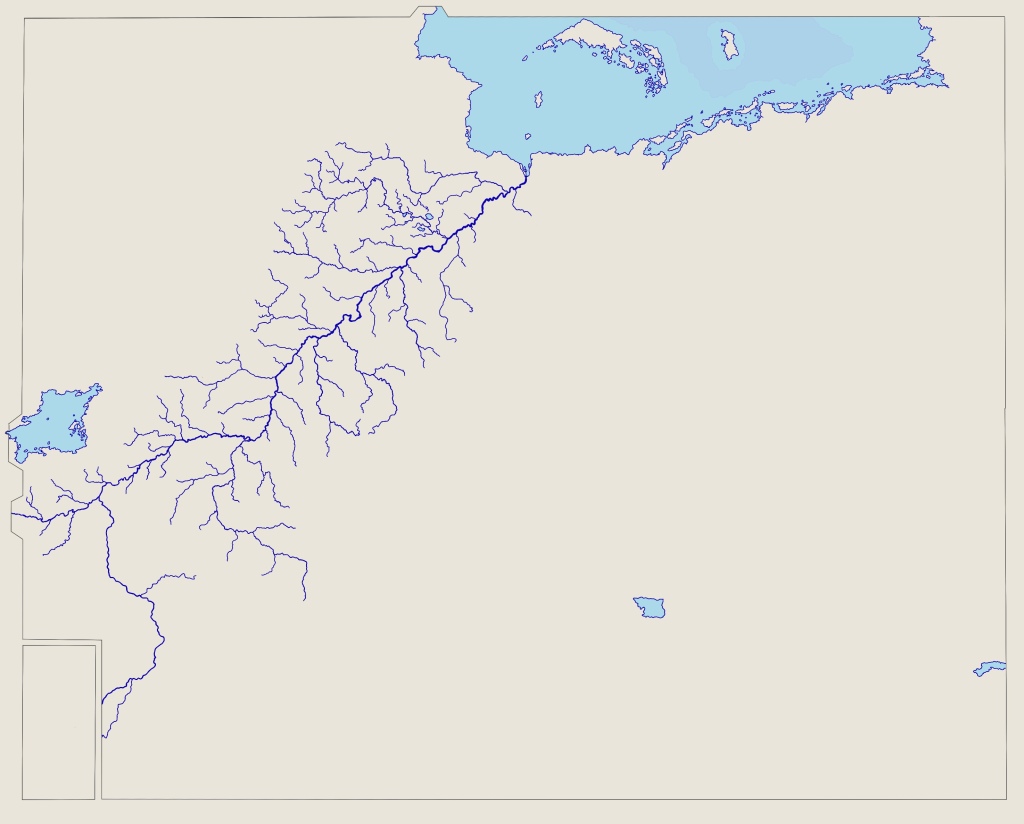
Each of our nodes controlled access to a particular network of upland, lowland and waterway: Dobray controlled the Adel/Aränë valley and access to the Curesi uplands; Šerian the Tregör and Daboral valleys and access to the Irvesi uplands; Ulian the Lažna valley and access to the Ďacendi uplands; Cantiego the Menla valley and access to the richesse of Cuzei; Anaseri the lower Eärdur valley and access to the wilds of Lácatur. All in all the worlds of the uplands, the lowlands and the rivers met in new processes, and at the meeting points of them all were our five nodes.
*
The early Caďinorians had a very different time of building riverine infrastructure in their hilly hinterland than in these mid-river stretches. But it is undoubtedly true that the infrastructure they first built upstream affected the mid and lower reaches of the river by capturing sediment, thus encouraging faster water to cut deeper channels in the riverbed. The more infrastructure was built in the Elcaďin highlands (including dams created on minor tributaries), the more the riverbed eroded, and the river deepened and narrowed in the midlands. Extensive irrigation, water capture and storage, not to mention deliberate attempts at inundation control, led to less and less variation in the extent of the annual flood. The river thinned and grew domesticated, tamed; in some places, it began almost to turn on its side, behaving more like the steady, deep channel cut through the Elcaďin section. Its caprices remained, but by the time the Caďinorians came to consider bridging the middle Svetla, it was a different river to that encountered by the early Meťaiun.
Still, the principal nodes remained as places of increased viability to cross, particularly in the drought of winter. And it is, of course, just as important to control a seasonal crossing place as it is a year-round one: no enemy will choose the part of the year to ford across a river in which it is impossible.
The first of our midland nodes to receive a bridge, and thus the first colossal bridge of ancient Eretald, was not Caďinorian, but Kahinisan. This was at Cantiego (opposite modern-day Vyat). It was built in the 800s, and chronicle reports suggest that it remained in some recognisably continuous form for around 900 years, when it collapsed in the middle of the Mezinë dynasty (1700s).
How did the ancient subjects of a pre-Imperial nation achieve such a feat? For a long time, this remained unknown, but careful scrutiny of archaeological and textual sources has recently concluded that this was a floating pontoon structure constructed of hundreds of rafts or boats laid side-to-side and fixed together underneath a wooden deck, mere feet above the surface of the water. This design probably had precedents as a method of temporary river crossings for armies, but the ingenious element innovated by the Kahinisans was to build a permanent drawbridge into it to allow ships to pass through. The foundations of the drawbridge towers rested on an island in the river, which was then dug out to form a canal. The pontoon structure was modular and could thus be adjusted as the water level changed, or to allow large fleets to pass through. We know from the chronicles that it was several times removed piecemeal into the city walls to prevent enemy armies crossing ‒ plus several times dashed to pieces by floods, several times completely rebuilt due to deterioration, and at least once burned down. We can also assume that it was under constant renovation. These events were never, however, the end of the bridge: that was the collapse of the stone towers that supported the drawbridge, an event conjectured by some to be connected with an earthquake which likely rewrote the structure of the rock on which the towers and canal were founded. The new Vyat bridge, of far more robust construction and a clearance high enough for coronî to pass beneath, was not added until the 2240s by Emperor Irun Banda, leaving over four centuries without a bridge anywhere over the middle Svetla.
Thus for 900 years, traffic on the Svetla went through the bottleneck of the Cantiego drawbridge. It is this more than any other factor that ensured the prominence and prosperity of Cantiego in the period after the bridge’s construction. It could be fiddly to wait one’s turn and navigate the drawbridge in a safe and orderly fashion, and there is evidence that crews often opted to dock in Cantiego until the bridge was quiet.
TBC

 But I can't spend much more time on it right now, I've been fairly obsessed with it all for days and probably need to do some other stuff for a bit. Thank you both so much for all your extremely helpful comments ‒ which, don't worry, I have heard ‒ I'm glad you like the drawings zomp, and I'll come back to this properly in a few days if I can.
 I got the scale way off wrt the number of people who'd fit on a vessel like this (as zomp suggested the other day, I wasn't visualising it right). Ditto, I think, the number and regularity of journeys in this period. But I must say a lot of this is based on a bit of a miscommunication: I absolutely never saw the ‘schedule’ as I created it to be ‘binding’. It's just that the river has a speed, and if a few passengers are going to hop on, then they're going to want a rough idea of how long it's going to take them to get somewhere. The schedule itself began as a diagram for me to try to work out how long it might take to get from place to place, and I'm not seriously suggesting it would be used as a commercial document (‒ for a start, who would print it, why and where?). If it were, as zomp said, it would be purely aspirational. The word schedule gives the wrong impression of what I was doing creating and presenting it ‒ I am trying to establish how river travel works in Eretald, not trying to schedule it!