In the dialect here there is a regular but stress-and-register-dependent sound change where PRICE (which in this context is always unraised) becomes [a̟(ː)] instead of the usual [ă̟ĕ̯]~[a̟e̯] before /oʊ u w l/ (and I suspect it would also apply before /ʊ/, but I can't think of case where this sequence occurs off the top of my head), including across word boundaries such as in some common collocations such as I was and I don't (when the /d/ is elided). In careful speech, though, [ă̟ĕ̯]~[a̟e̯] is retained for PRICE in such positions.Darren wrote: ↑Mon Sep 01, 2025 3:40 pmI'll and I'm are both distinctive in AusEng too. Cannonically they both have [ɑˑe̯] (PRICE), which surfaces in I'm in slow speech, but they both tend towards more innovative pronunciations. Unlike other PRICE + /l/ rhymes, I'll is always monosyllabic (outside of very exaggerated emphasis), and both words tend to round the nucleus, lose the offglide, and shorten the nucleus; so I'm is [ɑˑe̯m] ~ [ɒˑe̯m] ~ [ɒːm] ~ [ɒm] and I'll is [ɑˑe̯ɫʷ] ~ [ɑːɫʷ] ~ [ɒːɫʷ] ~ [ɒɫʷ] (plus optional coda vocalisation). All of these things can happen to other instances of PRICE, but these two words are always several steps ahead in a given register.
Linguistic Miscellany Thread
Re: Linguistic Miscellany Thread
Yaaludinuya siima d'at yiseka wohadetafa gaare.
Ennadinut'a gaare d'ate eetatadi siiman.
T'awraa t'awraa t'awraa t'awraa t'awraa t'awraa t'awraa.
Ennadinut'a gaare d'ate eetatadi siiman.
T'awraa t'awraa t'awraa t'awraa t'awraa t'awraa t'awraa.
-
Glass Half Baked

- Posts: 195
- Joined: Fri Mar 06, 2020 6:16 am
Re: Linguistic Miscellany Thread
Found this in a Tongan grammar from 1953. In a refreshing twist on the "let's explain the phonology as a list of letters followed by pronunciations in a dead prestige dialect of English*" strategy, the author has flattened the vowel triangle into a spectrum. It's still requires no linguistic knowledge on the reader's part, but actually gives some spatial grounding to the pronunciations.

* Seriously, if I encounter one more document that starts with "The Ektarian A is similar to a southwest Hounslow A, but less coruscating and more reminiscent of a fall evening," I am going to throw a lamp.
* Seriously, if I encounter one more document that starts with "The Ektarian A is similar to a southwest Hounslow A, but less coruscating and more reminiscent of a fall evening," I am going to throw a lamp.
-
WeepingElf

- Posts: 2477
- Joined: Sun Jul 15, 2018 12:39 pm
- Location: Braunschweig, Germany
- Contact:
Re: Linguistic Miscellany Thread
Yes, phonology is a rather recent concept in grammar writing - even as late as in the 1970s, many grammars made do with a pronunciation guide (and in conlanging, it is an even later innovation).
Re: Linguistic Miscellany Thread
That does make me wonder what pronunciations of end, and, odd, and obey the writer had in mind.Glass Half Baked wrote: ↑Wed Sep 10, 2025 7:01 am Found this in a Tongan grammar from 1953. In a refreshing twist on the "let's explain the phonology as a list of letters followed by pronunciations in a dead prestige dialect of English*" strategy, the author has flattened the vowel triangle into a spectrum. It's still requires no linguistic knowledge on the reader's part, but actually gives some spatial grounding to the pronunciations.
* Seriously, if I encounter one more document that starts with "The Ektarian A is similar to a southwest Hounslow A, but less coruscating and more reminiscent of a fall evening," I am going to throw a lamp.
Yaaludinuya siima d'at yiseka wohadetafa gaare.
Ennadinut'a gaare d'ate eetatadi siiman.
T'awraa t'awraa t'awraa t'awraa t'awraa t'awraa t'awraa.
Ennadinut'a gaare d'ate eetatadi siiman.
T'awraa t'awraa t'awraa t'awraa t'awraa t'awraa t'awraa.
Re: Linguistic Miscellany Thread
Looks intermediate between RP (obey) and SSBE (end, odd) to me. Nothing particularly odd¹ about it
¹ Pun intended
LZ – Lēri Ziwi
PS – Proto Sāzlakuic (ancestor of LZ)
PRk – Proto Rākēwuic
XI – Xú Iạlan
VN – verbal noun
SUP – supine
DIRECT – verbal directional
My language stuff
PS – Proto Sāzlakuic (ancestor of LZ)
PRk – Proto Rākēwuic
XI – Xú Iạlan
VN – verbal noun
SUP – supine
DIRECT – verbal directional
My language stuff
Re: Linguistic Miscellany Thread
The reason why I ask is that in conservative RP DRESS is closer than in modern SSBE or GA, in conservative RP and GA TRAP is closer than in modern SSBE, in GA PALM and LOT are merged in most cases while in conservative RP LOT is more open than in modern SSBE, and in GA GOAT is often a monophthong (even if it is conventionally transcribed as a diphthong) while in both conservative RP and modern SSBE GOAT is a diphthong with a center starting point.
Yaaludinuya siima d'at yiseka wohadetafa gaare.
Ennadinut'a gaare d'ate eetatadi siiman.
T'awraa t'awraa t'awraa t'awraa t'awraa t'awraa t'awraa.
Ennadinut'a gaare d'ate eetatadi siiman.
T'awraa t'awraa t'awraa t'awraa t'awraa t'awraa t'awraa.
-
anteallach
- Posts: 427
- Joined: Sun Aug 12, 2018 3:11 pm
- Location: Yorkshire
Re: Linguistic Miscellany Thread
I'm pretty sure DRESS lowered before TRAP, so that there was a period of RP where they were quite close together, which fits with the image.Travis B. wrote: ↑Wed Sep 10, 2025 11:12 amThe reason why I ask is that in conservative RP DRESS is closer than in modern SSBE or GA, in conservative RP and GA TRAP is closer than in modern SSBE, in GA PALM and LOT are merged in most cases while in conservative RP LOT is more open than in modern SSBE, and in GA GOAT is often a monophthong (even if it is conventionally transcribed as a diphthong) while in both conservative RP and modern SSBE GOAT is a diphthong with a center starting point.
As for GOAT, conservative RP had an [o] allophone in some unstressed syllables, and I think obey would have been an example of that (the one I remember is November, which is a similar environment) and indeed that would explain the otherwise curious choice of a disyllabic example word.
-
Glass Half Baked
- Posts: 195
- Joined: Fri Mar 06, 2020 6:16 am
Re: Linguistic Miscellany Thread
Another monkey-wrench: even RP might be too dirty for the sort of person writing about polynesian languages a lifetime ago. It's entirely possible the author (Churchward, in case anyone's interested) meant Platonic ideals of these vowels: ɛ, æ, ɔ, o, regardless of whether anyone pronounced them that way. Linguists in those days were constantly expecting their readers to engage with the text through the medium of an invented ahistorical English, a conlang we might call "Bookese." For example, second person singular forms are often glossed as "thou _est," even though the rest of the text is full of features that post date the loss of thou in ordinary speech.
My point is, you're trying to do anthropology on real world dialects when you should be studying the rhetorical man-traps academics used to build for fun.
My point is, you're trying to do anthropology on real world dialects when you should be studying the rhetorical man-traps academics used to build for fun.
Re: Linguistic Miscellany Thread
To be fair this is easier than writing "you are (singular)" vs. "you are (plural)", especially when people were very familiar with KJV English.Glass Half Baked wrote: ↑Fri Sep 12, 2025 6:31 amFor example, second person singular forms are often glossed as "thou _est," even though the rest of the text is full of features that post date the loss of thou in ordinary speech.
Re: Linguistic Miscellany Thread
I understood some of those words, but given the context, can <e> of <end> stand for anything other than [ɛ]? [ɪ] is presumably already covered, so no pin-pen merger.Travis B. wrote: ↑Wed Sep 10, 2025 11:12 amThe reason why I ask is that in conservative RP DRESS is closer than in modern SSBE or GA, in conservative RP and GA TRAP is closer than in modern SSBE, in GA PALM and LOT are merged in most cases while in conservative RP LOT is more open than in modern SSBE, and in GA GOAT is often a monophthong (even if it is conventionally transcribed as a diphthong) while in both conservative RP and modern SSBE GOAT is a diphthong with a center starting point.
the game
Re: Linguistic Miscellany Thread
I understood some of those words, but given the context, can <e> of <end> stand for anything other than [ɛ]? [ɪ] is presumably already covered, so no pin-pen merger.Zju wrote: ↑Fri Sep 12, 2025 4:12 pm The reason why I ask is that in conservative RP DRESS is closer than in modern SSBE or GA, in conservative RP and GA TRAP is closer than in modern SSBE, in GA PALM and LOT are merged in most cases while in conservative RP LOT is more open than in modern SSBE, and in GA GOAT is often a monophthong (even if it is conventionally transcribed as a diphthong) while in both conservative RP and modern SSBE GOAT is a diphthong with a center starting point.
[/quote]
In AusE, and allegedly in conservative RP, DRESS is/was [e], and in NZE DRESS is [ɪ] but does not merge with KIT as KIT is centralized and lowered to [ə]. For myself, DRESS when not before /d/ or being spoken carefully is [ɜ(ː)] (note that it is not pronounced the same as SSBE NURSE, as it is still a bit front of center in many cases, and it has no rounding or sulcalization, whereas SSBE NURSE is often a bit sulcalized).
Yaaludinuya siima d'at yiseka wohadetafa gaare.
Ennadinut'a gaare d'ate eetatadi siiman.
T'awraa t'awraa t'awraa t'awraa t'awraa t'awraa t'awraa.
Ennadinut'a gaare d'ate eetatadi siiman.
T'awraa t'awraa t'awraa t'awraa t'awraa t'awraa t'awraa.
-
zompist
- Site Admin
- Posts: 4358
- Joined: Sun Jul 08, 2018 5:46 am
- Location: Right here, probably
- Contact:
Re: Linguistic Miscellany Thread
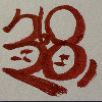
Ran into two amusingly bad translations from Mandarin. First:

It's harder to say what it should be. The text is 惊爆商品 jīngbào shāngpǐn. Translations of jīngbào include surprising, startling, explosive, unexpected. I suspect it's something like "sensational goods".
The second is from this interesting article on Chinese cookbooks. There's a dish called 口水鸡 kǒushuǐ jī . Now 口水, literally "mouth-water", means "saliva", so some book translated this as "Saliva Chicken". This is a beautiful example of a terrible literal translation. The better translation is "Mouth-watering Chicken".
It's harder to say what it should be. The text is 惊爆商品 jīngbào shāngpǐn. Translations of jīngbào include surprising, startling, explosive, unexpected. I suspect it's something like "sensational goods".
The second is from this interesting article on Chinese cookbooks. There's a dish called 口水鸡 kǒushuǐ jī . Now 口水, literally "mouth-water", means "saliva", so some book translated this as "Saliva Chicken". This is a beautiful example of a terrible literal translation. The better translation is "Mouth-watering Chicken".

-
zompist
- Site Admin
- Posts: 4358
- Joined: Sun Jul 08, 2018 5:46 am
- Location: Right here, probably
- Contact:
Re: Linguistic Miscellany Thread
The illustrator is not the author, and I don't see that the illo is intended to represent bad translations. Most of the items are simply mentioned at some point in the article.
Re: Linguistic Miscellany Thread
I've seen the name "saliva chicken" in multiple places on the Interwebs from a cursory googling.
Yaaludinuya siima d'at yiseka wohadetafa gaare.
Ennadinut'a gaare d'ate eetatadi siiman.
T'awraa t'awraa t'awraa t'awraa t'awraa t'awraa t'awraa.
Ennadinut'a gaare d'ate eetatadi siiman.
T'awraa t'awraa t'awraa t'awraa t'awraa t'awraa t'awraa.
Re: Linguistic Miscellany Thread
Reminds me of the "novelties" section in American grocery stores (although they refer to different things (also, have *any* of you ever referred to random frozen desserts as novelties??))
Re: Linguistic Miscellany Thread
I was taught in junior high that kyrka is a loan word from Greek kyriakon. I can't tell how accurate this is though.WeepingElf wrote: ↑Sat Aug 16, 2025 5:04 amI doubt that; it rather looks like a tendency to darken front vowels near retroflexes such as /r/. In this part of Germany, the word Kirche is pronounced something like [kɨɐçə].
My latest quiz:
Största städerna på Y i Sydamerika
Största städerna på Y i Sydamerika
-
WeepingElf
- Posts: 2477
- Joined: Sun Jul 15, 2018 12:39 pm
- Location: Braunschweig, Germany
- Contact:
Re: Linguistic Miscellany Thread
The word is ultimately from that source, but I have no idea whether it is a direct loan or not.Qwynegold wrote: ↑Thu Sep 18, 2025 5:25 amI was taught in junior high that kyrka is a loan word from Greek kyriakon. I can't tell how accurate this is though.WeepingElf wrote: ↑Sat Aug 16, 2025 5:04 amI doubt that; it rather looks like a tendency to darken front vowels near retroflexes such as /r/. In this part of Germany, the word Kirche is pronounced something like [kɨɐçə].
Re: Linguistic Miscellany Thread
Often the answer is just a Google away...WeepingElf wrote: ↑Thu Sep 18, 2025 6:26 amThe word is ultimately from that source, but I have no idea whether it is a direct loan or not.
Google AI wrote:The Swedish word kyrka, meaning "church," comes from Old Norse kirkja, which in turn derives from Old English cirice and Late Proto-West Germanic kirikā. This Germanic root word was borrowed from the Byzantine Greek kuriakón (dóma), meaning "Lord's (house)," ultimately from the Ancient Greek kúrios, meaning "lord".
JAL
Re: Linguistic Miscellany Thread
The question is why the rounded vowel in Swedish kyrka and the alternate ON form kyrkja? As mentioned there is also an alternate OE form cyrice which this may have been borrowed from. But whence cyrice if cirice came from PWGmc *kirikā? That leads me to thinking that this may have been under the influence of the Byzantine Greek form's use of <ῡ> rather than its actual pronunciation in Byzantine Greek.jal wrote: ↑Thu Sep 18, 2025 6:43 amOften the answer is just a Google away...WeepingElf wrote: ↑Thu Sep 18, 2025 6:26 amThe word is ultimately from that source, but I have no idea whether it is a direct loan or not.
Google AI wrote:The Swedish word kyrka, meaning "church," comes from Old Norse kirkja, which in turn derives from Old English cirice and Late Proto-West Germanic kirikā. This Germanic root word was borrowed from the Byzantine Greek kuriakón (dóma), meaning "Lord's (house)," ultimately from the Ancient Greek kúrios, meaning "lord".
Yaaludinuya siima d'at yiseka wohadetafa gaare.
Ennadinut'a gaare d'ate eetatadi siiman.
T'awraa t'awraa t'awraa t'awraa t'awraa t'awraa t'awraa.
Ennadinut'a gaare d'ate eetatadi siiman.
T'awraa t'awraa t'awraa t'awraa t'awraa t'awraa t'awraa.