Breaking your bones in a Winter Wonder Land

Topics that can go away
User avatar
Raphael
Posts: 6958
Joined: Sun Jul 22, 2018 6:36 am

Breaking your bones in a Winter Wonder Land

Post by Raphael »

From a recent discussion in the Contradictory Feelings Thread:
Raphael wrote: Thu Jan 08, 2026 12:52 am They say there'll be an ice storm here soon They say there'll be an ice storm here soon They say there'll be an ice storm here soon...
Lērisama wrote: Thu Jan 08, 2026 1:49 am Presumably the one just leaving us? It wasn't too bad, although we didn't even get any snow, which was concentrated in the east, weirdly.
Raphael wrote: Thu Jan 08, 2026 8:29 am But that's the thing, isn't it? If you have or want to do stuff that involves leaving the house, walking somewhere or taking public transportation somewhere or driving somewhere, rain that freezes as soon as it hits the ground can easily be worse than snow. And that's apparently what they "promised" us here.
Lērisama wrote: Thu Jan 08, 2026 10:23 am It's usually called “freezing rain” in English, or at least that's what the weather reports say. And yes, it's an utter pain/safety risk¹

¹ Although weirdly satisfying when it lands on already settled snow like back in 2018, I think it was
Travis B. wrote: Thu Jan 08, 2026 10:39 am I hate freezing rain, much more so than snow. Far more dangerous as a whole, I'd say.
WeepingElf wrote: Thu Jan 08, 2026 12:00 pm Yes, freezing rain is worse than snow. Snow is a nuisance; freezing rain makes it almost impossible to leave the house.
Raphael wrote: Thu Jan 08, 2026 12:44 pm Agreed.

(Note to people reading this from somewhere in the warmer parts of the planet, if any are - perhaps, if I stay in the mood for it, later tonight I might post a quick overview of different kinds of freezing weather and their various practical impacts, a a reference for people who don't know about these things from personal experience.)
Lērisama wrote: Thu Jan 08, 2026 1:31 pm In that case, might it be worth splitting off a “freezing weather thread?”
Post coming soon...
User avatar
Raphael
Posts: 6958
Joined: Sun Jul 22, 2018 6:36 am

Re: Breaking your bones in a Winter Wonder Land

Post by Raphael »

So here's what I wrote after that discussion:

This is meant as a brief overview of what it can mean for you, physically, if temperatures where you are get close to or drop below freezing. I'm writing it because I think it might be interesting or useful for people from warmer places who have little or no experiences with freezing weather themselves, and who want to know how that's like - perhaps for fiction they're working on. Perhaps it might even be useful as a conworlding resource.

So, some basics. The freezing point of non-salty water at the usual air pressures of places that aren't too high above sea level is at or very close to a temperature that's called zero degrees in Celsius and 32 degrees in Fahrenheit. (Yes, physicists, I know. You can stop yelling at me. I know that I'm grossly oversimplifying things. I'm trying to use everyday terminology here.) There are parts of the world where it never or almost never gets that cold; there are parts of the world where it sometimes gets that cold; and there are parts of the world where it's often or even always that cold.

The two main interesting forms that water takes at freezing temperatures are solid ice and snow. Solid ice is a very hard and very heavy substance that can sometimes be transparent - mainly when the piece of ice you're dealing with is small or thin - but is often white. It also has the annoying feature that its surface is extremely smooth and slippery, so that it's often difficult or impossible to get any kind of grip on it.

I'm too lazy to explain in detail what exactly snow is, from the perspective of physicists, here. Let's just say that it's usually quite soft, at least when it has fallen recently, and white, except if it has gotten dirty. It can sometimes be a kind of powder, but more often, at least where I live, it has a texture that makes it clump.

When liquid water freezes, you usually end up with solid ice. Getting snow is a lot more complicated. Most of the time, it only happens inside clouds, though there's also technology to do it artificially these days.

As far as I know, what I'm about to write now is not something specialists say; it's a classification I've invented for this post. (Correct me if other people have come up with it before.) But I think for practical purposes, freezing weather can be divided into at least three main scenarios:

1) It's a little bit below freezing, or perhaps things move back and forth between a little bit below freezing and a little bit above freezing.

2) It's a few degrees below freezing for a while.

3) It's many degrees below freezing for a while.

All three of these scenarios have their upsides and their downsides. I only have experiences with the first two scenarios myself (at least as far as I can remember), because I've never been to places where the third scenario is common.

The main problem with the first scenario is that you might get really a lot of thin layers of ice on the ground and other surfaces outside. Perhaps you get rain, and then the rain freezes when it hits the ground. That's called "freezing rain". Or perhaps you get some snow, and then it melts, and then it freezes again, becoming a layer of ice.

That is really bad, because ice is so slippery. Cars often can't drive any more, and people often can't walk any more. It can become seriously difficult for life to go on.

Now, you can try to mitigate ice by spreading sand on the ground, to give people and cars some chance of getting a grip. But there are limits to how well that works. Another possible method is to spread salt on the ground. Salty water freezes at a somewhat lower temperature than fresh water, so if it's no more than a few degrees below freezing, you can try to melt ice by putting salt on it. Of course it only makes sense to even prepare to do that in places where Scenarios 1 and 2 are fairly common, and Scenario 3 is less common.

In Scenario 2, you're more likely to get a fair amount of snow. This has the advantage that it's usually less slippery than ice. You can still slip and fall if you're walking on snow, though, or get wheelspin if you're driving a car. And of course your car might get stuck, and you might find it difficult to walk. Cars will usually drive slowly, and people will usually walk carefully.

In both Scenario 1 and Scenario 2, people can and often do use antifreeze, a special chemical mixture which is liquid and freezes at lower temperatures than water, to keep water in places where it's exposed to cold from freezing. De-icing sprays can remove ice from windows and windshields. There are limits to how cold it can get for these things to keep working, though.

While freshly fallen snow is, as I mentioned, usually quite soft, once enough people have walked or cars have driven across a layer of snow, it will have been pounded into something less thick and a good deal harder, where feet barely or not at all leave footprints. That kind of snow can be slippery, though.

Places where Scenarios 1 and 2 happen can be divided into those where these scenarios usually happen a few times a year for brief time periods, and those where they happen often and for longer time periods. In the first kind of place, which is the only kind of place that I really have experience with, either of these scenarios might lead to ordinary life grinding to a halt until it gets warmer. In the second kind of place, that would be very impractical, so people there might have found better ways to cope and keep life going.

Perhaps the biggest drawback of the second scenario is that it can easily and quickly turn into the first scenario. That's less of a problem in the third scenario. Once you get to the third scenario, things can get really uncomfortable, and sometimes downright weird.

In both the first and the second scenario, you can usually leave a patch of naked skin exposed to the fresh air outside for a short time without problems. It's not most people's idea of fun, but it's doable. After all, some people like jumping into icy water naked or almost naked, too. But get far enough into the third scenario, and leaving any skin exposed to the cold becomes a worse and worse idea. It can lead to serious injuries.

Once it gets cold enough, if you're a cis man, and you're outside, and you want to go to a more or less secluded spot to urinate, you should better finish quickly, or the cold might do nasty things to your penis.

Then there's the effect of really cold temperatures on metal. Once it gets cold enough, some metals become brittle like glass, so that, if you let something made out of one of these metals drop top the ground, it will shatter like something made out of glass would.

The one advantage of Scenario 3 is that it's less likely than Scenario 2 to quickly turn into Scenario 1.

Both Scenario 2 and Scenario 3 can lead to water pipes bursting. Ice takes up a bit more space than the same amount of liquid water. If you take a liter or a gallon of liquid water and freeze it, you get more than a liter or a gallon of ice. If the water is in a pipe when it freezes, you get more ice than would fit into the pipe. So it bursts.

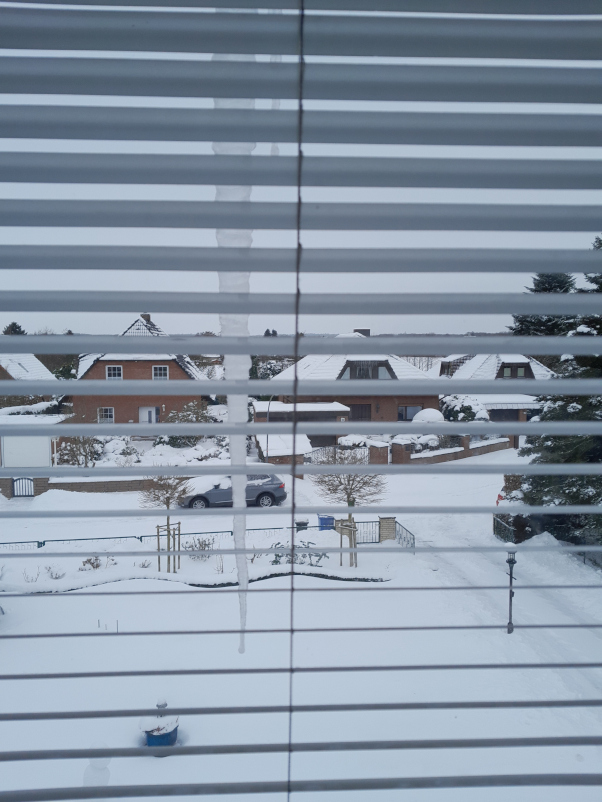
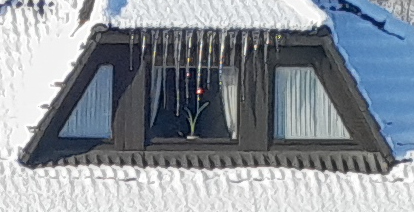
All three scenarios can, and the second and third scenario usually will, involve icicles. That is, a kind of stalactites made of ice that hang down from the edges of roofs and similar things.
icicle.jpg
icicle.jpg (213.63 KiB) Viewed 10871 times
iciclerow.jpg
iciclerow.jpg (60.47 KiB) Viewed 10871 times
If you're from a place where you know icicles mainly from movies, you might not think about them much. Depending on your aesthetic preferences, you might think of them as pretty. How can something that's made of a solid form of water and that looks pretty be worth worrying about?

But icicles are serious business. They consist of a material that is both hard and heavy, they're pointy, and they usually sooner or later fall down, sometimes from a great height, with their pointy end pointing downwards. They'll smash through your skull and your brain, and the only thing you can do about it is to try to reduce the risk by spending as little time as possible under the edges of roofs and in other places where they might form.

If there's a layer of ice on top of a lake or pond, it's possible that people, children or adults, will try to walk on the ice when it's not really strong enough to carry their weight. Perhaps just for fun, or perhaps to show off how daring they are. That is very bad. It's one of the ways to die in that kind of weather.

In my experience, children in sometimes snowy places tend to like snow a lot more than adults. I don't know how universal that is, though.

In most places where things get cold, they sooner or later get warmer again. Eventually, temperatures are above freezing. That means things can only get better for the moment, right? Not necessarily.

A minor point is the aesthetic side of things. Melting snow often looks a lot uglier than safely frozen snow. It can be very grey and dirty. Especially if it gets mixed with the sand that people had previously spread on top of it to enable walking and driving. Picturesque landscapes turn drab. But more important is the fact that a seriously snow-covered area contains a lot of what is, after all, water, in a solid form. Once it melts, you get a lot of newly liquid water in places where there previously was none. As you might guess, this can lead to problems. In places like that, at those times of the year, a certain amount of flooding is common.

That's all I can think of on this topic for now. Did I forget anything important?
Last edited by Raphael on Sun Jan 11, 2026 2:25 pm, edited 1 time in total.
bradrn
Posts: 7503
Joined: Fri Oct 19, 2018 1:25 am

Re: Breaking your bones in a Winter Wonder Land

Post by bradrn »

How cold does it generally get where you are? As far as I can tell Glasgow is firmly in category (1): I haven’t yet experienced a day where the maximum is below freezing, and I believe such days are very rare. Sydney, of course, rarely even gets into the single digits, and has no ice or snow at all.
Raphael wrote: Sun Jan 11, 2026 1:32 pm Both Scenario 2 and Scenario 3 can lead to water pipes bursting. Ice takes up a bit more space than the same amount of liquid water. If you take a liter or a gallon of liquid water and freeze it, you get more than a liter or a gallon of ice. If the water is in a pipe when it freezes, you get more ice than would fit into the pipe. So it bursts.
My coworker who used to work in Alaska has told me that in winter, when the temperature got below around -10 °C (I think it was), they needed to wrap the pipes in heaters to avoid precisely this.
Conlangs: Scratchpad | Texts | antilanguage
Software: See http://bradrn.com/projects.html
Other: Ergativity for Novices

(Why does phpBB not let me add >5 links here?)
User avatar
Raphael
Posts: 6958
Joined: Sun Jul 22, 2018 6:36 am

Re: Breaking your bones in a Winter Wonder Land

Post by Raphael »

bradrn wrote: Sun Jan 11, 2026 1:53 pm How cold does it generally get where you are? As far as I can tell Glasgow is firmly in category (1): I haven’t yet experienced a day where the maximum is below freezing, and I believe such days are very rare.
Usually Scenario 2 levels of cold once or twice a winter, including this weekend. Scenario 1 is more common, though.
Lērisama
Posts: 745
Joined: Fri Oct 18, 2024 9:51 am
Location: Kernow Voy

Re: Breaking your bones in a Winter Wonder Land

Post by Lērisama »

bradrn wrote: Sun Jan 11, 2026 1:53 pm How cold does it generally get where you are? As far as I can tell Glasgow is firmly in category (1): I haven’t yet experienced a day where the maximum is below freezing, and I believe such days are very rare. Sydney, of course, rarely even gets into the single digits, and has no ice or snow at all.
In Britian¹ is a “once in every few years” event. The last time was 2018, I think, when we got covered in a mass of Artic air for a week². I don't know whether this is being made more (because increasing extreme whether events) or less (because the average temperature rising means that you're even more unlikely to experience it in a normal year) by climate change.

¹ I believe Northern Germany is similar. edit given Raphael posting: I forgot about the lack of islandiness
² Although even then, the maxima were sometimes a tad above zero. The important thing is that it doesn't get hot enough for long enough that anything can melt – snow is a good insulator, so if snow's already fallen, then scenario 2 can maintain itself for a day or so even if the temperature alone would make you assume it's scenario 1, especially if it's cloudy enough that nothing is in direct sunlight.
LZ – Lēri Ziwi
PS – Proto Sāzlakuic (ancestor of LZ)
PRk – Proto Rākēwuic
XI – Xú Iạlan
VN – verbal noun
SUP – supine
DIRECT – verbal directional
My language stuff
User avatar
Raphael
Posts: 6958
Joined: Sun Jul 22, 2018 6:36 am

Re: Breaking your bones in a Winter Wonder Land

Post by Raphael »

Lērisama wrote: Sun Jan 11, 2026 2:24 pm
¹ I believe Northern Germany is similar. edit given Raphael posting: I forgot about the lack of islandiness
Generally speaking, the main difference between our weather and the British weather is that ours is less world famous.
Lērisama
Posts: 745
Joined: Fri Oct 18, 2024 9:51 am
Location: Kernow Voy

Re: Breaking your bones in a Winter Wonder Land

Post by Lērisama »

Raphael wrote: Sun Jan 11, 2026 2:28 pm
Lērisama wrote: Sun Jan 11, 2026 2:24 pm
¹ I believe Northern Germany is similar. edit given Raphael posting: I forgot about the lack of islandiness
Generally speaking, the main difference between our weather and the British weather is that ours is less world famous.
Britain differs in weather more than you'd think. In primary school I had a teacher who was from Up North, and when the class was excited about the yearly Westcountry ritual of talking about the prospects of snow while other areas actually get it, mentioned how when she first moved down, she was surprised when her class became completely uncontrollable when it started snowing, rather than just excited – because apparently it snows most years where she grew up, while for most of her students, what would be the first snow they would remember¹. Relatedly, snow days² for schoolchildren down here tend to be treated as some kind of right, and the rise of internet connections allowing work to be sent home is generally considered a bad thing.

¹ Barring maybe a couple of flakes that don't settle.
² The days when everyone gives up doing anything because of the (prototypically) snow.
LZ – Lēri Ziwi
PS – Proto Sāzlakuic (ancestor of LZ)
PRk – Proto Rākēwuic
XI – Xú Iạlan
VN – verbal noun
SUP – supine
DIRECT – verbal directional
My language stuff
User avatar
Raphael
Posts: 6958
Joined: Sun Jul 22, 2018 6:36 am

Re: Breaking your bones in a Winter Wonder Land

Post by Raphael »

Over here, whether a day of snow or ice is officially treated as a Snow Day tends to be decided on a case-by-case basis, depending on how serious things look. Sometimes schools close. Sometimes, when things are a bit less extreme, schools are kept open but the obligation to actually show up is temporarily suspended.

I must admit that my idea of snow and reactions to it in the Islands Off The Coast Of Western Europe is mostly based on the hilarious section on snow in the comedy book Surviving Ireland by Irish comedian Colm Tobin (not to be confused with the novelist Colm Tóibín).
bradrn
Posts: 7503
Joined: Fri Oct 19, 2018 1:25 am

Re: Breaking your bones in a Winter Wonder Land

Post by bradrn »

Lērisama wrote: Sun Jan 11, 2026 2:24 pm
bradrn wrote: Sun Jan 11, 2026 1:53 pm How cold does it generally get where you are? As far as I can tell Glasgow is firmly in category (1): I haven’t yet experienced a day where the maximum is below freezing, and I believe such days are very rare. Sydney, of course, rarely even gets into the single digits, and has no ice or snow at all.
In Britian¹ is a “once in every few years” event. The last time was 2018, I think, when we got covered in a mass of Artic air for a week². I don't know whether this is being made more (because increasing extreme whether events) or less (because the average temperature rising means that you're even more unlikely to experience it in a normal year) by climate change.
To make it even more confusing, while the worldwide average temperature will rise, the average temperature in Britain may fall due to slowdown of the Gulf stream.
Lērisama wrote: Sun Jan 11, 2026 2:43 pm the yearly Westcountry ritual of talking about the prospects of snow while other areas actually get it
Ah, over here we have that too!
Conlangs: Scratchpad | Texts | antilanguage
Software: See http://bradrn.com/projects.html
Other: Ergativity for Novices

(Why does phpBB not let me add >5 links here?)
Lērisama
Posts: 745
Joined: Fri Oct 18, 2024 9:51 am
Location: Kernow Voy

Re: Breaking your bones in a Winter Wonder Land

Post by Lērisama »

Raphael wrote: Sun Jan 11, 2026 2:59 pm Over here, whether a day of snow or ice is officially treated as a Snow Day tends to be decided on a case-by-case basis, depending on how serious things look. Sometimes schools close. Sometimes, when things are a bit less extreme, schools are kept open but the obligation to actually show up is temporarily suspended.
Here, school leaders can close their schools whenever they like¹. I haven't heard of keeping schools open but suspending the obligation to show up, but I've been to a school in the middle of nowhere⁴ and the attitude was “if you can't show up you can't show up, and there's no point telling you off for the weather conditions”

¹ Okay, I assume they have to have an actual reason, like “we don't think we can get enough staff in to meet the required ratios,”² or “the school site is dangerously slippery,” but it's up to them to make the judgement
² This is actually the main thing – it is often safer to walk than to drive³, so for a school where most of the pupils live within walking distance, if enough teachers can't get in, or can't guarantee being able to get back again, the school has to close to avoid breaking the law on supervision ratios.
³ You're smaller, and so can avoid the worst bits, not as heavy, so foot traffic doesn't compress all the air out of the snow, leaving an ice-like surface, and if it goes wrong, you're much less likely to get stuck. (This assumes the walker is able-bodied and careful)
⁴ Westcountry!
LZ – Lēri Ziwi
PS – Proto Sāzlakuic (ancestor of LZ)
PRk – Proto Rākēwuic
XI – Xú Iạlan
VN – verbal noun
SUP – supine
DIRECT – verbal directional
My language stuff
Lērisama
Posts: 745
Joined: Fri Oct 18, 2024 9:51 am
Location: Kernow Voy

Re: Breaking your bones in a Winter Wonder Land

Post by Lērisama »

bradrn wrote: Sun Jan 11, 2026 3:12 pm
Lērisama wrote: Sun Jan 11, 2026 2:24 pm
bradrn wrote: Sun Jan 11, 2026 1:53 pm How cold does it generally get where you are? As far as I can tell Glasgow is firmly in category (1): I haven’t yet experienced a day where the maximum is below freezing, and I believe such days are very rare. Sydney, of course, rarely even gets into the single digits, and has no ice or snow at all.
In Britian¹ is a “once in every few years” event. The last time was 2018, I think, when we got covered in a mass of Artic air for a week². I don't know whether this is being made more (because increasing extreme whether events) or less (because the average temperature rising means that you're even more unlikely to experience it in a normal year) by climate change.
To make it even more confusing, while the worldwide average temperature will rise, the average temperature in Britain may fall due to slowdown of the Gulf stream.
I was talking about in my lifetime, and the Gulf Stream thankfully hasn't broken down yet.
Lērisama wrote: Sun Jan 11, 2026 2:43 pm the yearly Westcountry ritual of talking about the prospects of snow while other areas actually get it
Ah, over here we have that too!
You're in Scotland. You do not get the right to comment on not getting snow. That would be like me commenting on not getting an Atlantic storm to someone in Yorkshire¹.²

¹ I.e. on the other side of the Pennines, so quite dry by UK standards
² This comment is non-serious, although it is true that we don't get any snow in an average year, while I believe Glasgow would get some
LZ – Lēri Ziwi
PS – Proto Sāzlakuic (ancestor of LZ)
PRk – Proto Rākēwuic
XI – Xú Iạlan
VN – verbal noun
SUP – supine
DIRECT – verbal directional
My language stuff
User avatar
Raphael
Posts: 6958
Joined: Sun Jul 22, 2018 6:36 am

Re: Breaking your bones in a Winter Wonder Land

Post by Raphael »

As the Scottish Culture Test put it:
It snows every winter, yet nobody in positions of authority ever seems to expect it, and there is consequently some disruption to essential services.
bradrn
Posts: 7503
Joined: Fri Oct 19, 2018 1:25 am

Re: Breaking your bones in a Winter Wonder Land

Post by bradrn »

Lērisama wrote: Sun Jan 11, 2026 3:21 pm we don't get any snow in an average year, while I believe Glasgow would get some
Oh, I didn’t realise that. Even so, Glasgow has far less snow than the rest of Scotland.
Conlangs: Scratchpad | Texts | antilanguage
Software: See http://bradrn.com/projects.html
Other: Ergativity for Novices

(Why does phpBB not let me add >5 links here?)
Lērisama
Posts: 745
Joined: Fri Oct 18, 2024 9:51 am
Location: Kernow Voy

Re: Breaking your bones in a Winter Wonder Land

Post by Lērisama »

bradrn wrote: Sun Jan 11, 2026 3:25 pm
Lērisama wrote: Sun Jan 11, 2026 3:21 pm we don't get any snow in an average year, while I believe Glasgow would get some
Oh, I didn’t realise that. Even so, Glasgow has far less snow than the rest of Scotland.
I don't think it settles every year, but I thought there's usually snowfall, while here, even that is rare. I have, however, never been to Scotland; where's Alice when you need them?
LZ – Lēri Ziwi
PS – Proto Sāzlakuic (ancestor of LZ)
PRk – Proto Rākēwuic
XI – Xú Iạlan
VN – verbal noun
SUP – supine
DIRECT – verbal directional
My language stuff
User avatar
Raphael
Posts: 6958
Joined: Sun Jul 22, 2018 6:36 am

Re: Breaking your bones in a Winter Wonder Land

Post by Raphael »

Lērisama wrote: Sun Jan 11, 2026 3:36 pm
bradrn wrote: Sun Jan 11, 2026 3:25 pm
Lērisama wrote: Sun Jan 11, 2026 3:21 pm we don't get any snow in an average year, while I believe Glasgow would get some
Oh, I didn’t realise that. Even so, Glasgow has far less snow than the rest of Scotland.
I don't think it settles every year, but I thought there's usually snowfall, while here, even that is rare. I have, however, never been to Scotland; where's Alice when you need them?
Alice! Who the ... ok, nevermind.
bradrn
Posts: 7503
Joined: Fri Oct 19, 2018 1:25 am

Re: Breaking your bones in a Winter Wonder Land

Post by bradrn »

Lērisama wrote: Sun Jan 11, 2026 3:36 pm
bradrn wrote: Sun Jan 11, 2026 3:25 pm
Lērisama wrote: Sun Jan 11, 2026 3:21 pm we don't get any snow in an average year, while I believe Glasgow would get some
Oh, I didn’t realise that. Even so, Glasgow has far less snow than the rest of Scotland.
I don't think it settles every year, but I thought there's usually snowfall, while here, even that is rare. I have, however, never been to Scotland; where's Alice when you need them?
Well, we haven’t had any snowfall yet… I hear it only happens once or twice a year.
Conlangs: Scratchpad | Texts | antilanguage
Software: See http://bradrn.com/projects.html
Other: Ergativity for Novices

(Why does phpBB not let me add >5 links here?)
Travis B.
Posts: 9855
Joined: Sun Jul 15, 2018 8:52 pm

Re: Breaking your bones in a Winter Wonder Land

Post by Travis B. »

Here in Wisconsin we've got a warm continental climate, and it is expected that there will be snow quite a few times each winter and people know how to simply live with it. Adults (who have to drive) don't like snow (as opposed to children who don't have to drive in snow) but treat it as a fact of life regardless. Despite what schoolchildren would want, though, snow days aren't simply handed out here; they only happen if snow is significantly deep or there is freezing rain (which is feared even here). Cases 1, 2, and 3 mentioned before all happen here each winter (and cases 1 and 2 are very, very frequent), and nothing special is thought of it. (As for pipes bursting, that is less common because buildings are normally designed and heated here such that that simply does not happen, and it is illegal for the power company to turn off the power in cold parts of the year.)
Yaaludinuya siima d'at yiseka wohadetafa gaare.
Ennadinut'a gaare d'ate eetatadi siiman.
T'awraa t'awraa t'awraa t'awraa t'awraa t'awraa t'awraa.
Richard W
Posts: 1736
Joined: Sat Aug 11, 2018 12:53 pm

Re: Breaking your bones in a Winter Wonder Land

Post by Richard W »

Lērisama wrote: Sun Jan 11, 2026 3:15 pm ¹ Okay, I assume they have to have an actual reason, like “we don't think we can get enough staff in to meet the required ratios,”² or “the school site is dangerously slippery,” but it's up to them to make the judgement
When I was a lad, just inside 'up North', it was usually because there was too much ice on the electricity cables supplying the village and they'd snapped. The cables could only support a few inches of ice hanging from them. No power meant no water for the toilets, so the school would be shut for hygiene reasons.
Travis B.
Posts: 9855
Joined: Sun Jul 15, 2018 8:52 pm

Re: Breaking your bones in a Winter Wonder Land

Post by Travis B. »

As for ice on lakes, people commonly walk or skate on it or even pitch tents or drive trucks on it here. Such is commonly done for ice fishing here. Note, however, that it is inevitable that a few vehicles will break through the ice and have to be pulled out someplace in the state each winter due to people miscalculating the thickness of the ice.
Yaaludinuya siima d'at yiseka wohadetafa gaare.
Ennadinut'a gaare d'ate eetatadi siiman.
T'awraa t'awraa t'awraa t'awraa t'awraa t'awraa t'awraa.
jcb
Posts: 474
Joined: Thu Jul 07, 2022 4:36 pm
Location: American Upper Midwest

Re: Breaking your bones in a Winter Wonder Land

Post by jcb »

In my experience, children in sometimes snowy places tend to like snow a lot more than adults. I don't know how universal that is, though.
As a child growing up in a place where it often snows in winter, I enjoyed winter very much, but as an adult with a job and responsibilities, I dread it, because of how it deeply complicates travelling:
  • One must shovel the snow from one's driveway.
  • One must be careful of walking on ice on driveways, parking lots, and sidewalks.
  • One must be careful when driving on snow and ice on the road.
  • One must scrape off the ice from the windows of one's car.
  • One must ensure that one's car's battery is always fully charged, especially if one doesn't have a garage to park one's car in, because batteries don't work well below -10 C, in my experience.
  • At any moment, snow could start falling and wind could start blowing, creating a storm and making the visibility required for driving quickly disappear, making safe travel simply impossible.
  • Going off the road and getting stuck in a storm is literally a life-threatening scenario.
One must account for the additional time it takes to do all this, lest one be late.
bradrn wrote: Sun Jan 11, 2026 1:53 pm How cold does it generally get where you are? As far as I can tell Glasgow is firmly in category (1): I haven’t yet experienced a day where the maximum is below freezing, and I believe such days are very rare. Sydney, of course, rarely even gets into the single digits, and has no ice or snow at all.
Raphael wrote: Sun Jan 11, 2026 1:32 pm Both Scenario 2 and Scenario 3 can lead to water pipes bursting. Ice takes up a bit more space than the same amount of liquid water. If you take a liter or a gallon of liquid water and freeze it, you get more than a liter or a gallon of ice. If the water is in a pipe when it freezes, you get more ice than would fit into the pipe. So it bursts.
My coworker who used to work in Alaska has told me that in winter, when the temperature got below around -10 °C (I think it was), they needed to wrap the pipes in heaters to avoid precisely this.
My last apartment required (as part of the contract) that in the winter we keep the heat turned on to at least a certain temperature to prevent the pipes from bursting.
Post Reply