Twin Aster

Conworlds and conlangs
bradrn
Posts: 7503
Joined: Fri Oct 19, 2018 1:25 am

Re: Twin Aster

Post by bradrn »

Man in Space wrote: Tue Oct 07, 2025 11:31 am
bradrn wrote: Mon Oct 06, 2025 9:37 am Alas, Discord links expire after a certain number of days. If you want, however, I could host them on my own server.
If you would like to, that would be most gracious.
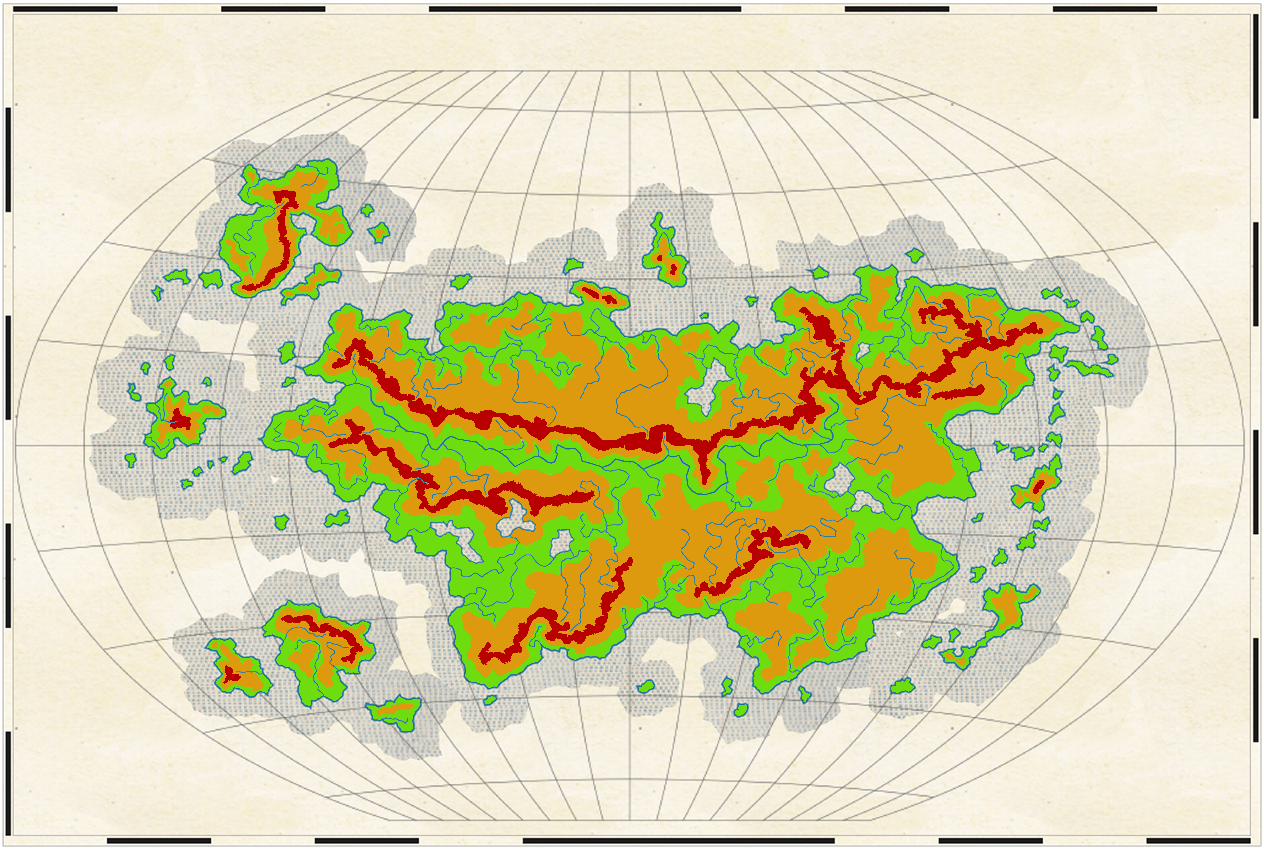
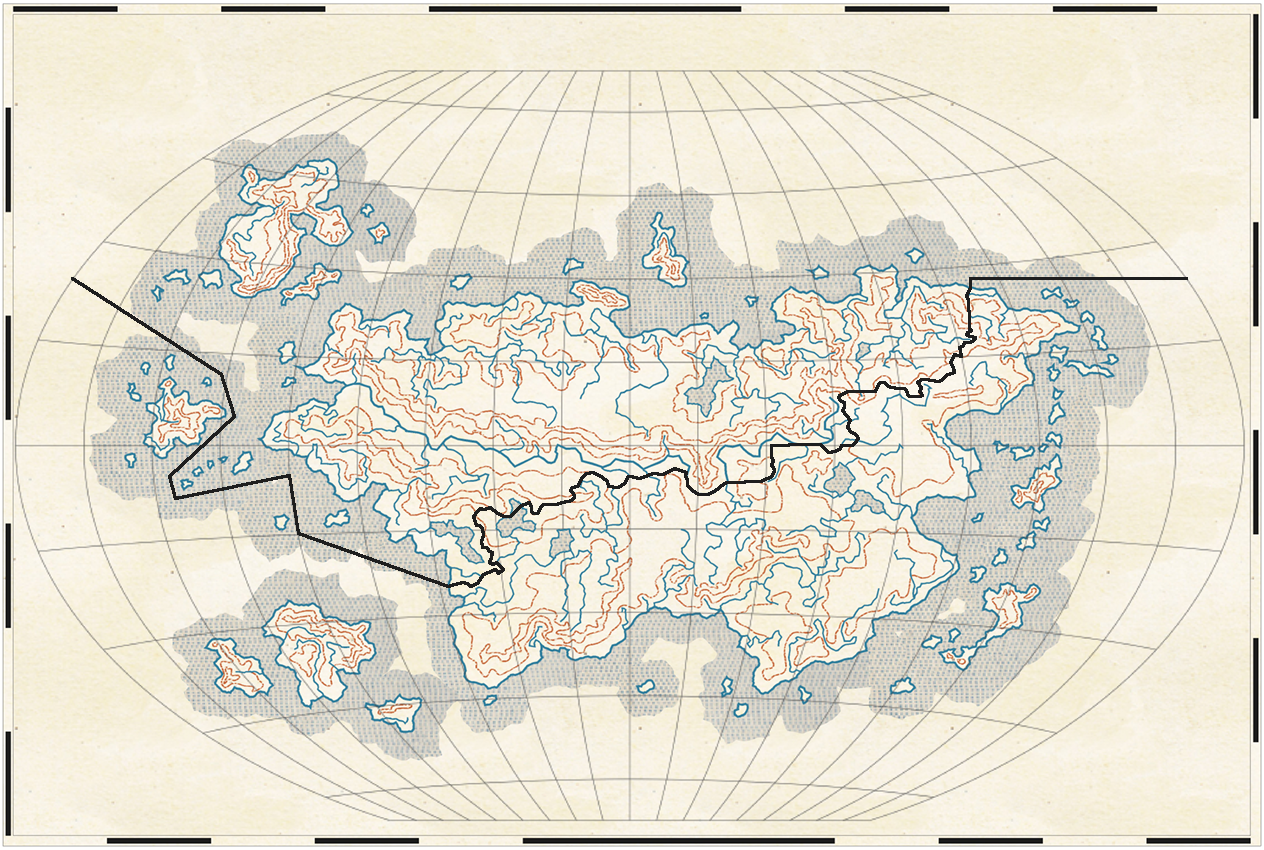
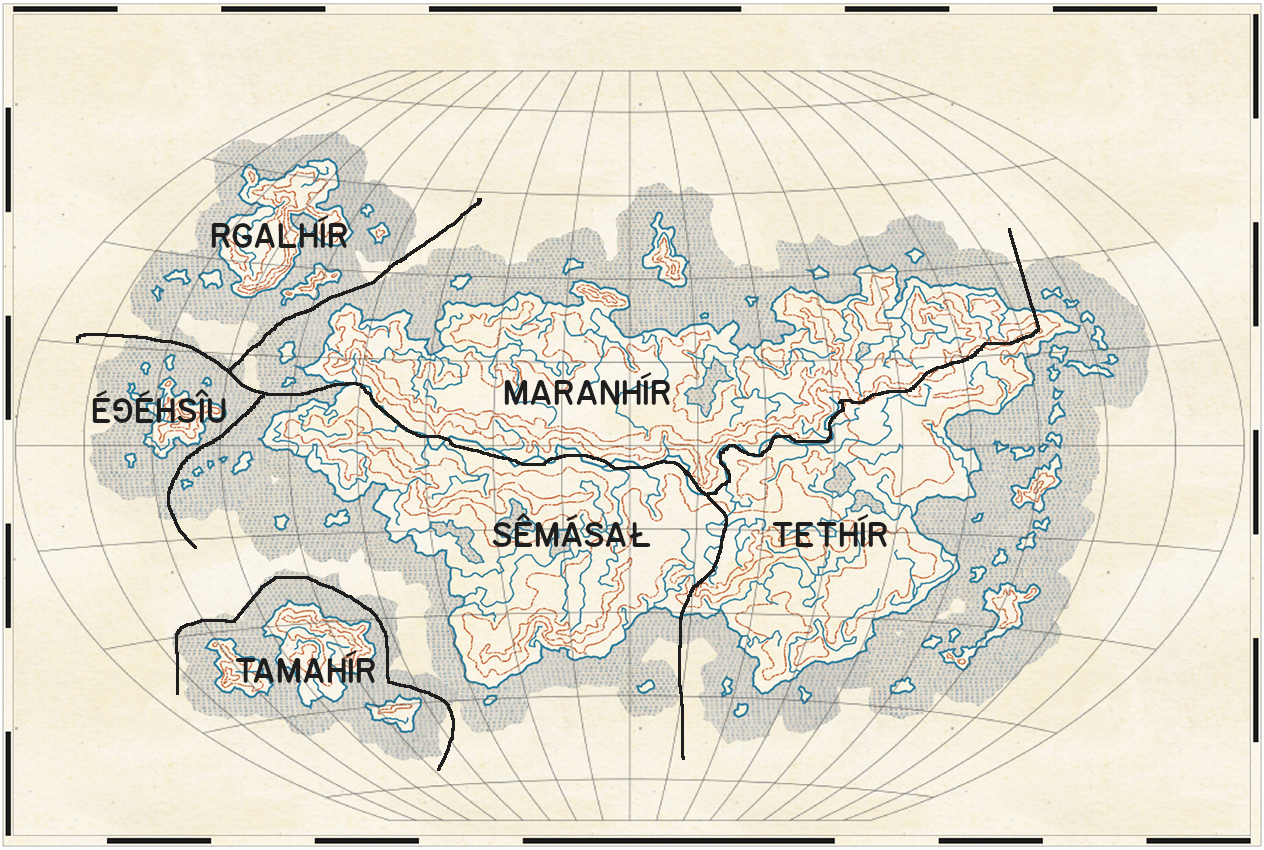
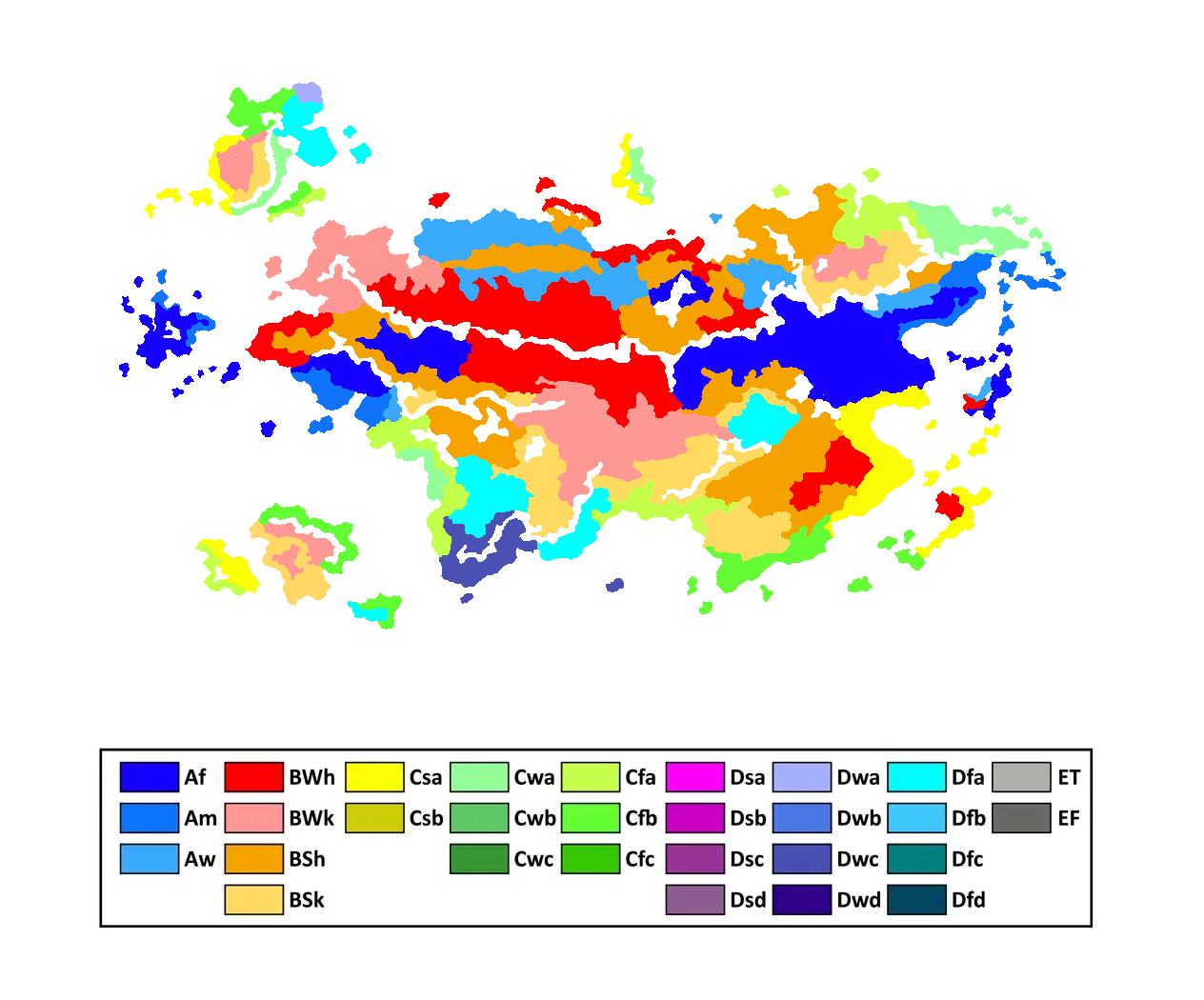
OK then, here you go:

Image

Image

Image

Image

Image
Conlangs: Scratchpad | Texts | antilanguage
Software: See http://bradrn.com/projects.html
Other: Ergativity for Novices

(Why does phpBB not let me add >5 links here?)
User avatar
sasasha
Posts: 634
Joined: Mon Aug 06, 2018 11:41 am
Location: Todmorden

Re: Twin Aster

Post by sasasha »

These are lovely!

What a river. How wide does it get?
User avatar
Axas mlö
Posts: 42
Joined: Thu Dec 12, 2024 12:13 am
Location: Luna City

Re: Twin Aster

Post by Axas mlö »

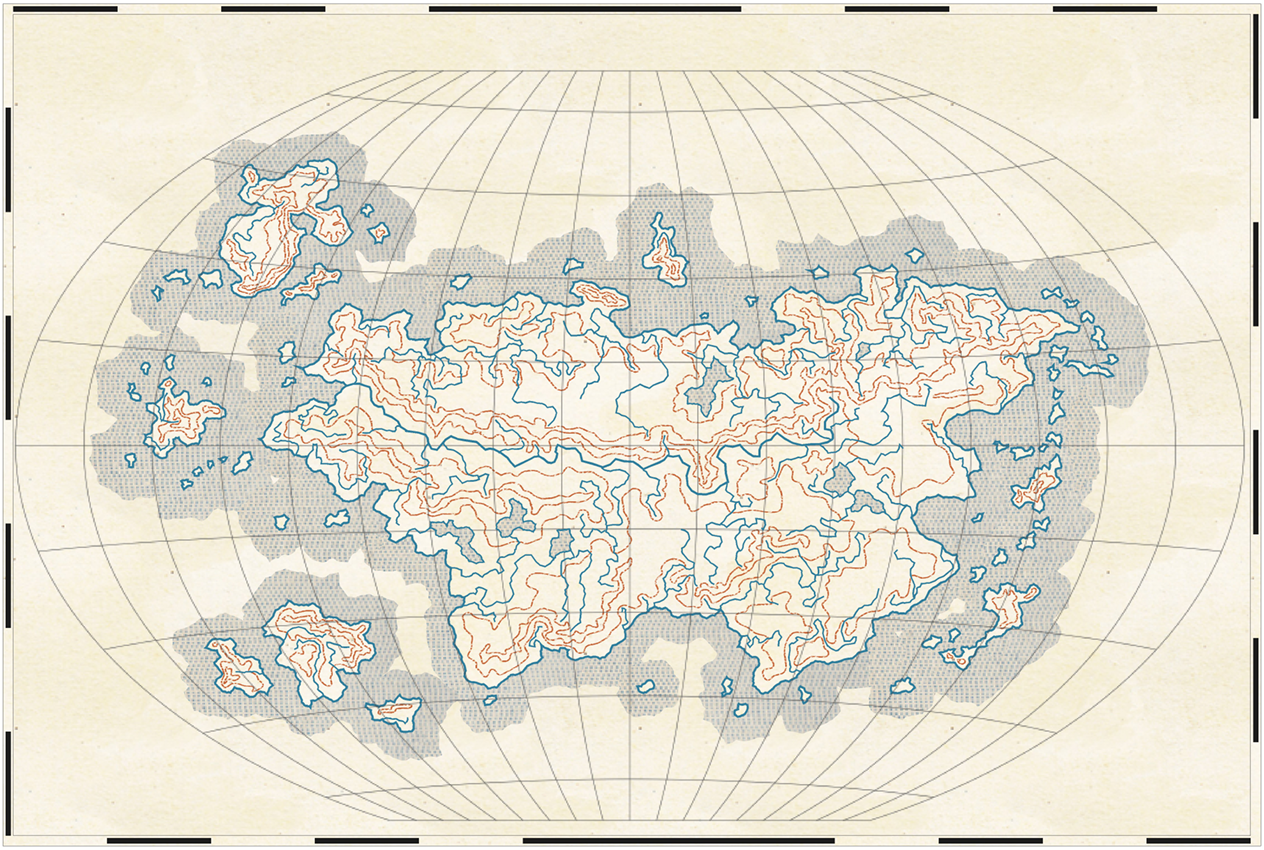
The maps are very pretty. Sorry if you've answered this already, but is that a world map, with a huge continent? But smaller regions are called continents? I notice the names don't match the names from the first post of this thread but I guess you've changed them?
Travis B.
Posts: 9855
Joined: Sun Jul 15, 2018 8:52 pm

Re: Twin Aster

Post by Travis B. »

Axas mlö wrote: Fri Oct 31, 2025 12:10 am The maps are very pretty. Sorry if you've answered this already, but is that a world map, with a huge continent? But smaller regions are called continents? I notice the names don't match the names from the first post of this thread but I guess you've changed them?
Consider that we call Europe and Asia separate continents, even though they are both part of Eurasia.
Yaaludinuya siima d'at yiseka wohadetafa gaare.
Ennadinut'a gaare d'ate eetatadi siiman.
T'awraa t'awraa t'awraa t'awraa t'awraa t'awraa t'awraa.
User avatar
Man in Space
Posts: 2434
Joined: Sat Jul 21, 2018 1:05 am

Re: Twin Aster

Post by Man in Space »

sasasha wrote: Fri Oct 10, 2025 7:20 pm These are lovely!

What a river. How wide does it get?
You know, I’m not sure. I’ve never worked it out.
Axas mlö wrote: Fri Oct 31, 2025 12:10 amThe maps are very pretty.
Thank you!
Axas mlö wrote: Fri Oct 31, 2025 12:10 amSorry if you've answered this already, but is that a world map, with a huge continent? But smaller regions are called continents?
Yes, this is correct, as is Travis’ remark:
Travis B. wrote: Fri Oct 31, 2025 8:38 amConsider that we call Europe and Asia separate continents, even though they are both part of Eurasia.
Some of the continents are more out of historical convenience than strict geology.
Axas mlö wrote: Fri Oct 31, 2025 12:10 amI notice the names don't match the names from the first post of this thread but I guess you've changed them?
Yes. Some have changed materially, some are affected by romanizational changes.
User avatar
Man in Space
Posts: 2434
Joined: Sat Jul 21, 2018 1:05 am

Re: Twin Aster

Post by Man in Space »

As I’ve previously mentioned, writing emerged multiple times in Írödian history. I’ve gone on about Caber quite a bit, but the writing that emerged in the Beheic–Khaya sphere is more enigmatic.

Part of it is that we don't know who hit upon it first.

Image Image Image Image

For instance, these are representations of iġayt’i ‘lead, command’, thukh ‘hear’, hu ‘tree’, and ĝim ‘lift’. They look pretty obvious in their derivation, right? This is not always the case; some Khaya glyphs are complete fabrications or abstractions:

Image Image Image Image

uypiĝ ‘now’, fu ‘any’, uyfali ‘granite’, p’ih ‘event’

Early CT was also significantly graphical:

Image Image Image Image

Left to right: kámr ‘city’, omína ‘lung’, êr ‘(umbilical) cord’, sar ‘eye’

The color of glyphs was meaningful:

Image

When it’s blue, it’s kélen ‘water’. When it's green, it represents mgör and means ‘seawater’.

Image

As displayed, iénhu ‘to rule, to govern’. Invert the colors and you have nte ‘be barbarous, be uncivilized’.

Image

A white cloud is omhïs; grey, it's ładn ‘stormcloud’; when blackish-brown, it's koğîğ ‘ash cloud’.

Image

The glyph for kámr ‘city’ customarily changes color depending on the nation the city belongs to. The coloring here is the “default”; when the walls are colored red, for instance, it's a Khaya city.

The colors for Khaya were more decorative; the colors for Beheic were more meaningful.
bradrn
Posts: 7503
Joined: Fri Oct 19, 2018 1:25 am

Re: Twin Aster

Post by bradrn »

Very nice! Were these inspired by Mayan and Aztec writing?
Conlangs: Scratchpad | Texts | antilanguage
Software: See http://bradrn.com/projects.html
Other: Ergativity for Novices

(Why does phpBB not let me add >5 links here?)
User avatar
Man in Space
Posts: 2434
Joined: Sat Jul 21, 2018 1:05 am

Re: Twin Aster

Post by Man in Space »

bradrn wrote: Sun Nov 02, 2025 1:38 pm Very nice! Were these inspired by Mayan and Aztec writing?
Exactly so. Khaya took cues from Mayan and CT hieroglyphics from Aztec.
User avatar
Man in Space
Posts: 2434
Joined: Sat Jul 21, 2018 1:05 am

Re: Twin Aster

Post by Man in Space »

Classical Khaya

Some context

The Khaya appeared somewhat suddenly in the historical record. And the world, it burned. They were originally displaced by volcanic activity; their supposed Urheimat was subject to large-scale tectonic upheaval due to geology reasons and remains so to this day, making excavation and investigation impractical. A lot of what we do have is on monuments and other official channels of communication. There have been some daughter scripts directly from it, as have there been multiple iterations of Tim Ar script.

Phonology

Consonants

/m n/ m n
/ⁿg ⁿɢ/ ĝ ǧ
/p pʰ p’ b t tʰ t’ d k kʰ k’ g q qʰ q’ ɢ/ p ph p’ b t th t’ d k kh k’ g q qh q’ ġ
/f s h/ f s h/
/w l j/ w l y

Vowels

/u i a/ u i a (allophones [o e] written o e; allophone [æ] not distinguished in writing)

Syllable structure

The maximal CK syllable is CVX, where C is any consonant, V any vowel, and X one of m n ĝ ǧ f h w l .

Allophonic rules
  • N > [+ same POA] / _C
  • wu ji > wo je
  • uw ij > ow ej
  • wj jw > jː wː
  • K > Q / _Q
  • Q > K / _K
  • S[+ voice] > [- voice] / _F
  • a > æ / _j
Some morphophonemics
  • Final [h] very often converts to [s] if it is made intervocalic (reflecting an original *s that subsequently debuccalized in coda position); is typically used to denote [h] that stays [h].
  • ĝ ǧ become ĝg ǧġ when geminated.

Numbers

This language counts in base twelve. Counting is done by bending the fingers in starting with the thumb. A closed fist is five, a closed fist with a thumb sticking out is six. Repeat for the other hand and you can count up to twelve.

fiĝ /fiⁿg/ [fiⁿg] ‘one’
liǧu /liⁿɢu/ [liⁿɢu] ‘two’
p’af /pʼaf/ [p’af] ‘three’
at’u /at’u/ [at’u] ‘four’
k’in /k’in/ [k’in] ‘five’
gi /gi/ [gi] ‘six’
ǧul /ⁿɢul/ [ⁿɢul] ‘seven’
ya /ja/ [ja] ‘eight’
ǧafa /ⁿɢafa/ [ⁿɢafa] ‘nine’
fi /fi/ [fi] ‘ten’
thul /tʰul/ [tʰul] ‘eleven’
wiqhu /wiqʰu/ [wiqʰu] ‘twelve’
t’im /t’im/ [t’im] ‘12²’
p’owlu /p’uwlu/ [p’owlu] ‘12³’
thuy /tʰuj/ [tʰuj] ‘12⁴’
phuim /pʰuim/ [pʰuim] ‘12⁵’

Pronouns

1SG ahi
1DL.INCL ĝu
1DL.EXCL t’aǧ
1PL.INCL mu
1PL.EXCL nil

2SG.M qu
2DL.M qilu
2PL.M qal

2SG.F qu may
2DL.F qilu may
2PL.F iqim

3SG ga
3DL ey
3PL k’uh

Dialectally, ga may, ey may, and either uk’um, ik’im, or k’uh may are sometimes used for female third-person referents.

Word order

Word order is pretty much SVO, much like Common Caber, except that you can optionally mark a topic. If the topic is, say, a direct object, it is still fronted but the appropriate pronoun is used in its place. If this is ambiguous you can replace the pronoun with the topic marker tay again; dialectally this is becoming more common in all cases.

Ga iǧġil wit’a.
ga
3SG
iǧġil
climb
wit’a
mountain

‘he climbs the mountain’

Ga tay iǧġil wit’a.
ga
3SG
tay
TOP
iǧġil
climb
wit’a
mountain

‘as for him, he climbs the mountain’

Wit’a tay ga iǧġil ga.
wit’a
mountain
tay
TOP
ga
3SG
iǧġil
climb
ga
3SG

‘as for the mountain, he climbs it’

Note that in the case of the last sentence, the overt third-person pronoun ga as the subject means that the topic is not the subject.

Most adjectives follow their referent:

wit’a ĝahtey
wit’a
mountain
ĝahtey
tall

‘tall mountain’

Numbers and the determiner way ‘this, these’ precede their noun:

way wit’a
way
DET
wit’a
mountain

‘this mountain’

fiĝ wit’a
fiĝ
one
wit’a
mountain

‘one mountain’

Degree words come before their corresponding adjective:

mukhu ĝahtey
mukhu
too
ĝahtey
tall

‘too tall’

Plurals

Plurals tend to be formed in one of the following ways.

The first, typical of stems ending in -{V,#}CV, is adding the suffix -nV, where V is an echo vowel of the final vowel in the stem. In writing this tends to be written with the glyph for nah MOON.

p’ugunu
p’ugu
leaf
-nV
PL

‘(three or more) leaves’

wit’ana
wit’a
mountain
-nV
PL

‘(three or more) mountains’

lini
li
precious_stone
-nV
PL

‘(three or more) precious stones’

The second tends to apply to open syllables following a closed syllable (-VCCV#): A syllable-final h is added. This is indicated in writing by using the glyph hu TREE.

affah
affa
nose
-h
PL

‘(three or more) noses’

t’unt’uh
t’unt’u
axe
-h
PL

‘(three or more) axes’

Syllables that end in a fricative or a nasal (or prenasalized stop) take the ending -:a, which geminates the previous consonant.

nimma
nim
river.mouth
-:a
PL

‘three or more) river mouths’

sissa
sih
hill
-:a
PL

‘(three or more) hills’

suyuĝĝa
suyuĝ
staff
-:a
PL

‘(three or more) staffs’

qhunaĝĝa
qhunaĝ
tree.sp
-:a
PL

‘(three or more) qhunaĝ trees’

ĝiffa
ĝif
ear
-:a
PL

‘(three or more) ears’

The final regular method of pluralization is the suffix -wi.

yulwi
yul
lake
-wi
PL

‘(three or more) lakes’

upuqilwi
upuqil
spear
-wi
PL

‘(three or more) spears’

wowwi
woy
feather
-wi
PL

‘(three or more) feathers’

thiwwi
they
plant.sp
-wi
PL

‘(three or more) they plants’

A few words take the suffix -y, though this is rare. There is no way to predict this, though the majority of the words that take a plural in -y are monosyllables.

huy
hu
tree
-y
PL

‘(three or more) trees’

k’ay
k’a
doorway
-y
PL

‘(three or more) doorways’

ĝuy
ĝu
finger
-y
PL

‘(three or more) fingers’

dey
di
shell
-y
PL

‘(three or more) shells’

Duals

There is much less variation in the formation of duals.

Words that end in a consonant take the suffix -u. In writing this is indicated using the full form of the appropriate phonetic complement glyph, where the ending consonant is considered the onset.

uhuyu
uhuy
hand
-u
PL

‘two hands’

theyu
they
circle
-u
DL

‘two circles’

guthawo
guthaw
claw
-u
DL

‘two claws’

khahu
khah
knife
-u
DL

‘two knives’

If the word ends in a vowel, the suffix -wo is added. This is indicated with the glyph for woy FEATHER.

uhkhowo
uhkhu
head
[goss="DL"]-wo[/gloss]
‘two heads’

ganliwo
ganli
cloud
-wo
DL

‘two clouds’

phuliwo
phuli
foot
-wo
DL

‘two feet’

ĝiqhawo
ĝiqha
insect.sp
-wo
DL

‘two ĝiqhas’

luhiwo
luhi
branch
-wo
DL

‘two sticks, two branches’

The Seven Kill Stele

Nagiĝĝa tay uya thunu eyaǧnutha sey yuhnu phayq’ih.
nagiĝ
god
-:a
PL
tay
TOP
uya
give
thu
thing
-nV
PL
eyaǧ
count
-nu
ABIL
-tha
NEG
sey
in_order_to
yuh
nourish
-nu
NMLZ
phayq’i
person
-h
PL


Phayq’ih tay ha k’uh tha ha uyayun ha nagiĝĝa.
phayq’i
person
-h
PL
tay
COP
ha
DAT
k’uh
3PL
tha
NEG
ha
DAT
uya
give
-yu
back_to
-n
NMLZ
ha
DAT
nagiĝ
god
-:a
PL


P’al. P’al. P’al. P’al. P’al. P’al. P’al.
p’al
kill
p’al
kill
p’al
kill
p’al
kill
p’al
kill
p’al
kill
p’al
kill


Verb marking

STATIVE IMPERFECTIVE

One could almost call this the ‘simple imperfective’. It's the default form of the verb.

ga uya
ga
3SG
uya
give
STAT.IMPF

‘he gives, he’s giving’

ga bat’uġ
ga
3SG
bat’uġ
know
STAT.IMPF

‘he knows’

-tha DYNAMIC IMPERFECTIVE

The dynamic imperfective emphasizes that the situation is changing or ongoing right now (for "now" meaning "at the time relevant to the utterance").

ga uyatha
ga
3SG
uya
give
-tha
DYN.IMPF

‘he is in the process of giving, he's giving right now, he's in the middle of giving’

ga bat’uġtha
ga
3SG
bat’uġ
know
-tha
DYN.IMPF

‘he learns, he's learning’

-k/-ak ITERATIVE

ga uyak
ga
3SG
uya
give
-k
ITER

‘he gives again and again, he's giving over and over’

ga bat'uġak
ga
3SG
bat'uġ
know
-ak
ITER

‘he memorizes it, he focuses on it’

-w/-u CONTINUATIVE

The difference between the continuative and the dynamic imperfective is that the continuative has the sense that the action is taking a particularly long time, and the continuative does not imply any significant change pursuant to the action.

ga uyaw
ga
3SG
uya
give
-w
CONT

‘he is still giving’

ga bat’uġu
ga
3SG
bat’uġ
know
-u
CONT

‘he still remembers it, he still knows it’

-wol PERFECTIVE

ga uyawol
ga
3SG
uya
give
-wol
PERF

‘he gave’

ga bat’uġwol
ga
3SG
bat’uġ
know
-wol
PERF

‘he knew’

You can stack aspect markers:

ga bat’uġthak
ga
3SG
bat’uġ
know
-tha
DYN.STAT
[
-k
ITER

‘he’s in the middle of memorizing it’

Some derivational morphology

-a/-ha ‘people of X’

The form -ha is used after a final -a; otherwise the form -a is suffixed. Note that the noun refers to people as a group, but is treated as a singular noun for grammatical purposes.

khay ‘plateau’ > khaya ‘people of the plateau’ (used as an endonym by the Khaya themselves)
khay
plateau
>
>
khay
plateau
-a
denizen_of


wiqhu ‘twelve’ > wiqhua ‘people of twelve, i.e. people who count in base-12’
wiqhu
twelve
>
>
wiqhu
twelve
-a
denizen_of


fi ‘ten’ > fia ‘people of ten, i.e. people who count in base-10’
fi
ten
>
>
fi
ten
-a
denizen_of


seyliq’a ‘stormcloud’ > seyliq’aha ‘people of the stormcloud’ (Seyliq’a is a toponym here)
seyliq’a
stormcloud
>
>
seyliq’a
stormcloud
-ha
denizen_of


-ni 'singular/singulative (of collective)'

This is applied to mass nouns to indicate a singular or singulative. It can be combined with -a/-ha above.

unnuh ‘soup, stew’ > unnuhni ‘serving of soup, helping of stew’
unnuh
soup
>
>
unnuh
soup
-ni
SGV


p’uǧakhu ‘sweat’ > p’uǧakhuni ‘bead of sweat, sweat droplet’
p’uǧakhu
sweat
>
>
p’uǧakhu
sweat
-ni
SGV


khaya ‘people of the plateau’ > khayani ‘one of the Khaya’
khay
plateau
-a
denizen_of
>
>
khay
plateau
-a
denizen_of
-ni
SGV


wiqhua ‘people of twelve’ > wiqhuani ‘one of the Wiqhua’
wiqhu
twelve
-a
denizen_of
>
>
wiqhu
twelve
-a
denizen_of
-ni
SGV


-khu 'characteristic substance'

thah ‘cook, prepare food’ > thaskhu ‘spice, seasoning’
thah
cook
>
>
thah
cook
-khu
substance


phan ‘grind’ > phankhu ‘flour’
phan
grind
>
>
phan
grind
-khu
substance


yuḥ 'feed, nourish' > yuhkhu 'food'
yuḥ
nourish
>
>
yuḥ
nourish
-khu
substance


p’uǧa ‘sweat (v.)’ > p’uǧakhu ‘sweat (n.)’
p’uǧa
sweat
>
>
p’uǧa
sweat
-khu
substance


-aĝ ‘to have (a/an) X’

q’aǧi ‘bowl’ > q’aǧiaĝ ‘have a bowl’
q’aǧi
bowl
>
>
q’aǧi
bowl
-aĝ
have


qhuh ‘rope’ > qhusaĝ ‘have some rope’
qhuh
rope
>
>
qhuh
rope
-aĝ
have


suyuĝ ‘staff’ > suyuĝaĝ ‘have a staff’
suyuĝ
staff
>
>
suyuĝ
staff
-aĝ
have


upuqil 'spear' > upuqilaĝ 'have a spear'
upuqil
spear
>
>
upuqil
spear
-aĝ
have


One can use adverbialized adjectives on -aĝ constructions to attribute some sort of quality to the possessum.

ga qhusaĝ idimbun
ga
3SG
qhuh
rope
-aĝ
have
idin
long
-bun
ADV

‘he has a long rope’

The suffix -aĝ is never used with body parts. A construction with the preposition ha is used in that case:

biǧnisu tay ga hu ey
biǧnih
arm
-u
DL
tay
TOP
ga
3SG
hu
DAT
ey
3DL

‘as for arms, he's got two of them; he's got two arms

-bun ADVERBIALIZER

idin ‘long’ > idimbun ‘lengthy, lengthily, at length’
idin
long
>
>
idin
long
-bun
ADV


phalun ‘resolute’ > phalumbun ‘resolute(ly)’
phalun
resolute
>
>
phalun
resolute
-bun
ADV


Elements of classical antiquity

t’ihsa ‘copper’
hulyu ‘tin’
qhaĝ ‘iron’
suykul ‘mercury’
mowol ‘lead’
baft’ih ‘silver’
lu ‘gold’
imp’ih ‘carbon’
dulun ‘sulfur’
pham ‘arsenic’
agik’ey ‘antimony’
dow ‘zinc’
User avatar
Axas mlö
Posts: 42
Joined: Thu Dec 12, 2024 12:13 am
Location: Luna City

Re: Twin Aster

Post by Axas mlö »

Man in Space wrote: Fri Oct 31, 2025 11:25 am
Axas mlö wrote: Fri Oct 31, 2025 12:10 amSorry if you've answered this already, but is that a world map, with a huge continent? But smaller regions are called continents?
Yes, this is correct, as is Travis’ remark:
Travis B. wrote: Fri Oct 31, 2025 8:38 amConsider that we call Europe and Asia separate continents, even though they are both part of Eurasia.
Some of the continents are more out of historical convenience than strict geology.
Yes, makes sense; I'm curious about the details. What led the people of the world to count them as separate continents? Especially Tethir and Semasal, which don't (as far as I can tell) have a lot of water/mountains/whatever between them. My understanding, though I haven't checked this, is that the idea of Europe and Asia as different came from people who hadn't explored all the way around the Black Sea yet.

Does the concept of "continent" for them have the idea it does for us, of something that's usually or by default separated by water, even if Asia and Europe are an exception? or does it mean e.g. "important chunk of land"?

Also, I quite like your pictures of the writing system. Pretty, and somehow... catchy.
Travis B.
Posts: 9855
Joined: Sun Jul 15, 2018 8:52 pm

Re: Twin Aster

Post by Travis B. »

Axas mlö wrote: Wed Nov 05, 2025 11:55 am
Man in Space wrote: Fri Oct 31, 2025 11:25 am
Axas mlö wrote: Fri Oct 31, 2025 12:10 amSorry if you've answered this already, but is that a world map, with a huge continent? But smaller regions are called continents?
Yes, this is correct, as is Travis’ remark:
Travis B. wrote: Fri Oct 31, 2025 8:38 amConsider that we call Europe and Asia separate continents, even though they are both part of Eurasia.
Some of the continents are more out of historical convenience than strict geology.
Yes, makes sense; I'm curious about the details. What led the people of the world to count them as separate continents? Especially Tethir and Semasal, which don't (as far as I can tell) have a lot of water/mountains/whatever between them. My understanding, though I haven't checked this, is that the idea of Europe and Asia as different came from people who hadn't explored all the way around the Black Sea yet.

Does the concept of "continent" for them have the idea it does for us, of something that's usually or by default separated by water, even if Asia and Europe are an exception? or does it mean e.g. "important chunk of land"?

Also, I quite like your pictures of the writing system. Pretty, and somehow... catchy.
IIRC the Black Sea was explored around by classical times; rather "Europe" versus "Asia" versus "Africa" originated from the different parts of the Mediterranean world in classical times, with "Europe" being the northern parts from Greece and west of there, "Asia" being the eastern parts from Anatolia and east of there, and "Africa" being the southern parts, especially the originally-Berber lands.
Yaaludinuya siima d'at yiseka wohadetafa gaare.
Ennadinut'a gaare d'ate eetatadi siiman.
T'awraa t'awraa t'awraa t'awraa t'awraa t'awraa t'awraa.
User avatar
Raphael
Posts: 6958
Joined: Sun Jul 22, 2018 6:36 am

Re: Twin Aster

Post by Raphael »

Travis B. wrote: Wed Nov 05, 2025 1:17 pm

IIRC the Black Sea was explored around by classical times; rather "Europe" versus "Asia" versus "Africa" originated from the different parts of the Mediterranean world in classical times, with "Europe" being the northern parts from Greece and west of there, "Asia" being the eastern parts from Anatolia and east of there, and "Africa" being the southern parts, especially the originally-Berber lands.
I think "Africa" originated very much as a Roman term, not a Greek one.
Lērisama
Posts: 746
Joined: Fri Oct 18, 2024 9:51 am
Location: Kernow Voy

Re: Twin Aster

Post by Lērisama »

Raphael wrote: Wed Nov 05, 2025 1:34 pm
Travis B. wrote: Wed Nov 05, 2025 1:17 pm

IIRC the Black Sea was explored around by classical times; rather "Europe" versus "Asia" versus "Africa" originated from the different parts of the Mediterranean world in classical times, with "Europe" being the northern parts from Greece and west of there, "Asia" being the eastern parts from Anatolia and east of there, and "Africa" being the southern parts, especially the originally-Berber lands.
I think "Africa" originated very much as a Roman term, not a Greek one.
Substitute Libya, and the point stands, albeit more confusingly. Especially since Roman Africa covered part of modern Libya.
LZ – Lēri Ziwi
PS – Proto Sāzlakuic (ancestor of LZ)
PRk – Proto Rākēwuic
XI – Xú Iạlan
VN – verbal noun
SUP – supine
DIRECT – verbal directional
My language stuff
User avatar
Raphael
Posts: 6958
Joined: Sun Jul 22, 2018 6:36 am

Re: Twin Aster

Post by Raphael »

Lērisama wrote: Wed Nov 05, 2025 6:00 pm
Raphael wrote: Wed Nov 05, 2025 1:34 pm
Travis B. wrote: Wed Nov 05, 2025 1:17 pm

IIRC the Black Sea was explored around by classical times; rather "Europe" versus "Asia" versus "Africa" originated from the different parts of the Mediterranean world in classical times, with "Europe" being the northern parts from Greece and west of there, "Asia" being the eastern parts from Anatolia and east of there, and "Africa" being the southern parts, especially the originally-Berber lands.
I think "Africa" originated very much as a Roman term, not a Greek one.
Substitute Libya, and the point stands, albeit more confusingly. Especially since Roman Africa covered part of modern Libya.
Fair enough.
User avatar
Man in Space
Posts: 2434
Joined: Sat Jul 21, 2018 1:05 am

Re: Twin Aster

Post by Man in Space »

A Few Bits and Bobs, Veterans’ Day Edition

Old Oidonese
The vowel system of Old Oidonese is being changed somewhat. Originally the vowels existed into two harmonious sets, to wit fronted (/æ e i u/ ä e i ou) and retracted (/æ ɑ i o/ æ a ı o). They are still exist in these sets; however, what once was /e/ is now /ə/. (It also may or may not be more accurate to describe /u/ as /ʉ/).

CT cuneiform examples, Atskian mode:

Image
ÊR ‘cord’ (prototypically ‘umbilical cord’)

Image
KAUĞAM ‘waterfall, cataract’

Image
OMHÏS ‘cloud’ / ŁADN ‘stormcloud’ / KOĞIĞ ‘ash cloud’
User avatar
Man in Space
Posts: 2434
Joined: Sat Jul 21, 2018 1:05 am

Re: Twin Aster

Post by Man in Space »

Image
MASNÁ ‘missile, bullet; shooting star’ / SÜH ‘point, dot, spot, star’

Image
KÉLEN ’liquid; water’

Image
SAR ’eye; to see’

Image
KM ‘rain’

Image
KÁ⅁I ‘vase, jar’

Image
KÁHR ‘to drag, to draw, to pull in one’s wake’

Image
KONÉR ‘wrong, incorrect’
User avatar
Raphael
Posts: 6958
Joined: Sun Jul 22, 2018 6:36 am

Re: Twin Aster

Post by Raphael »

The first one looks the most original to me, with the circular arrangement.
User avatar
Man in Space
Posts: 2434
Joined: Sat Jul 21, 2018 1:05 am

Re: Twin Aster

Post by Man in Space »

Raphael wrote: Wed Nov 12, 2025 6:37 am The first one looks the most original to me, with the circular arrangement.
Thank you! Two of the “rules” of CT cuneiform are that 1) there are only four permissible strokes (0, 45, 90, 135 starting vertical and counting widdershins) and 2) no beams/stems can cross.

Anyway…some experiments in CT hieroglyphics. I recently learnt of Mi’kmaw hieroglyphs and I liked the aesthetic, so I’m trying something similar here. This says “⅁are n Tim Ar”:
IMG_6225.png
IMG_6225.png (94.19 KiB) Viewed 3970 times
rotting bones
Posts: 2836
Joined: Tue Dec 04, 2018 5:16 pm

Re: Twin Aster

Post by rotting bones »

Interesting as always.
User avatar
/ˌnɐ.ˈɾɛn.dɚ.ˌduːd/
Posts: 299
Joined: Tue Feb 11, 2025 7:47 pm
Location: the end

Re: Twin Aster

Post by /ˌnɐ.ˈɾɛn.dɚ.ˌduːd/ »

it is uncanny how much I adore the aesthetic of these kinds of glyphs, and you've certainly done a good job of recreating the same vibe here. I'd love to see more of CT's hieroglyphs!
⟨notenderdude⟩

"May all here present witness be!
Alyen of Dúr is bound to me
and from this day all nature hails
the future Keeper of the Scales!"
Post Reply